E-Paper



India backs Palestine, condemns ‘unlawful’ West Bank expansion by Israel
MEA said its decision to sign on a statement criticising Israel was in line with India’s stand to back a two-state solution and the rights of the Palestinian people


India said on Friday that it had joined more than 100 countries and international organisations in a statement condemning Israel’s moves to expand unlawful settlements in the West Bank, as this is in line with New Delhi’s long-standing position of backing a two-state solution and the rights of the Palestinian people.
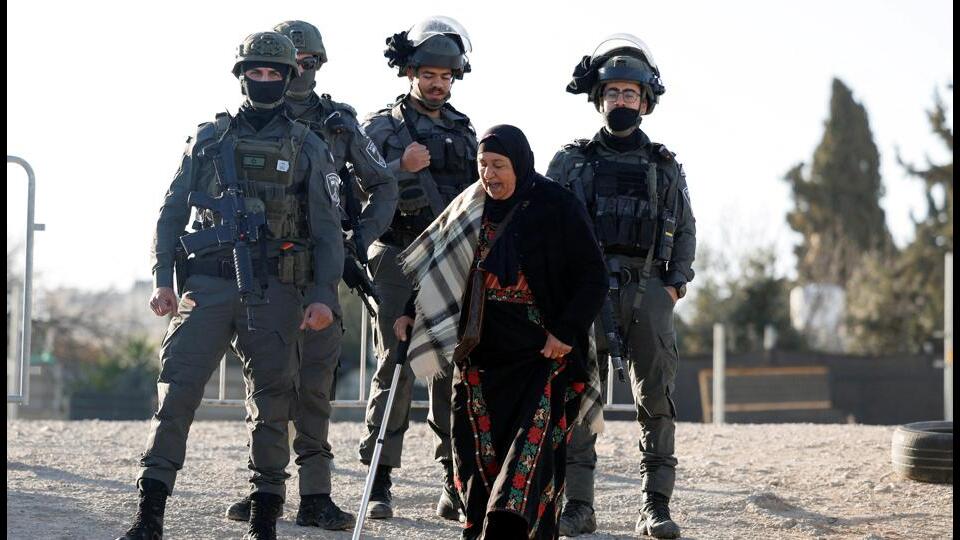
India was not included when Palestine’s UN envoy Riyad Mansour initially issued the statement on Tuesday with the backing of more than 80 countries and organisations. The Indian side signed on, along with some 20 countries and organisations, on Wednesday, criticising Israel’s moves to expand its control over areas in the West Bank controlled by the Palestinian Authority.
External affairs ministry spokesperson Randhir Jaiswal told a weekly media briefing that the document had not been negotiated by the countries and organisations, as is usually the case at the United Nations. “Our position on this particular issue was most recently expressed in the India-Arab League ministerial joint statement,” he said.
The India-Arab League ministerial meeting, held on January 31, saw both sides reiterating their commitment to a “just, comprehensive and lasting peace in the Middle East”, in line with international law, relevant UN resolutions and the Arab Peace Initiative.
The joint statement issued after the meeting stated: “They called for a sovereign, independent and viable state of Palestine based on 1967 borders, living side by side in peace with Israel. Both parties supported the practice of inalienable rights of the Palestinian people.”
Jaiswal said that in consonance with the position outlined in the joint statement, India associated itself with the Palestinian initiative, “keeping in mind the concerns addressed by the statement”.
“Let me also point out that a number of countries have similarly associated themselves with it after the statement was issued,” he added.
The statement came less than a week before Prime Minister Narendra Modi’s planned visit to Israel during February 24-25. Modi will meet his Israeli counterpart, Benjamin Netanyahu, to review bilateral relations, and the two sides are expected to sign several agreements in areas ranging from technology to security.
The statement, which was backed by countries in Europe, Africa, Asia and Latin America, and organisations such as the European Union (EU), Arab League and the Organisation of Islamic Cooperation, rejected “all measures aimed at altering the demographic composition, character and status of the Palestinian Territory occupied since 1967, including East Jerusalem.”
The countries reiterated their commitment “to take concrete measures” in line with UN resolutions and the July 2024 advisory opinion of the International Court of Justice, which declared Israel’s occupation of Palestinian territory as illegal and sought the evacuation of all settlements in the West Bank.
Israel has intensified military operations in the West Bank since it launched its war in the Gaza Strip in October 2023 in response to the terror attacks by Hamas. The operations have included arrests, displacement and settlement expansion, and Palestinian officials have said the aim is to change the ground realities. At least 1,114 Palestinians have been killed and 22,000 arrested in the West Bank.
Jaiswal also said that India attended a meeting of President Donald Trump’s Board of Peace in Washington on February 19 as “an observer”. He said that India has supported Trump’s Gaza Peace Plan and the efforts underway under UN Security Council Resolution 2803.