E-Paper



India can’t become capital of illegal migrants: Govt on Rohingyas’ deportation
In an affidavit, the Centre called Rohingyas “absolutely illegal migrants” who posed “serious threats to the national security” as a Chief Justice of India (CJI) SA Bobde-led bench reserved its order on the plea

 Prefer HTon Google


India cannot become the “international capital of illegal migrants”, the Centre told the Supreme Court on Friday while opposing a plea seeking release and protection of over 150 Rohingyas sent to a holding centre in Jammu as part of a process to identify undocumented immigrants for deportation to Myanmar.
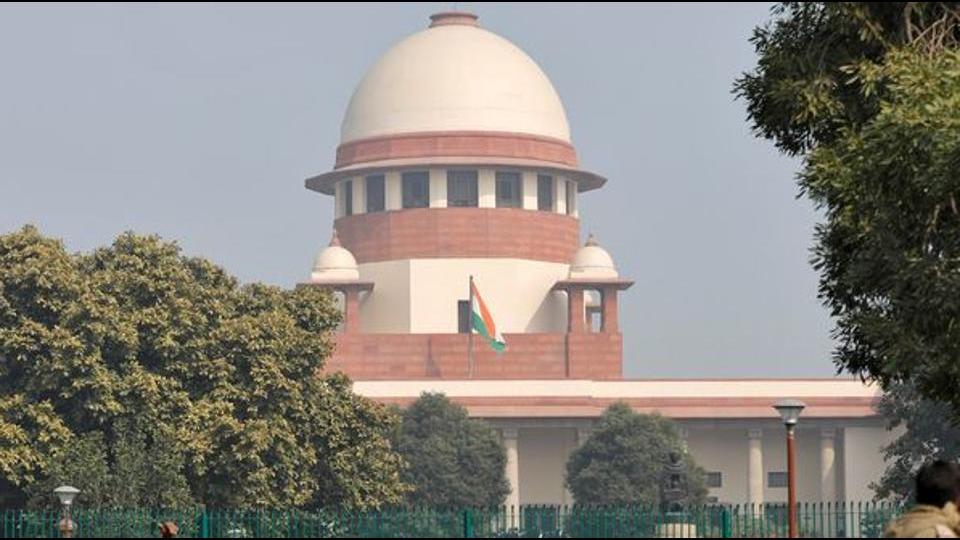
In an affidavit, the Centre called Rohingyas “absolutely illegal migrants” who posed “serious threats to the national security” as a Chief Justice of India (CJI) SA Bobde-led bench reserved its order on the plea.
The Jammu & Kashmir administration began the process of identifying undocumented immigrants on March 6. Over 150 of them were sent to the holding centre under the Foreigners Act. Officials insisted due process of law was followed and added the immigrants sent to the centre did not have valid travel documents.
Also Read | Aid workers struggle to reunite Rohingya children separated by deadly fire
Hundreds of thousands of Muslim Rohingya have since 2017 fled Myanmar to escape persecution and many of them have been staying in India. The UN has called a Myanmar army’s campaign against the Rohingya “a textbook example of ethnic cleansing”.
The government underlined “illegal migrants” cannot assert the right to settle in India under the Constitution’s Article 21 (the right to life and liberty).
Solicitor general Tushar Mehta, who appeared for the Centre, submitted the Supreme Court dismissed a similar application to stop the deportation of Rohingyas in Assam in 2018. He added the fresh plea must meet the same fate.
“The continuance of the illegal immigration of Rohingyas into India and their continued stay in India, apart from being absolutely illegal, is also found to be having serious national security ramifications and poses serious security threats,” Mehta told the bench, which also includes justices AS Bopanna and V Ramasubramanian.
Mehta said the Centre has begun the process for deporting Rohingyas after receiving a confirmation from Myanmar regarding their nationality. He added the court should steer clear of the “diplomatic issue” since it falls within the exclusive domain of the executive.
Senior advocate Harish Salve, who represented the Jammu & Kashmir administration, cautioned the bench against “starting a dangerous trend” by interfering with a subject that related to “illegal migrants” and diplomatic relations.
Advocate Prashant Bhushan, who argued for the petitioner Salimullah, cited the International Court of Justice (ICJ)’s January 2020 judgment on the persecution of Rohingyas in Myanmar and how they were subjected to serious crimes in violation of international humanitarian laws. Bhushan said an urgent intervention of the Supreme Court was required since those held in Jammu could be deported to Myanmar from where they fled fearing prosecution.
The bench told Bhushan: “You are saying that they might be massacred once sent back to Myanmar. What happens in a foreign country is beyond our control... We are certain that there should be no genocide on this earth. We are not supporting the genocide of any kind anywhere. But the question here is different. You did not tell us that a similar application by you had already been dismissed by this court.”
Salve said ICJ’s judgment was in the realm of the public international law and could not override local laws of a country. He added India was not a party to the principle of non-refoulement as mentioned in the 1951 Refugee Convention.
The principle under international human rights law guarantees people should not be returned to a country where they would face torture, cruel, inhuman or degrading treatment or punishment and other irreparable harm.
Salve said India is not obliged to follow non-refoulment, which would restrain it from expelling a refugee fearing persecution.
The affidavit, seen by HT, maintained India has to secure the interests of its own citizens before catering to the interests of illegal migrants “casting a burden on the already-depleting natural resources of the country”.
“The Constitution makes it abundantly clear that India, as a sovereign nation, has the first and foremost Constitutional obligation and duty towards its citizens and to ensure that the demographic and social structure of the country is not changed to its detriment, the resulting socio-economic problems do not occur to the prejudice of the citizens and the resources of the nation are utilized to fulfil the fundamental rights of its own citizens and are not diverted to the detriment of the citizens, due to influx of illegal migrants into the territory of India,” the affidavit said.
It cited a 1991 Supreme Court judgment that said although Constitution’s Article 21 (the right to life and liberty) extended to foreign nationals, the fundamental right to reside and settle in India under Article 19(1)(e) was applicable only to citizens.