
 E-Paper



India, China complete disengagement in Depsang, Demchok at LAC
The Indian Army and the Chinese People’s Liberation Army (PLA) have pulled back their forward-deployed troops and equipment from the two flashpoints.

 Prefer HTon Google


India and China have completed the disengagement exercise in the Depsang and Demchok friction points at the Line of Actual Control (LAC) in eastern Ladakh. The troops of the two countries are now verifying the vacation of positions and removal of infrastructure.
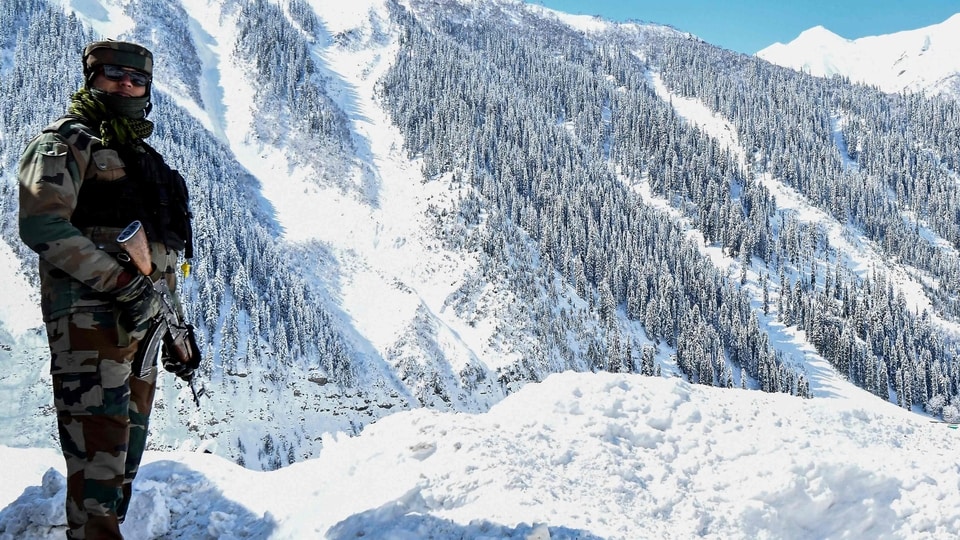
The Indian Army's sources told ANI that coordinated patrolling will start soon by both sides. Ground commanders will continue to hold talks.
The two sides will exchange sweets for Diwali tomorrow.
Foreign secretary Vikram Misri on October 21 announced that New Delhi and Beijing reached an agreement to disengage in the remaining friction points at LAC in eastern Ladakh.
Following the agreement, the two countries began troops disengagement at the two friction points at Demchok and Depsang plains on October 23.
Also read: India, China reach agreement on patrolling along LAC after 4 years
India and China's relations deteriorated because of the Chinese troops' aggression along the Line of Actual Control, the de facto border, in April 2020. The relations hit rock bottom on June 15, 2020, after 20 Indian soldiers died in the line of duty thwarting the Chinese offensive in the Galwan Valley.
New Delhi says India's bilateral relations with China will normalise only after the situation at the LAC returns to what it was before May 2020.
Also read: Narendra Modi to Xi Jinping: ‘Maintaining border peace priority’
What PM Modi told Xi Jinping?
Last week, following a thaw in the India-China bilateral relationship, Prime Minister Narendra Modi met with Chinese President Xi Jinping at the sidelines of the BRICS Summit in Russia.
PM Modi said maintaining peace at the border should remain “our priority”.
"This is our first formal meeting after five years. Excellency, we welcome the agreements that we have reached over the border. Maintaining peace and tranquility over the border should remain our priority, and mutual trust, mutual respect and mutual sensitivity should remain the basis of our relationship. I am confident that we will hold talks with an open heart and our discussions would be constructive," PM Modi said at the meeting.
Also read: India and China wrapping up disengagement at hot spots
What does the disengagement process entail?
The Indian Army and the Chinese People’s Liberation Army (PLA) have pulled back their forward-deployed troops and equipment from the two flashpoints. They have also dismantled temporary structures that had been built during the four-year-long standoff.
Indian soldiers will resume their patrolling in areas that had been cut off because of the PLA’s presence. However, the disengagement in Depsang and Demchok will not lead to the creation of buffer zones.
India and China had disengaged from Galwan Valley, Pangong Tso, Gogra (PP-17A) and Hot Springs (PP-15) areas and created buffer zones.
The disengagement at Depsang and Demchok will facilitate patrolling by both sides in a coordinated manner, and in the agreed upon frequency and strength (of the patrolling parties), Lieutenant General Vinod Bhatia (retd), a former director general of military operations, told HT.


