India's month-long presidency of the powerful United Nations Security Council (UNSC) ended on Tuesday (August 31) with substantive outcomes on key global issues. India is currently a non-permanent member (for a two-year term) of the 15-nation UNSC. It assumed the rotating Presidency of the UN body for the month of August.
“As we wind down our Presidency of UN #SecurityCouncil, we thank all colleagues in #UNSC for their tremendous support to make our Presidency a success with many substantive outcomes," India’s Permanent Representative to the UN Ambassador T S Tirumurti tweeted on Tuesday.
US Ambassador to the UN Linda Thomas-Greenfield congratulated India for a successful presidency of the UN Security Council for the month of August. "Your leadership and resilience saw us through many challenging issues -- especially the situation in Afghanistan,” she said.
Here's a look at the outcomes:
- India began its Presidency with a high-level signature event on maritime security presided over by Prime Minister Narendra Modi. Tirumurti described it as “path-breaking” in many ways since this was the first time the Prime Minister of India chaired the Security Council.
- The event was the first time when there was a comprehensive debate on the holistic concept of maritime security. There was also a presidential statement on maritime security which was also the first such statement on the concept.
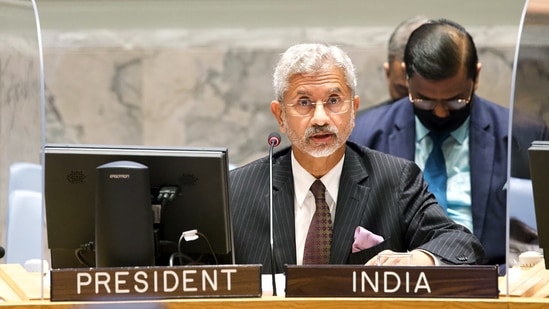
- External Affairs Minister S Jaishankar chaired the two other signature events - on Peacekeeping and Technology on August 18 and the briefing on Islamic State on August 19.
- India also exchanged a Memorandum of Understanding (MoU) with the UN in support of the 'Partnership for Technology in Peacekeeping' initiative and to UN C4ISR Academy.
- For the first time, the Security Council held an open debate focused exclusively on how technology can aid in peacekeeping and for the first time, it adopted a presidential statement on the topic of technology and peacekeeping, said Tirumurti.
- He added that for the first time, India drafted a resolution on peacekeeping focused on ensuring accountability for crimes against peacekeepers. The resolution was sponsored by 80 member states, including all 15 members of the UNSC.
- India's presidency of the UNSC ended with the first resolution being adopted by the Council on the situation in Afghanistan following the takeover of Kabul by the Taliban.
- Under India’s presidency, the UNSC successfully steered the discussions on various peace and security issues that are on its agenda, including Myanmar, Syria, Yemen, and the Middle East Peace Process.