E-Paper



India, EU trade pact to be very important geopolitical stabiliser: Antonio Costa
”Our trade agreement is a very important geopolitical stabiliser and a showcase of how it’s possible to protect international rules-based trade,” he said

 Prefer HTon Google


NEW DELHI: India and the European Union can together act as “strong providers of stability, protectability and reliability” on the international stage and protect the rules-based order at a time of growing geo-economic turbulence and unpredictability in trade, European Council President Antonio Costa said on Monday.
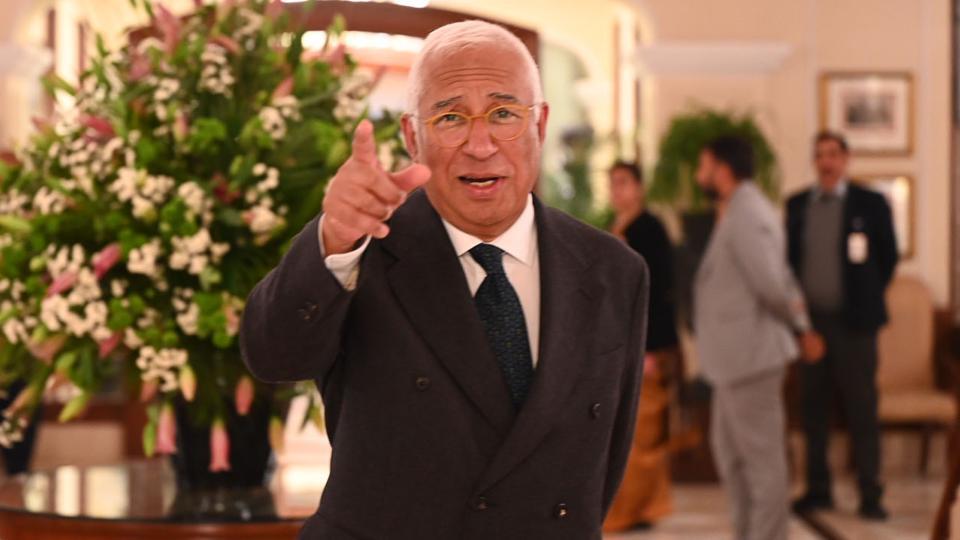
In an exclusive interview with HT shortly after participating in the Republic Day celebrations along with European Commission President Ursula von der Leyen and ahead of the India-EU Summit on Tuesday, Costa said the growing India-EU security and defence cooperation is crucial for preserving security in the Indo-Pacific and ensuring free and open commerce between the Indo-Pacific and the Atlantic. Edited excerpts:
The EU has described India as an “indispensable” partner. Is the India-EU relationship prepared for the challenges of the contemporary world, and will the summit on Tuesday reflect the respective and shared challenges of the two sides?
This invitation to me and [European Commission] President [Ursula] von der Leyen to be chief guests in this memorable Republic Day is an honour. Tomorrow, in the 16th India-EU Summit, I think we will deliver on a trade agreement, on security and defence cooperation and on mobility.
In our multi-polar world, it’s essential that the EU and India become closer and closer partners because we can together be strong providers of stability, protectability and reliability in international relations and to protect our international rules-based order.
Our trade agreement, I think, is a very important geopolitical stabiliser and a showcase of how it’s possible to protect international rules-based trade.
The FTA, in addition to creating a huge market and opening up access, how will it stabilise things for both sides, especially at a time of growing protectionism and geo-economic unpredictability?
That’s precisely why this trade agreement is not only about economics. It’s coming at a very important moment and sending a very important political message to the world that India and the EU believe more in trade agreements than in tariffs. We believe that trade is important to boost our economies, create jobs, promote prosperity. This is an important message to the world, precisely at this moment when protectionism is rising and some countries have decided to increase tariffs, we are reducing our reciprocal tariffs and we are creating a market of two billion people. It’s the largest market in the world and this is very strong for India, for Europe, but also for the world because we together represent a quarter of global GDP. If we increase our trade, we will increase our GDP and we will contribute to increasing global GDP.
Both India and the EU have been the target of unilateral tariffs. Is there a way the two sides can work together to deal with this issue, creating instability in the global market?
For the economy, predictability is essential. Any company needs to have a clear perspective of what they can count. That’s the reason why we need to stabilise things. The EU is making a huge effort to weave a very large network of trade agreements. We have 78 trade agreements around the world. Last week, we signed a trade agreement with Mercosur. I hope that [on Tuesday] we conclude the political negotiations on the trade agreement with India. It is the most important trade agreement ever signed by the EU. This is a very important instrument to stabilise trade relations around the world.
Canadian Prime Minister Mark Carney spoke very bluntly at Davos about a rupture in the world order and the need for greater multipolarity. Do you see India and the EU as two poles in this new order that is emerging for defending international norms and rule of law?
Yes, we are showing precisely this. We have put in practice this idea. We are two very important poles in the world. We are working together on trade, we are working together on security and defence because we believe that the international rules-based world needs to be protected.
We need to respect the UN Charter. We are fully engaged to protect multilateralism, which is more necessary than ever in this multipolar world. As with India, we are supporting the agenda presented by Secretary-General Antony Guterres to reform the UN. This reform is very important [for the system] to be more efficient, but it’s also important to make the UN more representative, especially in the Security Council. That’s the reason why I have always supported India’s ambition to be represented at the Security Council.
How will the Security and Defence Partnership fundamentally change security cooperation between India and the EU?
It has different dimensions. We have cooperation in cyber threats, counter-terrorism, maritime security. At the Republic Day parade, the EU was represented by two maritime missions, Operation Aspides in the Red Sea, and Operation Atalanta in the Mediterranean. We don’t have our own forces, but we have European missions ensured by the member states. We are working together with India in Operation Aspides and this has been very important to security in the Indo-Pacific and to preserve free and open trade between the Indo-Pacific and the Atlantic through the Mediterranean and the Red Sea.
The issue of Greenland and the steady erosion of security alliances that benefited Europe for decades have spurred a rethinking on security and defence. What, in your opinion, is the future of Europe’s partnership with the US and what role do you perceive for India in this scenario, especially in defence industry cooperation?
NATO has been very important for Europe, the US, Canada, Norway and Turkiye and ensured, over the last almost 80 years, peace from the Mediterranean to the North Atlantic. We need to preserve this. That’s the reason we had a common agreement at the last NATO Summit to increase and have a more fair burden sharing in NATO. We believe that in the long term, we will continue to preserve this very important defensive alliance that is very important to ensure peace in the world and stability in the trans-Atlantic relationship.
[Defence industry cooperation] is the other dimension of our cooperation in security and defence. This security and defence agreement will allow India to participate in our defence programmes, namely SAFE [Security Action for Europe (SAFE) programme, a €150-billion initiative to provide low-cost, long-term loans for defence procurement] and in European defence industrial programmes. This is very important for the Indian economy, but it’s also very important for European defence because we are now committed to increasing our own defence capabilities. We are investing a lot in our own industry, but also diversifying suppliers. After the signing of this agreement, we open the possibility for India to integrate, to have access to and participate in these programmes.
Russia’s war in Ukraine remains an issue where India and the EU have divergences. Some EU members continue to procure Russian energy, and India has faced criticism for purchases of Russian oil and defence equipment. India’s priority is procuring cheaper energy for its people. Can the EU help in diversifying energy sourcing?
Starting from Europe, we have reduced by 74% our purchases from Russia. Only two countries – because they are landlocked – continue to buy [energy] but we took the decision to end imports of gas and oil from Russia by the end of next year. With India, we are cooperating more and more to increase India’s own capacity to produce its own energy. This is very important for India to become more autonomous, and that’s the reason we are working together to increase the use of renewable energy, because this is the only way for each state to become autonomous for their own energy. If not, we normally need to import, and when we need to import, we are reducing our autonomy. Renewable energy offers the opportunity for everybody to become autonomous and provide affordable energy to citizens and companies.
Would you like India to play any sort of role in helping to hasten the end of the war in Ukraine?
If India could play a role, I hope so, because this war needs to finish as soon as possible. We support all efforts to end this war, namely the efforts led by President Trump. But for the time being, Russia is refusing to accept any terms for even a ceasefire or peace negotiations and a peace agreement to achieve a just and lasting peace. I think it’s in the interest of all countries to put more pressure on Russia, to push Russia to the peace negotiations and to accept a peace agreement. You can never forget that this is not only about Ukraine, this is about respect for the fundamental principles of the UN Charter because the sovereignty of Ukraine is like the sovereignty of my country, the sovereignty of Denmark, the sovereignty of Venezuela, or the sovereignty of India. When we start allowing a permanent member of the Security Council to use force against a neighbour, we are giving bad ideas to other permanent members of the Security Council. When it comes to the main principles of the UN Charter, we should not have any doubt about upholding this, condemning those who violate, and supporting those who are suffering [from] these violations.
As a person of Indian origin, how do you feel having played a key part in the run-up to this summit that is expected to produce very important deliverables? Is there any place where you feel the contents of the summit fell short of your expectations and how do you see the future of India-EU relations?
I’m optimistic by nature and I think it’s not just a matter of optimism. The work that we did together last year gave me confidence about what will be the deliverables from this summit. As a person of Indian origin, I’m not only honoured but I’m very pleased to be here and to look back and remember that we reopened these negotiations in 2021 during the rotating Portuguese presidency of the EU. I’m lucky to be here to, I hope, assist in the conclusion of these negotiations.