
 E-Paper



India extends its sea legs to Oman and Mauritius to monitor Indian Ocean Region
With its allies Oman and Mauritius, India got Port Duqm and Agalega Islands to get better maritime domain awareness and coastal security for Port Louis.

 Prefer HTon Google


India has extended its sea legs by establishing a maritime support base in Duqm port in Oman and is preparing to support close ally Mauritius by establishing an air support facility in north Agalega Islands, south of Seychelles – both moves aimed at improving maritime domain awareness and coastal security of friendly nations in the Indian Ocean Region (IOR), especially in the face of Beijing’s growing presence in the region.
While the government is tight-lipped about these two most significant developments, HT learns that the facility in Duqm port in Oman has already been operationalised to maintain, repair and overhaul Indian ships as well as provide berthing, fuel and rest facilities to Indian Navy ships in the vicinity and travelling beyond.
Simultaneously, India, in support of key ally Mauritius, has built an airstrip in north Agalega islands, some 1,050km north of Port Louis, to provide maritime security to the island nation as well help protect its tourism assets in the region. While it is learnt that the facility under the Mauritius government will be thrown open to public in December by Prime Minister Pravind Jugnath, the Indian Navy is already preparing plans to send at least 50 officers and personnel to man the airstrip, which will have the capability of handling Boeing P-8I surveillance and anti-submarine warfare aircraft of the Indian Armed Forces. Jugnath met Prime Minister Narendra Modi on September 8 and was special invitee to the G20 Summit in Delhi.

The decision to have support facilities in the two countries is partly due to the increased forays of PLA Navy ships into Indian Ocean Region. National security planners estimate that the Chinese Navy Carrier Strike Forces are expected to patrol IOR by 2025-26 with PLA rapidly expanding its already formidable surface and subsurface naval assets.
According to data from South Block, the number of Chinese vessels in IOR is increasing every year with as many as 24 Chinese ships entering the Indian Ocean to date in 2023. These include PLA Navy ships, satellite and ballistic missile tracking ships, and scientific research and surveillance vessels. The number of such ships in 2019 was 29, and it grew to 43 in 2022.
On average, there have been around six PLA Navy assets in IOR every month this year according to data from South Block. Since 2019 to till date, there have been 48 surveillance and scientific research vessels deployed in IOR with the general area of deployment in the Bay of Bengal, South Indian Ocean, north of Agalega islands and the Persian Gulf, with Anti-Piracy Escort Force (APEF) and Task Force 172 seen operating off the eastern coast of Africa with a Chinese naval base at Djibouti. As of now, a 45th APEF is expected to enter IOR anytime this week.
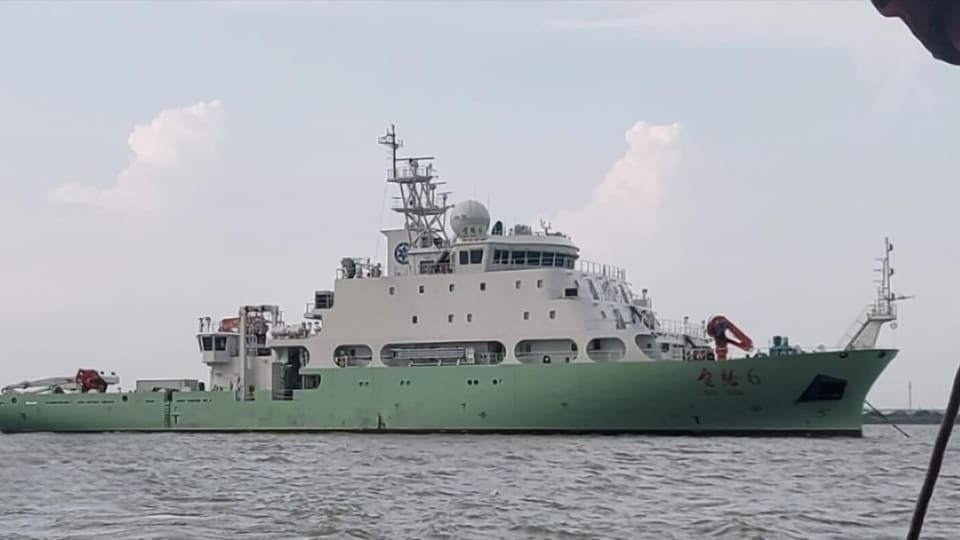
A Chinese surveillance ship Shi Yan 6 will also enter IOR on September 23 to undertake joint military scientific research in Sri Lankan EEZ in October-November 2023. No less than 33 ballistic missile and space tracking ships of Yuan Wang class have been deployed in IOR since 2019 with such ships being monitored off coast of Australia and East Coast of Africa.
With an increasing number of Chinese ships and warships entering the Indian Ocean through Malacca straits, Sunda, Lombok and Ombi-Wetar straits in Indonesia, India not only needs to be aware of PLA activities in its backyard but also has to provide coastal and maritime security to its key allies in the Persian Gulf and south Indian Ocean, said experts and analysts.


