
 E-Paper



India pushes makers for bivalent Covid vaccines
At least two companies — Serum Institute of India (SII) and Bharat Biotech — confirmed they were working on prototypes.

 Prefer HTon Google


Indian government scientists are in discussions with domestic vaccine makers for a bivalent Covid-19 dose, similar to the approach taken by US pharma company Moderna for its shot that became the first updated coronavirus vaccine in the world this week, people aware of the matter said, adding that approvals for such products will be fast-tracked.
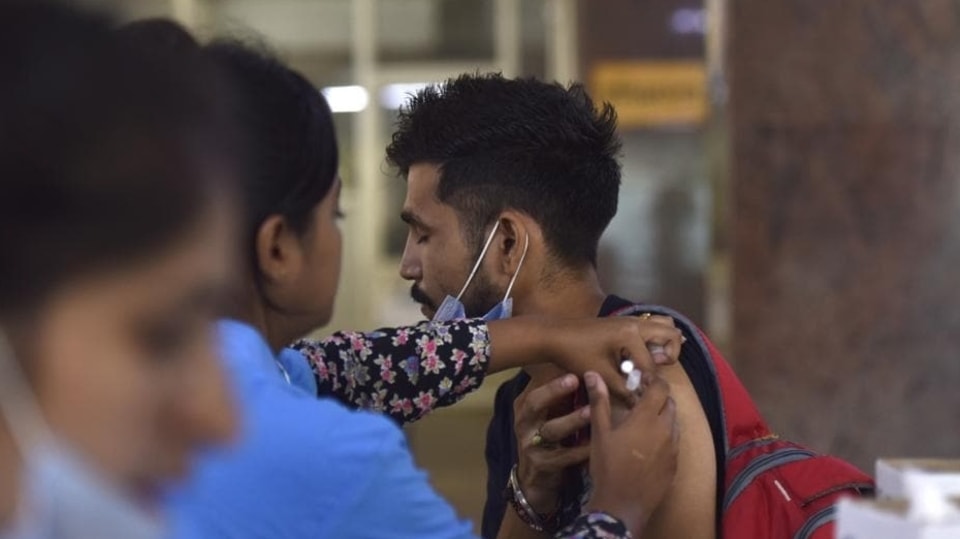
The department of biotechnology in touch with vaccine makers for what officials call a second-generation vaccine, and at least two companies — Serum Institute of India (SII) and Bharat Biotech — confirmed they were working on prototypes.
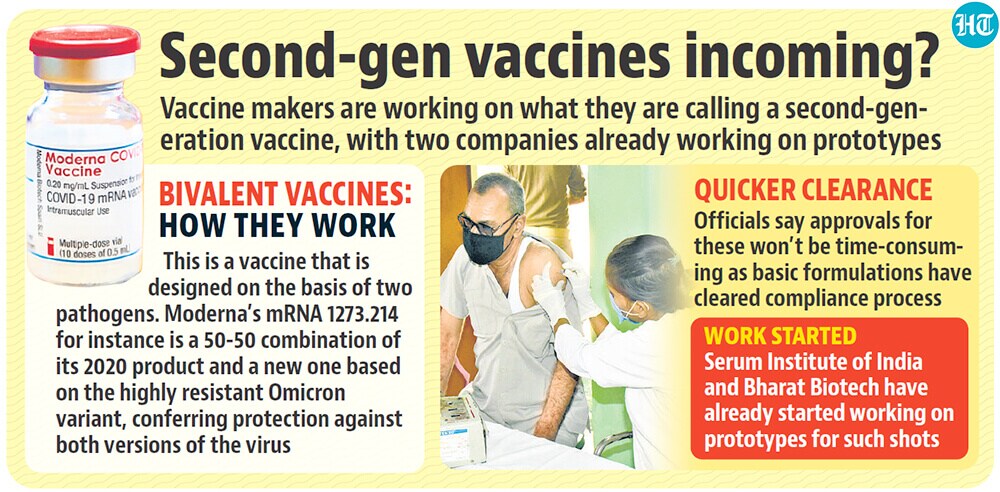
“We are looking at a bivalent vaccine that can provide an immune response against two antigens through a single vaccine,” said a senior official from the department, requesting anonymity.
The official added that the department was in talks with five pharma companies, as well as research organisations. “It is too early to give out much details, but considering that the newer variants of Covid-19 now have a greater immune escape, there is a need for updated vaccine,” the official added, refusing to divulge the name of the companies that were in talks with the department.
A bivalent vaccine is designed on the basis of two pathogens. Moderna’s mRNA 1273.214 for instance is a 50-50 combination of its 2020 product and a new one based on the highly resistant Omicron variant, allowing it to create immunity that protects against both versions of the virus.
The Omicron variant’s lineages are now dominant across the world, becoming a de-facto new foundation for the Sars-CoV-2’s ongoing evolution. The World Health Organization and an international coalition of health regulatory agencies first sought new vaccines to counter such variants in January.
People aware of the matter said an update to an existing vaccine will be fast-tracked. An official from the office of the Drugs Controller General of India (DCGI) said approvals for updated vaccines will in themselves not be a time-consuming process because basic formulations are already in place and have gone through the compliance process once.
“The priority of the government currently is on Covid-19 vaccines and their newer versions. So, it’s plain logic that approvals will be fast-tracked accordingly,” said the official.
Officials from SII and Bharat Biotech, the producers of the two doses most widely used in India’s Covid-19 vaccination till now, said they were working on such doses.
An SII spokesperson said the Pune-based company is working with the American vaccine developer Novavax to update the dose being made and sold in India under the brand name Covovax. “The existing formulation will be tweaked to incorporate the new variant and because this is not going to be a new vaccine per se, we will not take much time to get approvals,” the official said, without divulging details about the timeline.
An official from Bharat Biotech said the company was developing a “variant proof” vaccine and immunogenicity data was being studied.
At present, Covishield (produced by SII), Covaxin (developed by Bharat Biotech), Biological E’s Corbevax, Gamaleya Institute’s Sputnik, and SII-made Covovax are in use in India. The regulator has also approved doses by Moderna and Pfizer-BioNTech but these have not been available in the country.
Earlier this week, UK authorities cleared a Moderna dose that the company adapted to create immunity against the Omicron variant. The vaccine is a 50-50 formulation of Moderna’s 2020 product, designed on the Sars-CoV-2 variant that first spread around the world, and of a new dose developed using the blueprint of the Omicron variant. Other companies, such as Pfizer, too are working on similar updates.
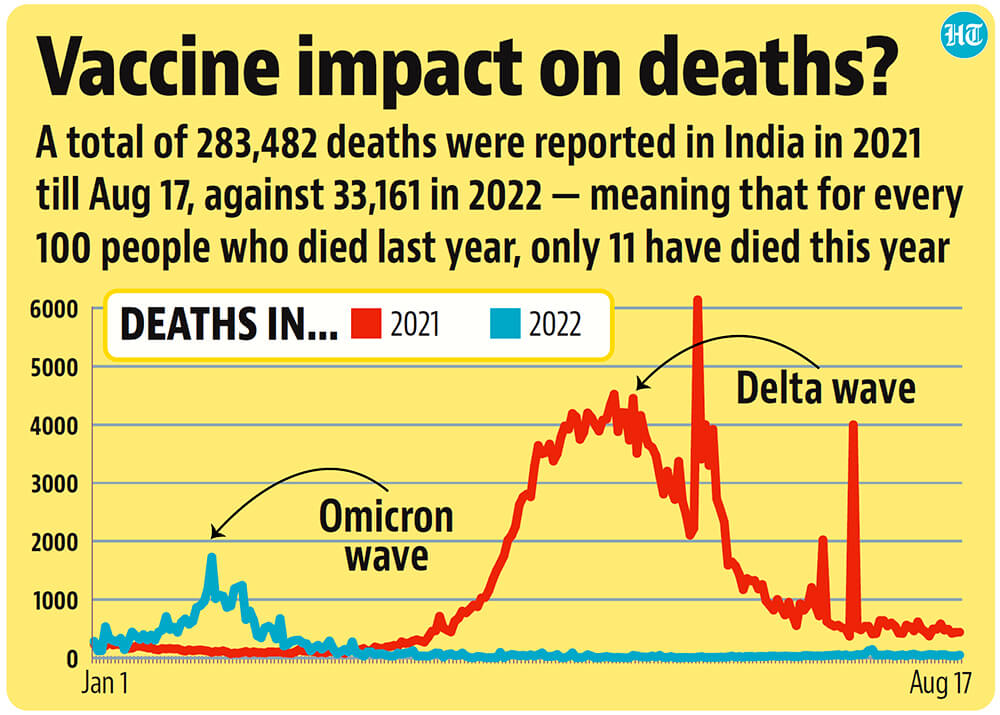
The need for Covid-19 vaccines to be updated was first visible in January when the Omicron variant quickly spread across the world, displacing all other variants with its increased resistance to antibodies elicited from vaccines and past infection — which otherwise had blunted the growth of versions like Alpha and Delta.
Recently, scientists and global health bodies have flagged that the protection from severe diseases conferred by booster doses is “transient”, making updated vaccines necessary instead of a repeated, frequent boosters.
“The incremental benefit of a second booster dose is likely lower compared to primary series and first booster doses. The number needed to vaccinate to avert one death with a second booster is higher compared to that for primary series,” WHO said in a statement on Thursday regarding the use of second booster doses.
“The impact of currently available vaccines on reducing symptomatic illness and transmission in the context of Omicron is modest. The effects of a second booster dose on restoring VE against symptomatic illness will be transient and likely not last longer than a few months,” it added.
Several countries are now offering second booster doses. India is at present offering the first booster doses to people who have completed six months since their full primary vaccination course.
Gagandeep Kang, virologist and professor at Christian Medical College, Vellore, said it would be good to have a broader ‘Sars-CoV-2’ vaccine that provides protection against a range of Sars-CoV-2 variants. “There could be a single antigen that has a broad response against a range of Sars-CoV-2 or have a universal coronavirus vaccine that provides immunity against current and future mutations. It would definitely be a good idea to develop the science for both,” Kang said.
“The goal is to have an immune response against Covid which is both broad and long-lasting because we don’t know what the next variant is going to be. The aim should be to add as many different antigens as possible, add antigens beyond the spike protein. Ultimately, scientists would want to develop a ‘pan coronavirus vaccine’, which would be broadly protective against all the variants but also other types of Sars-CoV viruses,” said Soumya Swaminathan, chief scientist at the World Health Organisation (WHO), in a tweet on Wednesday, citing an interview she gave to a news channel.


