
 E-Paper



India to chair Taliban sanctions committee, to keep focus on terrorists, sponsors
After a recent visit to Pakistan by a Taliban delegation led by Mullah Abdul Ghani Baradar, videos emerged of the group’s leaders visiting terror training camps on Pakistani soil

 Prefer HTon Google


India on Friday took a tacit swipe at Pakistan for backing cross-border terrorism as it announced it would be chairing three key UN sanctions committees, including the Taliban sanctions committee, during 2021-22.
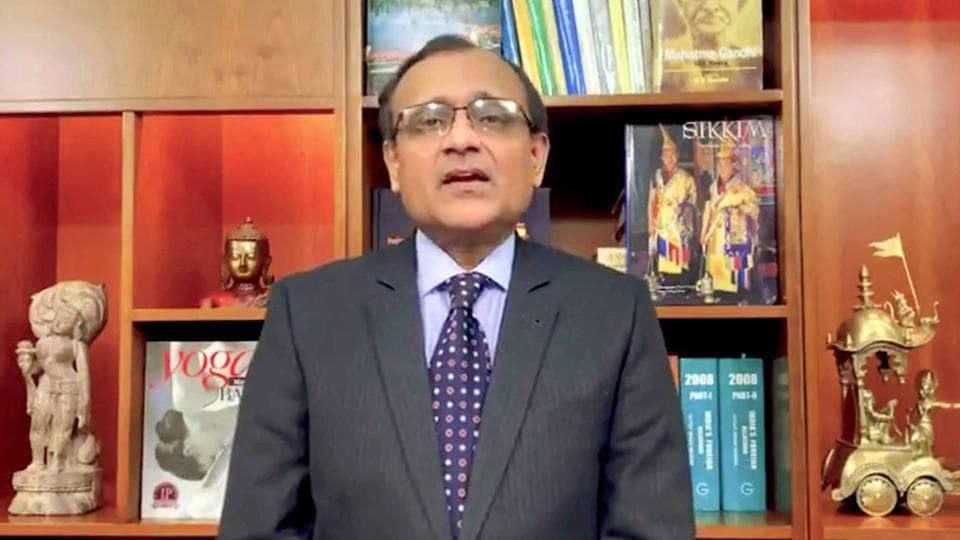
TS Tirumurti, India’s envoy to the UN, said the country had been asked to chair three important subsidiary bodies of the Security Council – the Taliban sanctions committee or the 1988 sanctions committee, the counter-terrorism committee and the Libya sanctions committee. The move follows India joining the Security Council as a non-permanent member for 2021-22.
India will chair the Taliban sanctions committee – also called the 1988 sanctions committee as it was formed through resolution number 1988 in 2011 by splitting the 1267 sanctions regime on al-Qaeda – at a time when there is growing concern worldwide at alarming levels of violence in Afghanistan that has been blamed on the Taliban.
Also Read: Afghanistan busted Chinese spy ring, kept it a secret. NDS chief explains why
“The Taliban sanctions committee, also called the 1988 sanctions committee, has always been a high priority for India, keeping in mind our strong interest and commitment to peace, security, development and progress of Afghanistan,” Tirumurti said in a video message.
Without naming Pakistan, he added: “Our chairing this committee at this juncture will help keep the focus on the presence of terrorists and their sponsors threatening the peace process in Afghanistan. It has been our view that peace process and violence cannot go hand in hand.”
After a recent visit to Pakistan by a Taliban delegation led by Mullah Abdul Ghani Baradar, videos emerged of the group’s leaders visiting terror training camps on Pakistani soil and meeting injured fighters at a hospital in Karachi. One of the videos showed Baradar – the group’s main negotiator at the peace talks in Doha – telling Taliban members in Karachi that the group makes all decisions related to the peace talks after consulting its leadership and clerics’ council based in Pakistan.
Referring to the counter-terrorism committee, which will be chaired by India in 2022, Tirumurti noted that the panel was formed in the aftermath of the 9/11 terror attacks in New York and that India had led it during its last stint as a non-permanent member of the UN Security Council during 2011-12.
He also noted that India would chair the counter-terrorism committee on the 75th anniversary of the country’s independence. “The chairing of this committee has special resonance of India, which has not only been in the forefront of fighting terrorism, especially cross-border terrorism, but has also been one of its biggest victims,” he said.
The Libya sanctions committee, also known as the 1970 sanctions committee, is a “very important subsidiary body” of the Security Council that implements a sanctions regime, including a two-way arms embargo, assets freeze, travel ban and measures to prevent illicit export of petroleum, Tirumurti said.
India will chair this committee at a “critical juncture, when there is international focus on Libya and on the peace process” in that country, he added.



