E-Paper



India to forge own path in global energy transition: Senior UN climate official
Selwin Hart, special adviser to UN Secretary General Antonio Guterres on climate change, said India’s transition strategy would differ significantly from other nations, particularly given its status as a net importer of fossil fuels


India will forge its own distinct pathway in the global energy transition, with the country emerging as a “clean energy powerhouse” despite different challenges facing developing economies, a senior UN climate official said.
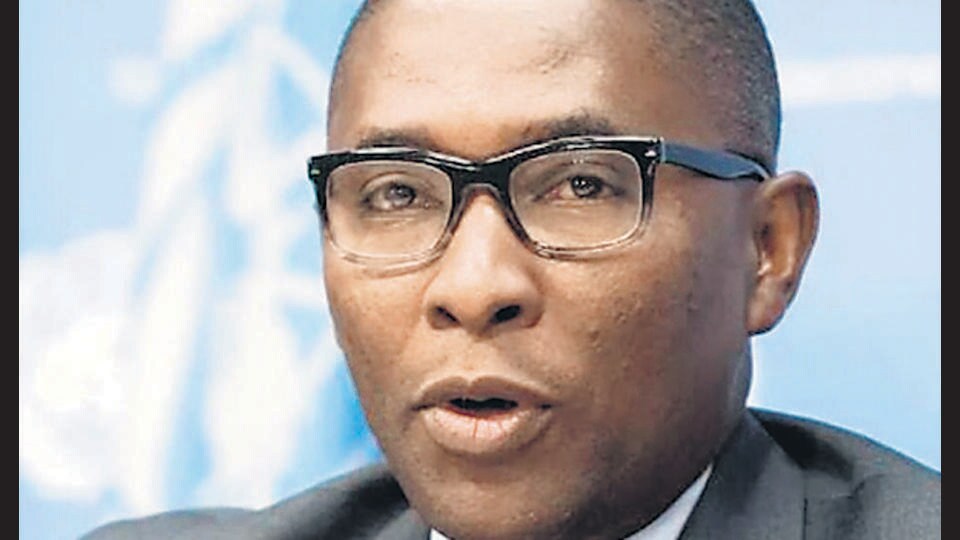
Selwin Hart, special adviser to UN Secretary General Antonio Guterres on climate change, told HT in an interview on Thursday that India’s transition strategy would differ significantly from other nations, particularly given its status as a net importer of fossil fuels.
“One of the things that we’ve been repeatedly saying, especially for developing and emerging economies that are fossil fuel producing nations, is that their transition pathways are going to be different,” Hart said. “If you’re a large fossil fuel producing nation, your transition pathway is going to be different than the transition pathway of a country that’s a net importer of fossil fuels.”
“It is not a one size fits all approach. That being said, India is a clean energy powerhouse,” Hart said, emphasising that developing and emerging economies face unique challenges in their climate strategies.
Hart highlighted how BRICS nations are stepping up climate action in the wake of the United States’ withdrawal from the Paris Agreement. He noted that climate issues, previously absent from BRICS discussions, now feature prominently in the bloc’s statements with “extensive and very precise technical work” being undertaken.
The UN official’s comments follow his team’s recent analysis suggesting fossil fuels are nearing “the end of the road,” which prompted Guterres to deliver a special address declaring this “the moment of energy transition.”
India’s renewable energy progress
Hart described India as “extremely pivotal to multilateralism, sustainable development, and climate action,” noting that the country has traditionally been “an extremely strong advocate for conveying the interests of the developing world.”
“It’s also an extremely large economy that is still developing, and will require huge amounts of energy,” Hart said, praising India’s momentum towards its climate goals.
He noted that 50% of the country’s electricity capacity now comes from renewables. “India is more than halfway to the 500 gigawatt goal set by PM Modi,” he said, expressing hope this progress would be reflected in India’s nationally determined contribution (NDC) due before COP30.
“Because what we want to say, ambition cannot be imposed from outside. We will encourage as much as possible. We can’t impose,” Hart said. “But we hope that India, along with other major economies, put NDCs on the table that send the right signals to markets and to investors that the energy transition is unstoppable.”
“The potential for India to exploit its leadership on clean energy is absolutely enormous,” Hart said.
Financial challenges loom
However, Hart acknowledged that financing remains a critical challenge for developing countries preparing for COP30 in Brazil this November. Many nations face serious debt distress and lack fiscal space for adaptation and resilience investments.
The COP29 and COP30 presidencies have established a circle of finance ministers to address these challenges. “The world needs to understand that there needs to be a serious discussion on how to address the financing needs of developing countries,” Hart said.
Despite US withdrawal from Paris Agreement, Hart said other major economies remain committed to multilateral climate action. He cited an April roundtable convened by Guterres and Brazilian President Lula, which included President Xi, European Commission President von der Leyen, and chairs of various regional groups including ASEAN, CARICOM, G20, and the African Union.
All participants “expressed firm commitment to multilateralism, to the Paris Agreement,” Hart said.
The UN Secretary General has invited world leaders to announce new NDCs during an event on September 24, the second day of the General Assembly’s high-level week. Hart said China and other countries have indicated they will present economy-wide NDCs covering all greenhouse gas emissions.
Hart emphasised that renewable energy costs have reached historic lows with record deployments worldwide, contributing to a “decoupling of GDP growth from emissions” that marks a departure from two centuries of carbon-intensive economic growth.
On July 22, Guterres declared in a special address at UN headquarters: “Fossil fuels are running out of road. The sun is rising in a clean energy age.”