E-Paper



India yet to take call on Bangladesh’s request for Yunus-Modi meeting
The Bangladeshi side made a formal request earlier this week for a meeting between Yunus and Modi, who will both be in New York for the UN General Assembly later this month

 Prefer HTon Google


The Indian side is yet to take a call on Bangladesh’s request for a meeting between interim government head Muhammad Yunus and Prime Minister Narendra Modi on the margins of the UN General Assembly in New York, people familiar with the matter said on Saturday.
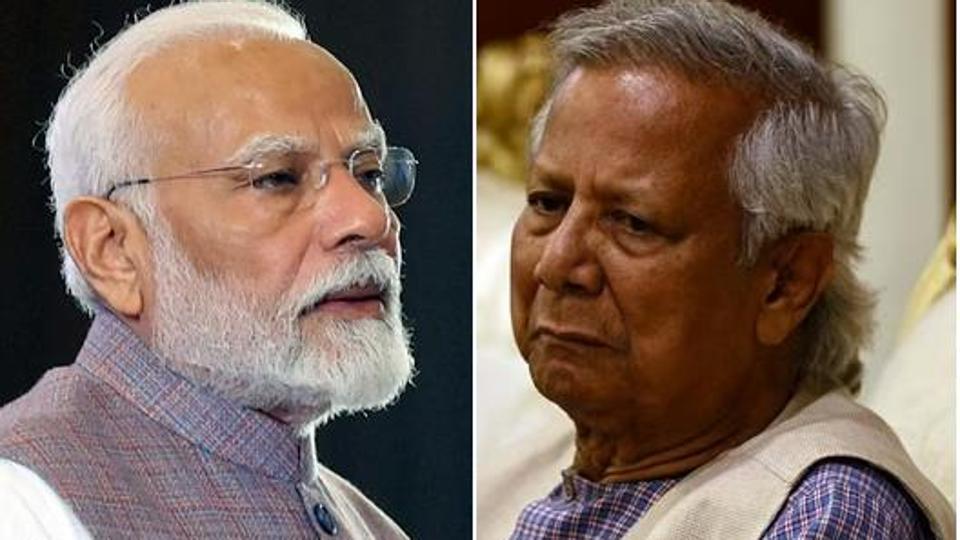
The people, who spoke on the condition of anonymity, said a meeting appears unlikely following comments by Yunus in an interview with an Indian media outlet earlier this week. Yunus’s remarks had not gone down well in New Delhi, they said.
The Bangladeshi side made a formal request earlier this week for a meeting between Yunus and Modi, who will both be in New York for the UN General Assembly later this month, the people said. The Indian side is yet to decide on this request and Modi’s agenda for bilateral meetings in New York is still being firmed up, they said.
In an interview this week, Yunus criticised former premier Sheikh Hasina for commenting on developments in Bangladesh while in exile in India. He suggested Bangladesh can seek her extradition and said India should move beyond the “narrative” that every political party other than Hasina’s Awami League is “Islamist”.
“If India wants to keep her until the time Bangladesh wants her back, the condition would be that she has to keep quiet,” Yunus said. “Sitting in India, she is speaking and giving instructions. No one likes it. It’s not good for us or for India.”
The Bangladeshi side has told India “quite firmly” that Hasina should keep quiet as “she has been given shelter there and she is campaigning from there”.
There has been no response so far from the Indian side to Yunus’s remarks. However, the people cited above said such comments weren’t conducive to better relations.
India’s leadership has said Hasina was granted approval to come to the country at short notice after she stepped down on August 5. The external affairs ministry has declined to comment on any possible Bangladeshi request for her extradition, describing it as a hypothetical matter.
Yunus, sworn in as leader of Bangladesh’s interim government three days after Hasina fled to India, spoke to Modi on phone on August 16. At the time, Modi urged Yunus to ensure the protection of Hindus and other minorities in Bangladesh following attacks after the ouster of the previous government.
Yunus had said Bangladesh will give priority to the security of all minorities. In recent weeks, Yunus has repeatedly described reports in the Indian media about attacks on Bangladesh’s Hindus as “exaggerated”.
During their phone conversation, the two leaders also discussed ways to take forward bilateral relations in line with national priorities.
However, the people said there was a growing sense that Bangladesh’s interim government was not fully in control of the situation and elements within the caretaker setup are working at cross-purposes.