NEW DELHI: India and the European Union (EU) must conclude a free trade agreement (FTA) by the end of the year to deepen their strategic partnership, and the Indian side must engage in earnest negotiations to ensure a mutually beneficial trade deal, EU ambassador Hervé Delphin said on Monday.
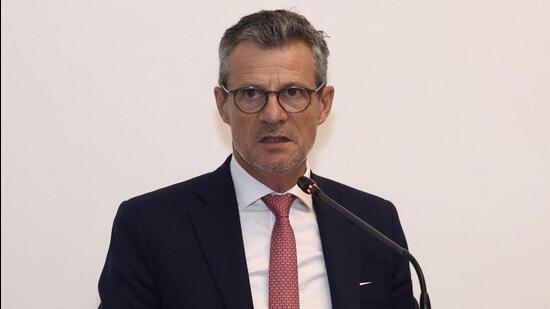
Delphin contended the 13th round of negotiations for the FTA this month was “a bit of a missed opportunity to make some breakthrough”. He said the two sides must also deliver in negotiating a new India-EU strategic roadmap so that it can be endorsed at the next summit in 2026.
The envoy was speaking on the theme of “Navigating India-EU strategic ties” ahead of the 14th round of talks on the FTA in Brussels from October 6. India and the EU resumed negotiations for a trade deal in June 2022, following a hiatus of almost a decade. Leaders of the two sides have set a deadline for concluding the negotiations by the end of 2025.
“We must deliver on the FTA by the end of the year. The 13th round earlier in September was a bit of a missed opportunity to make some breakthrough. The EU was and is still ready to conclude on a meaningful package,” Delphin said. “We look forward to India engaging in earnest and moving, like the EU has shown readiness to do, towards a mutually beneficial deal.”
An official EU report on the 13th round of talks said “some progress was made in certain outstanding areas”, such as rules of origin, sanitary and phytosanitary measures and investment, but “no additional chapter could be closed”.
{{/usCountry}}An official EU report on the 13th round of talks said “some progress was made in certain outstanding areas”, such as rules of origin, sanitary and phytosanitary measures and investment, but “no additional chapter could be closed”.
{{/usCountry}}Delphin said the two sides must conclude negotiations on a new India-EU strategic roadmap so that it can be endorsed at the next India-EU Summit in New Delhi in early 2026. This, he said, will turn “words into action and ambition into reality”.
EU foreign and security policy chief Kaja Kallas unveiled the vision for this new strategic roadmap on September 17 with the aim of giving greater heft to bilateral relations and to put in place mechanisms to follow up the implementation of decisions. This vision has five pillars – boosting trade and investment; deepening cooperation on critical and emerging technologies; bolstering cooperation in security and defence to address threats and risks; connectivity and global issues; and enablers for the partnership, such as increased mobility of skilled workers.
Delphin noted that India and the EU face similar challenges, and said: “Their economic development and their security are under stress, their vision of a rule-based and cooperative global order is undermined.”
At the same time, both sides offer each other strategic options to de-risk economic turmoil and security uncertainties by combining their strengths. The assessment of the EU and its members as valuable strategic partners has gained weight in New Delhi because of “India’s own strategic conundrum and significant challenges posed by China, Russia and the US”, Delphin said.
Delphin also acknowledged issues on which India and the EU “are not aligned”, such as Russia’s war of aggression against Ukraine.
“The participation of an Indian military contingent in the Russia-Belarus military exercise Zapad 2025 or the question of sanctions and of Russian oil have been much in discussion in European capitals lately,” he said.
“India has pronounced itself for peace. Russia is a strategic partner for India. And India wants to deepen its ties with the EU. This will require further consideration in Delhi on how to square those terms,” he added.