E-Paper



India’s move to fence Myanmar border good for region: Bangladesh minister
Hasan Mahmud said a range of issues, including security cooperation and Rohingya refugees figured at his meetings with S Jaishankar and NSA Ajit Doval

 Prefer HTon Google


NEW DELHI: India’s move to fence its border with Myanmar will help the region given the unrest in that country, Bangladesh foreign minister Hasan Mahmud said on Thursday, as he reiterated Dhaka’s request for New Delhi’s assistance in repatriating Rohingya refugees.
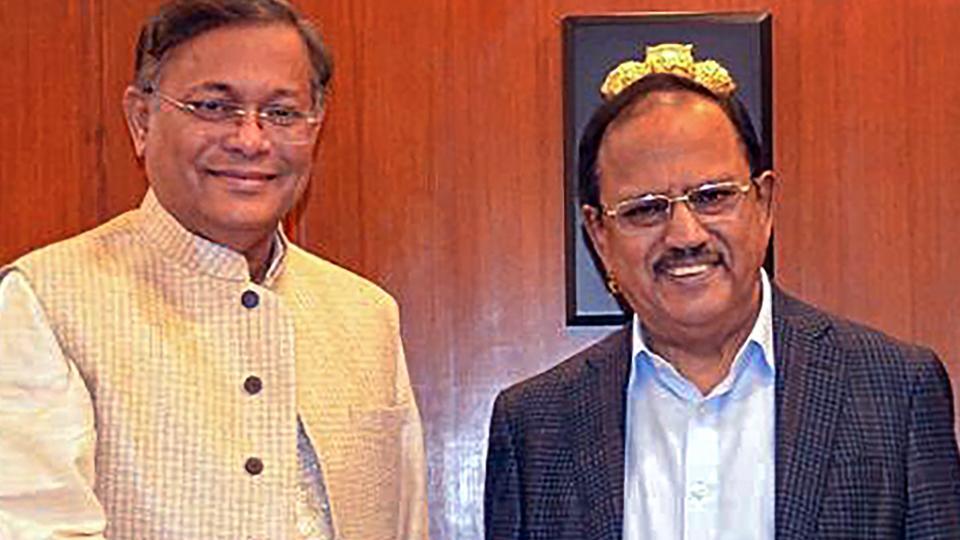
The instability in Myanmar following a major offensive launched by resistance forces against the junta last October was a key part of Mahmud’s discussions with Indian interlocutors. India and Bangladesh have witnessed an influx of hundreds of refugees from Myanmar after a surge in fighting in Rakhine state and other regions in recent weeks.
The Indian government has said it will fence the whole of the 1,643-km boundary with Myanmar and home minister Amit Shah announced on Thursday that the “free movement regime” for people living along the India-Myanmar border will be immediately suspended.
“Fencing the India-Myanmar border will be good for India and the region as I think there is insurgency (flowing) from Myanmar. In recent weeks, hundreds of people fled from Myanmar to India and Bangladesh. That is why the Indian government decided to (fence the border),” Mahmud said during an interactive session at a think tank.
Mahmud referred to the issue of 1.2 million Rohingya people from Myanmar’s Rakhine state currently living in Bangladesh and reiterated his country’s long-standing request for India’s help in repatriating the refugees. A case on the matter has been filed at the International Court of Justice and Bangladesh is in touch with India on this issue, he said.
“We have been having discussions with Myanmar for the last seven years so that it takes them back with full dignity and honour. Myanmar has been saying they will take them back but they are adopting delaying tactics,” he said. The current situation in Myanmar is an “obstacle” to repatriating the refugees but Bangladesh is hoping the crisis will be over soon.
“In this respect, we [expect] assistance and cooperation from the Indian side,” he said, adding that the “forcibly displaced” Rohingyas are now a “burden” on Bangladesh.
The Rohingya refugees are creating environmental and security problems as well as other difficulties for Bangladesh and the government in Dhaka is in touch with the UN High Commissioner for Refugees to check the flow of Rohingyas, he said.
Mahmud, on his first trip to India after being appointed foreign minister following last month’s general election, also said the Bangladesh government was determined to prevent terrorist activities on its soil. “While assuming power in 2009, Prime Minister Sheikh Hasina declared a zero-tolerance policy against terrorism. She declared our land would not be allowed for any terrorist activities to destabilise any neighbouring country or the region and we have been following that,” he said.
A range of issues, including security cooperation, Rohingya refugees and sharing of Teesta river waters, figured in his meetings with external affairs minister S Jaishankar and National Security Adviser Ajit Doval on Wednesday, Mahmud said. Defence and security cooperation are on the upswing and Bangladesh will procure defence equipment from India, he added.
Mahmud defended Bangladesh’s recent elections, which were criticised by Western powers, as the most vibrant and participatory polls in the country’s history. “The Indian government stood by us in holding free and fair elections as they stood by us in 1972,” he said referring to New Delhi’s role in the liberation war against Pakistan.