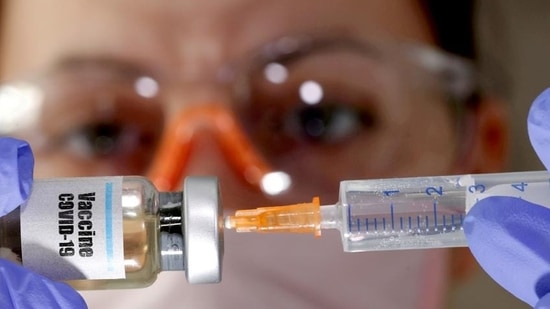
India has made remarkable progress in vaccinating people against Covid-19 since the beginning of the immunisation drive in January 2021. However, since September, when a free window for boosters was discontinued, it has faltered in this initiative. Although a large proportion of adults is yet to take boosters and a large share of teenagers is yet to get the second dose, the speed of vaccination has slowed. This comes even as there is a surge in some western countries (and
... which is strange because not everyone has got all three doses of the vaccine
The pace of vaccination would be low if most people were fully vaccinated. However, that is not the case. While most adults seem to have taken at least two doses of the vaccine, it is not the case with teenagers, who became eligible for two doses of vaccination in January this year. Those in the 12-18 age group currently average 1.30 doses compared to the average of 1.97 doses for adults (excluding boosters), according to data from the official Co-WIN dashboard.
What is the exact coverage of different doses across age groups? This is a statistic that is not published either on the Co-WIN dashboard or its API. However, it can be calculated from data published by the health ministry in a daily press release. The ministry stopped publishing this data from November 1. The October 31 press release shows that more than half of the 12-15 age group, around one-fourth of the 15-18 age group, and 8% of adults were yet to get their second dose. It means that 135 million people were yet to get their second dose at the end of October. In addition, more than 75% of adults, or 719 million people, were yet to get their booster shot. Since only 3.34 million doses have been administered since November 1, it is safe to assume that there has not been a major change in any of these numbers since.
Surge in cases in US, Europe and China can affect India if vaccination levels remain low
As HT had pointed out earlier (https://bit.ly/3iXLE5o), the poor uptake of vaccines is partly the result of complacency. This is understandable because new cases are low right now: an average of 193 in the week ending December 12. However, it does not mean the pandemic is over and vaccination is no longer required. Cases reached an all-time high in China at the end of last month, while several countries in Europe and the Americas are seeing a significant surge. The latest average of daily cases in countries such as the US, Italy, France, Germany, and others is around 8%-20% of the all-time peaks of these countries despite the peak festival season (Christmas) being some distance away. India’s vaccination drive cannot remain in a limbo if it wants to protect people from this surge reaching the country.
Apart from more booster coverage, India also needs to update its vaccine
An important thing to note about the surge in cases abroad is that this is happening even in countries with relatively better levels of vaccination. Why is this happening? A study published last week in Nature Medicine showed that boosters are not working well against new sub-variants (BQ.1.1 and XBB.1) of the Omicron variant, which caused the third wave in India earlier this year. Data from outbreak.info shows that the B.Q.1.1 is indeed the dominant strain in countries where a surge is taking place. India, which also samples fewer cases for sequencing, has not yet seen this sub-variant. Clearly, India needs to think about updating its vaccines for these sub-variants. At the very least, it must encourage people to get all their doses. In October, while this calculation was still possible, it had been nine months or longer since the last dose for at least a third of the eligible people. This is not going to protect sufficiently against the new sub-variants.