After having stayed above the upper limit of the Reserve Bank of India’s tolerance zone in May and June, retail inflation, as measured by the Consumer Price Index (CPI) eased to 5.6% in the month of July, largely on account of lower food prices.
The latest inflation numbers are on expected lines; a Bloomberg poll of 39 economists had given a median projection of 5.7%. The National Statistical Office (NSO) also released the Index of Industrial Production (IIP) numbers (a measure of factory output) for the month of June 2021, which indicated that industrial activity did not cross pre-pandemic levels in the first quarter of the current fiscal year.
While the latest inflation numbers offer a relief, experts believe that it is premature to discount the inflationary threat as spill-over from high fuel prices and firms passing on the increased input costs to consumers could generate fresh tailwinds for prices. The IIP performance in the June quarter has to be seen in the context of the disruption on account of the second wave of Covid-19 infections. However high-frequency indicators from July onwards offer a mixed picture of the prospects of economic recovery, even as the government maintains that a robust recovery is underway.
Food prices, which have a share of 39% in the average CPI basket, were the driving factor behind the moderation in inflation. While food inflation, in year-on-year terms, came down from 5.1% in June 2021 to 4% in July 2021, the non-food component of CPI moderated to just 6.7% in July compared to its last month’s value of 7%. Core inflation, which is the non-food, non-fuel component of the CPI basket, also showed stickiness, growing at 6.1% in July compared to 6.4% in June. July is the seventh consecutive month, when core inflation has ended up higher than the non-core component of CPI.
{{/usCountry}}Food prices, which have a share of 39% in the average CPI basket, were the driving factor behind the moderation in inflation. While food inflation, in year-on-year terms, came down from 5.1% in June 2021 to 4% in July 2021, the non-food component of CPI moderated to just 6.7% in July compared to its last month’s value of 7%. Core inflation, which is the non-food, non-fuel component of the CPI basket, also showed stickiness, growing at 6.1% in July compared to 6.4% in June. July is the seventh consecutive month, when core inflation has ended up higher than the non-core component of CPI.
{{/usCountry}}The Monetary Policy Committee of RBI projected inflation at 5.9% in the September quarter and 5.7% for the entire fiscal year.
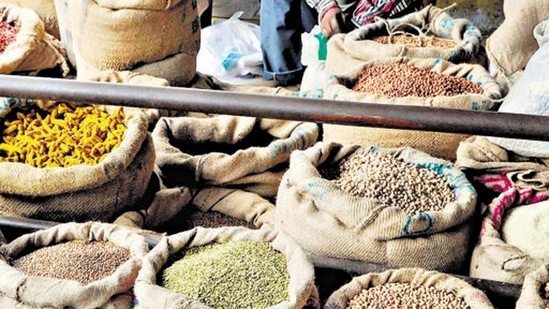
Headline numbers for food inflation need to be read carefully as they hide pressure and pain points in the food economy. Prices of both the cereals and products and vegetable sub-categories contracted for an unprecedented sixth consecutive month, even as edible oil prices continued to grow at more than 30% on a year-on-year basis for the third consecutive month. Pulse prices, too, grew at 9%. Cereals and vegetables constitute a majority of the domestic production basket, whereas India depends on imports for both pulses and edible oils. A contraction in the prices of major domestic crops and a rise in prices of imported edibles along with a faster increase in prices of non-food items is bound to put pressure on farm incomes, in turn dampening rural demand.
Given the fact that the June 2020 numbers for IIP were very low because of the 68-day lockdown, which was imposed from March 25 onwards, and there were significant restrictions this June because of the second wave of Covid-19 infections, the 13.6% year-on-year growth in June 2021 IIP is not a very useful metric of the extent of economic recovery.
What is certain, however, is the fact that factory output did not reach pre-pandemic levels in the April-June quarter of 2020-21. This is in keeping with a similar projection for the overall economy by RBI’s MPC in its latest meeting. IIP was at 130.4 in the quarter ending June 2019 and reached 121.8 in the quarter ending June . To be sure, it was at 137.4 in the March quarter, higher than the pre-pandemic value of 135.4 in the March 2019 quarter, but the second wave changed its trajectory.
“The latest inflation numbers hide the pain points for cereal and vegetable farmers. We will also see the cascading effects of higher fuel prices in the days to come. Unless there is a significant cut in fuel prices, inflation will continue to pose a threat to economic recovery,” said Himanshu, associate professor of economics at Jawaharlal Nehru University.