E-Paper



Interim budget: Health staff to be covered under govt scheme ambit
The allocation for the scheme has seen a jump of about 4% from ₹7,200 crore in the budget estimates of 2023-24 to ₹7,500 crore for 2024-25

 Prefer HTon Google


Health cover under the Ayushman Bharat-Pradhan Mantri Jan Arogya Yojna — the government’s flagship public health insurance scheme — will be extended to all ASHA workers, Anganwadi workers and helpers, Union finance minister Nirmala Sitharaman announced on Thursday.
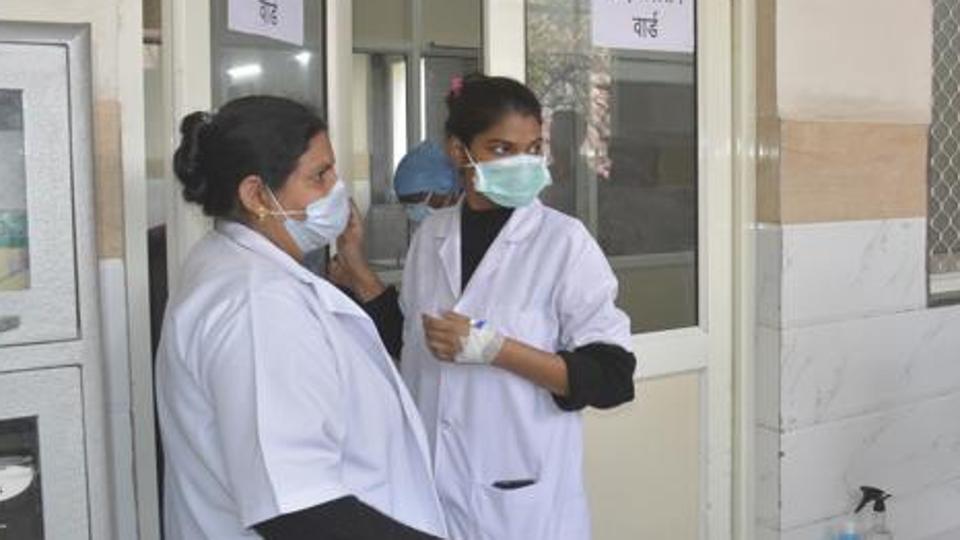
The allocation for the scheme has seen a jump of about 4% from ₹7,200 crore in the budget estimates of 2023-24 to ₹7,500 crore for 2024-25.
The scheme provides an annual cashless cover of ₹ 5 lakh for hospitalisation.
After the initial list of approximately 550 million beneficiaries identified from the poor and vulnerable category based on the Socio-Economic Caste Census, 2011, the Centre also expanded the database to include benefits under the scheme to the transgender community for general treatment and also gender reassignment surgeries last year.
Inclusion into the list of AB-PMJAY beneficiaries was a longstanding demand of front-line health care workers across the country.
“Thanking FM @NSitharaman Ji for announcing that healthcare cover under Ayushman Bharat scheme will be extended to all ASHA workers, all Aanganwadi workers, and helpers. #ViksitBharatBudget,” Union health minister Mansukh Mandaviya posted on X, soon after the budget announcement.
The finance minister also announced the government would encourage cervical cancer vaccination for girls in the age group of 9 to 14 years. The Centre has been considering the introduction of vaccination against cervical cancer in schools.
Experts said vaccinating young girls in the said age group is key to eliminating cervical cancer — one of the leading cancers in Indian women that is preventable. Human Papillomavirus (HPV) infection is now a well-established cause of cervical cancer, and HPV types 16 and 18 are responsible for about 70% of all cervical cancer cases worldwide. It has been established that the vaccines have the potential to reduce the incidence of cervical and other anogenital cancers.
“HPV vaccine aids in the primary prevention of cervical cancer which prevents the risk of HPV infection that causes cervical cancer. It’s most effective when given to adolescents between 9 to 14 years of age. Women between 27 to 45 years of age can get the HPV vaccine, however, getting it administered at these ages reduces the effectiveness of the vaccine and should be taken after proper consultation with a gynecologist. HPV Vaccines have a success rate of 88%. In India, we have an indigenous vaccine for cervical cancer, manufactured by Serum Institute of India priced at ₹2,200,” said Dr Rama Joshi, principal director, department of gynae-oncology, Fortis Hospital, Gurugram.
Adar Poonawalla, CEO, Serum Institute of India, wrote on X, “I applaud the Indian government’s announcement to vaccinate girls aged 9-14 against cervical cancer. Let’s pledge to prevent HPV and ensure easy access to vaccination.”
After doubling undergraduate medical seats to 100,000 by increasing the number of medical colleges to nearly 650 in the past 10 years, the Centre plans to raise the number further.
“Several youth are ambitious to get qualified as doctors. They aim to serve our people through improved health care services. Our government plans to set up more medical colleges by utilising the existing hospital infrastructure under various departments. A committee for this purpose will be set up to examine the issues and make relevant recommendations,” the finance minister said in her interim budget speech.
In addition, various schemes for maternal and child care will be brought under a comprehensive programme for synergy in implementation. Upgrade of anganwadi centres under Saksham Anganwadi and Poshan 2.0 will be expedited for improved nutrition delivery, early childhood care and development.
“The announcement of the central government to integrate various schemes for maternal and child care under one comprehensive programme will provide a more structured and cohesive approach to the host of programmes we have been driving so far. According to the National Family Health Survey-5 (2019-21), India’s infant mortality rate still accounts for over 27 deaths per 1,000 live births, while the maternal mortality rate stands at 52 deaths per 1 lakh live births. With this in consideration, such a comprehensive programme is the need of the hour,” said Dr Sachin Shah, director- neonatal and paediatric intensive care services, Surya Mother & Child Super Speciality Hospital.
The newly designed U-WIN platform for managing immunisation and intensified efforts of Mission Indradhanush will also be rolled out expeditiously throughout the country, said the finance minister.
The World Health Organization (WHO) lauded the announcements.
“ASHA workers, anganwadi workers, and helpers are at the forefront of health care delivery at the grassroots level. WHO applauds the extension of health care coverage to them under Ayushman Bharat. The initiatives announced today… will further strengthen systems and health care services across the country. WHO welcomes investments in these areas and will continue to support the Government of India in achieving health for all and meeting its disease elimination goals,” said Roderico H. Ofrin, WHO representative to India.