
 E-Paper



Jagannath temple reform triggers violent backlash in Puri, police stage flag march
Police used teargas shells and lathicharge to control the mob.

 Prefer HTon Google


Odisha police staged a flag march to restore order after violence rocked several parts of Puri during a bandh on Wednesday to oppose reforms ordered by the Supreme Court to streamline functioning of the Jagannath temple.
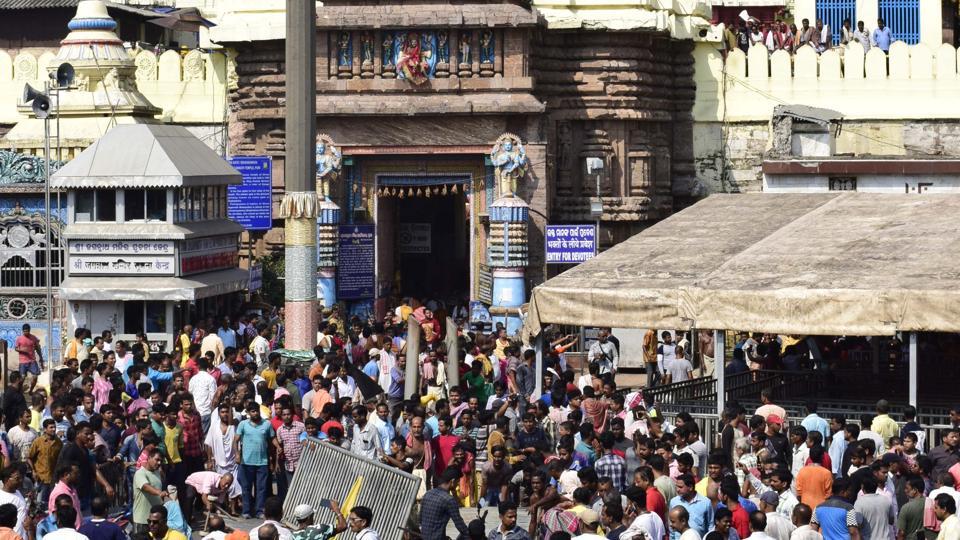
The police were caught unawares initially as protesters vandalised a police outpost outside the temple, pelted stones at the residence of the superintendent of police and ransacked two offices of temple and looted cash, electronic items, furniture and groceries. About 20 policemen were injured in stone-pelting and several barricades burnt in five hours of violence that began around 7:30 am, police said.
No one had been arrested till late Wednesday evening.
On Tuesday, the Odisha government has implemented the first step ordered by the apex court --- a queue -- for pilgrims as part of the action plan which was opposed by a local organisation Jagannath Sena, which called for Puri bandh.
Police used teargas shells and lathicharge to control the mob. “We were simply outnumbered by the protestors and our initial reluctance to use force emboldened them. But now the situation is under control,” said inspector general of police of central range, Soumendra Priyadarshi.
The police later conducted a flag march on the Grand Road to bring the situation under control.
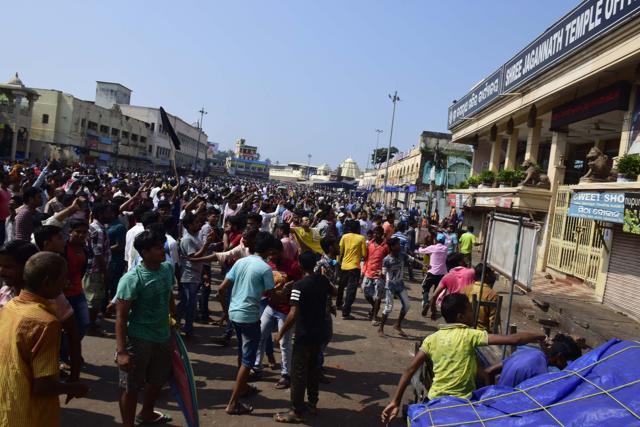
“Anyone who was involved in today’s violence would be taken to task,” Priyadarshi said.
Later in the evening a peace committee meeting between the district administration and priests decided that local devotees of Puri town won’t have to queue up and will be allowed entry to the temple through the other three gates after producing identity cards. However, people from rest of the country have to queue up, officials said.
The Odisha unit of the Congress blamed the BJD government for the violence.
“The violence in Puri was a result of incompetence, arrogance and mismanagement of the government,” Niranjan Patnaik, chief of the state unit of the Congress said.
The officials blamed anti-social elements and a section of the temple priests, who are likely to be affected by the orders of Supreme Court in June and July this year for major reforms in the temple governance for the violence, which happened 10 days after a visit by SC appointed amicus curiae Gopal Subramaniam.
“For me the most important are devotees and secondly transparency in accounting,” Subramanium had said.
The court has mooted 12 proposals for reforms in the temple saying the servitors will have no claim on offerings made by devotees and all collections must go the temple ‘Hundi’ following a petition in the apex court by Cuttack-based lawyer Mrinalini Padhi. This included a barricaded queue system for devotees from entrance itself, end to donation to priests and transparency in temple management. While there is consensus on nine proposals out of the 12 suggested by the Supreme Court, there was disagreement on the rest, government officials said.
“Resentment is over this (queue system) as it is an undemocratic process,” Binayak Das Mohapatra, head of Chhatisa Nijog, a powerful body of the temple priests. He also warned that thousands of devotees will forcibly enter the temple through the three others terming the process a ‘step against the tradition’.
Priyadarshan Patnaik of Jagannath Sena that spearheaded the protests said: “We are ready to die for Lord Jagannath and the protest will continue.” Puri district collector Jyoti Prakash Das, however, said the queue system was purely experimental and is subject to reviewed so that devotees do not face problems. “But the violence over it can never be justified,” he said.


