
 E-Paper



Jaishankar says he is a 'townhall' person, not mass communicator like Modi, Amit Shah
Jaishankar spoke to HT and shared his experience of campaigning for the election as the external affairs minister.

 Prefer HTon Google


Talking about his participation in the election campaign as he addressed many seminars and delivered many talks on the Modi government's foreign policies amid the ongoing election, external affairs minister S Jaishankar said he is more comfortable in doing townhall kind of things. In an exclusive interview with Hindustan Times, he also busted the myth that foreign policies do not matter in elections as he said everywhere he goes, he is asked a set of questions on foreign policy.
The line between foreign and domestic policy has got blurred, Jaishankar said explaining that India buying Russian oil is a matter of foreign policy but the consumer is the people of the country who will pay at the petrol pump and thus it becomes a domestic policy.
Jaishankar reveals real story behind 'Modi ji ne war rukva di papa'
"I find it very interesting because when I have gone to about nine or 10 states during the elections, I almost invariably get a set of questions on foreign policy. So I think somewhere it has seeped into people’s consciousness. What has seeped into it? One, a sense of pride about where Prime Minister Narendra Modi has taken the country. Two, an understanding that some danger outside, it could be a pandemic, it could be terrorism, will not stay outside, and will come home. So it’s very interesting. If you look at the BJP manifesto, I think we have given much more space to foreign policy than we have ever given before," Jaishankar said.
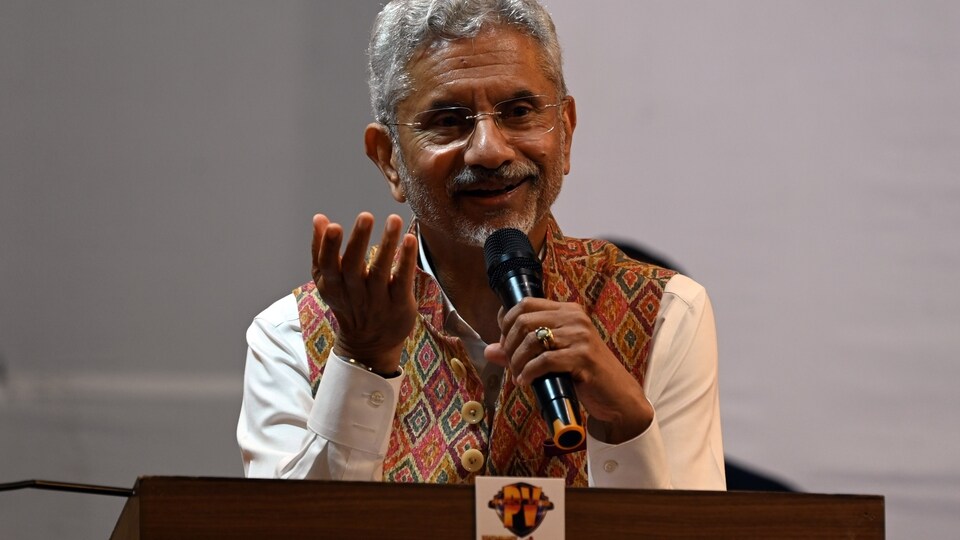
On his active participation in the election campaign, he said different people have different styles of communication. While Narendra Modi and Amit Shah are extraordinary in mass communication, Jaishankar said he finds himself comfortable in townhall type of addresses. "I find I am much more comfortable and much more effective in doing more of a town hall kind of thing. Sure, town halls can be pretty big. I did one in Mumbai, a day before yesterday, there must have been about 2,000 people," Jaishankar said.
"Since I became a minister, I have actually spent a lot of my time talking to young people. So, in that sense, a lot of their concerns and interests have been absorbed over the last five years. I find young people are actually very, very taken with what they believe is greater respect today for India at the world stage. They are fascinated. You have no idea how many times this Ukraine issue has come up. And sometimes, I actually talk to them about other operations. You know we did a very risky operation in Sudan. Our embassy was actually physically occupied by one of the combatant sides. I tell them how for example we organised oxygen supply, the kind of effort we made abroad or how you know there was a time when the US had put a ban on any vaccine ingredients going out…, how we persuaded the US. I think it’s good to see that sense of nationalism in young people because often when I travel out, my peer group ministers, they don’t have that same degree of optimism in their societies," Jaishankar added.


