Lawyers play a crucial role in shaping constitutional discourse, justice Bhushan R Gavai said on Friday as he recalled how the Constitution guided the personal and professional life of distinguished legal luminary, Fali S Nariman, in all respects.
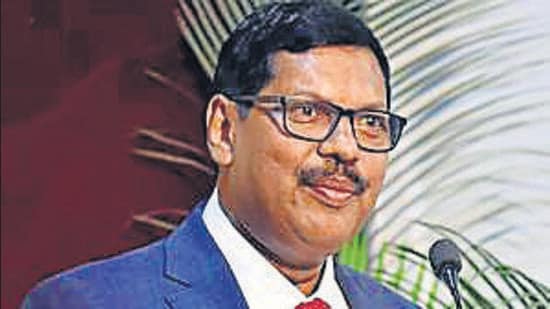
Delivering the first Fali S Nariman memorial lecture organised by the Bombay Bar Association and the Advocates Association of Western India, justice Gavai said, “He (Nariman) embraced the Constitution not just as a legal framework but as a living document that guided his personal values, professional ethics, and advocacy.”
Recalling the judgments which bear the imprint of his rare intellect and steadfastness to Constitutional principles of liberty, equality and fraternity, the senior most judge of the Supreme Court noted that even outside court, Nariman remained steadfast to these principles as he remained a “prominent voice in public discourse”, unafraid to express his candid opinions and openly voicing critical views against judgments of the top court.
Speaking on the topic “Fali Nariman’s Role in Shaping Constitutional Jurisprudence”, justice Gavai said, “Dr Ambedkar’s visionary leadership and understanding of justice laid the foundation for a democratic India, ensuring that the principles of equality, liberty, and fraternity were enshrined in our Constitution. In a similar vein, Mr Nariman, through his exemplary contributions to the legal profession and his steadfast commitment to justice, expanded and deepened the values of the Constitution.”
Friday marked the death anniversary of Babasaheb Ambedkar.
{{/usCountry}}Friday marked the death anniversary of Babasaheb Ambedkar.
{{/usCountry}}Stating that Nariman was a relentless advocate for the rule of law, a custodian of constitutional values and a defender of justice, he said, “His deep knowledge, sharp intellect, and unwavering integrity earned him the admiration and respect of countless legal minds, both in India and beyond.”
Though the annals of judicial history are studded with decisions argued and assisted by Nariman, justice Gavai gave two instances of how Nariman embodied the spirit of Constitution.
In 1975, when Emergency was imposed, Nariman resigned as additional solicitor general (ASG) and criticized the ADM Jabalpur judgment of 1976 which upheld the suspension of fundamental rights during Emergency. Later in 2018, during the hearing of a water sharing dispute between Karnataka and Tamil Nadu, Nariman refused to appear for Karnataka which did not follow the order of the court to release 6000 cusecs of water.
By appearing for the Union Carbide in the Bhopal Gas tragedy, for which he faced criticism, he maintained that every party, regardless of their actions, deserves representation to ensure a fair trial, said justice Gavai.
Nariman firmly entrenched the doctrine of basic structure in India’s constitutional jurisprudence, which serves as a safeguard against majoritarian tyranny, ensuring the protection of the Constitution by preserving its core features, the judge said.
He remained a staunch advocate for the independence of the judiciary by contributing to the decisions that developed the Collegium system and argued against the NJAC brought by Parliament to replace the Collegium, reinforcing the principle primacy of the Chief Justice of India is central to judicial appointments.
Laying the human rights jurisprudence for the courts, Nariman played a sterling role as amicus curiae in the Vishaka judgment filling the legal vacuum to provide safe working place for women against sexual harassment. He championed for personal liberty, secularism and minority rights, and helped the cause of children whose education and childhood were jeopardised on the basis of their faith.
“What courts can and cannot achieve is not solely the product of judicial deliberation...Lawyers play a crucial role in shaping constitutional discourse. Lawyers contribute to society not merely by interpreting the law but by ensuring that justice is accessible to all segments of society, particularly the poor and marginalised,” justice Gavai said.