Kerala’s worst floods in close to a century left hundreds of people dead, displaced over a million, and caused unprecedented loss of property worth billion of rupees in less than a fortnight. Though excessive rains filled the dams, experts blamed poor water flow management from the reservoirs for the inundation of the coastal state and many parts of the southern India. It is not for the first time that this has happened.
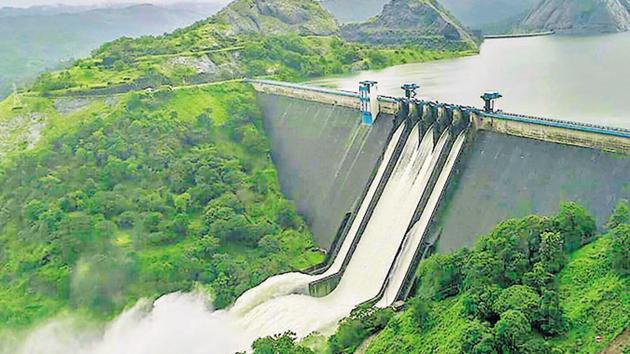
A Comptroller and Auditor General report submitted in Tamil Nadu Assembly in 2016 squarely blamed the unwarranted release of 29,000 cusecs of water for 21 hours in December 2015, in violation of dam safety norms, for flooding in Chennai. The report said the floods could have been avoided had the Public Works Department followed the Central Water Commission guidelines on regulated water release from the three water tanks upstream of the city.
In hindsight, water experts are saying that the intensity of Kerala floods could have been reduced if the water from 35 big dams in Kerala was released much earlier. Kerala blamed neighbouring Tamil Nadu for the floods in the Supreme Court on Friday, saying the gates of Mullaperiyar dam were suddenly opened without any warning, a claim denied by Tamil Nadu government.
What has happened in Kerala poses a bigger question regarding flood management in India considering that around 15% of India’s land mass is prone to floods, with an average of 1,548 people losing their lives and around eight million hectares getting affected, causing loss of about ₹5,628 crore every year. The 5,254 dams in India are an integral part of flood management, apart from storing water for irrigation and generating power.
{{/usCountry}}What has happened in Kerala poses a bigger question regarding flood management in India considering that around 15% of India’s land mass is prone to floods, with an average of 1,548 people losing their lives and around eight million hectares getting affected, causing loss of about ₹5,628 crore every year. The 5,254 dams in India are an integral part of flood management, apart from storing water for irrigation and generating power.
{{/usCountry}}
The 2017 CAG report submitted in Parliament presented an insight on what is wrong with India’s flood management plan. Of the 219 proposed new telemetry stations, used to forecast floods, only a quarter were set-up till August 2016. Of the 375 existing stations, almost 60% were non-functional after installation, the report said.
“Flood forecasting data was used in the formulation of flood forecast only after comparing the telemetry data with manually observed data; and in the case of mismatch between the two sets of data, manual data was adopted,” the CAG report said, pulling up CWC for not depending on telemetry data even after investing in modernisation for nearly 20 years.
The report also said that there is an emergency action plan for only 7% of the dams in India. For the 61 in Kerala, there is none. In eight out of 17 flood-prone states, the integrated flood management plans for entire river/basin have not been taken up, the report said.
The auditor also said that frequent check of dams before and after monsoon happened in only two -- Bihar and Odisha -- of the 17 two states in recent years.
Madhavan Nair Rajeevan, secretary in the ministry of earth sciences, admitted earlier this week that there was poor flood management system in India.
“As per my understanding, no big reservoir has a decision support system. So we don’t know when to open gates and how to open them…There is a common perception that in India most of the flood management systems are not supported by science. I am very sure we don’t have a decision support system and we need it,” he had said.
AK Gosain, professor emeritus at Indian Institute of Technology (IIT), Delhi, agreed with him and said dam management in India works on the principle that at end of the monsoon the reservoirs should be full. “The tendency is not to release water till the last go and this is what has happened in Kerala,” he said.
Himanshu Thakkar of the South Asia Network of Dams, Rivers and People said the reason for this tendency was that most of the big dams in India are run by the power generation companies, who are unwilling to reduce water level beyond a limit as it can impact power generation. In Kerala, the water level in the big dams is monitored by Kerala State Electricity Board.
Experts say the flooding in downstream areas can be better managed if the India Meteorological Department’s 72-hour forecast is used to create simulation models for water release. Gujarat and Odisha governments use the IMD’s forecast to release water slowing from the dams on Tapi and Mahanadi rivers respectively, helping the two states manage floods. Despite Gujarat receiving substantial rainfall in 2017, Surat city on the Tapi river was not flooded