
 E-Paper



Krishna, who rode risks to superstardom
The death of Ghattamaneni Krishna in the early hours of Tuesday brought to an end an era in Tollywood. He was, perhaps, the last representative of a generation in the Telugu film industry that stood for commitment, dedication and discipline.


The death of Ghattamaneni Krishna in the early hours of Tuesday brought to an end an era in Tollywood. He was, perhaps, the last representative of a generation in the Telugu film industry that stood for commitment, dedication and discipline.
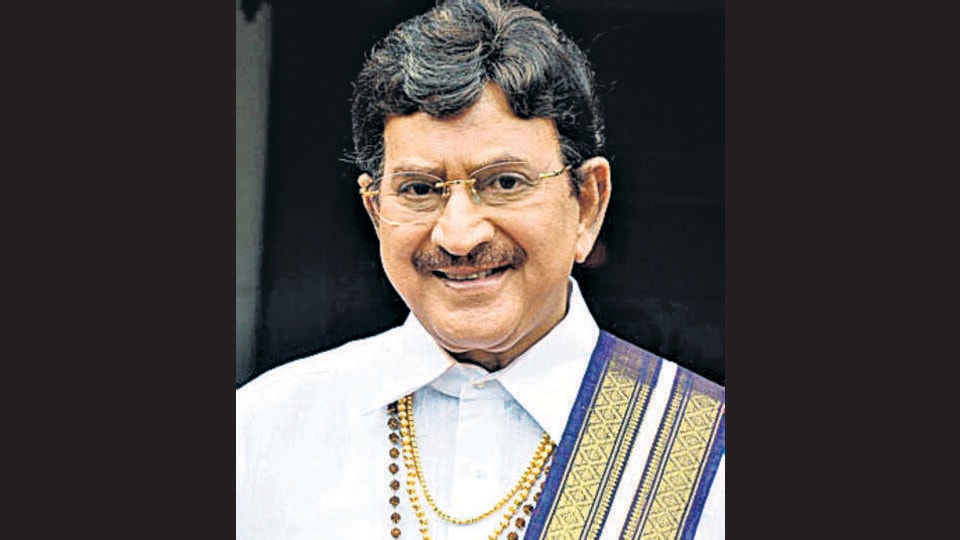
Known to legions of his fans as Superstar, he was not just an actor but also a trendsetter — as a director, producer and promoter of a film studio in Hyderabad. Above all, he was a good human being who never hesitated to help his co-stars when they were in crisis.
A Padma Bhushan recipient, Krishna was not afraid of taking risks. At a time when nobody dared to enter the dense forests of Visakhapatnam, Krishna spent several days along with his crew in the woods, braving threats from Maoists and wild animals to produce his 1974 magnum opus Alluri Sitarama Raju, a biopic on the revolutionary freedom fighter. He travelled to all the places where Sitarama Raju fought a guerrilla war against the British to make the biopic more realistic.
Similarly, when Krishna produced the 1977 movie Kurukshetram, based on the Mahabharata, he took the crew — along with elephants, horses, camels and chariots — to Kurukshetra in Haryana to shoot the war scenes. His experiments in the film at a time of no computer-generated graphics were unparalleled in the Telugu industry.
In fact, the making of Kurukshetram was considered risky because simultaneously, legendary actor NT Rama Rao was producing Dana Veera Shura Karna, also based on the Mahabharata with focus on the character of Karna. NTR’s film was a bigger hit at the box office but when it came to technical brilliance, Kurukshetram was far superior.
Another example of Krishna’s penchant for risk-taking was the remake of Bengali classic Devdas. At the time, no one could imagine touching the story again because the classic had already been made in multiple languages. In Telugu too, the film Devadasu was made in 1953 with Akkineni Nageshwara Rao and was an all-time hit. Yet, Krishna showed gumption to go ahead with the same story; though his film was not a commercial success, it stands testimony to his taste for good stories and his iconic portrayals.
It was Krishna who introduced James Bond to the Telugu film industry. His 1971 film Mosagallaku Mosagadu in which he played a cowboy-type character on the lines of Mackenna’s Gold, is considered a masterpiece and set the trend in this genre. Large parts of this film were shot in the Thar Desert, where he again took a large contingent of actors and crew members.
It was again Krishna who introduced 70mm lens and cinemascope technology to Tollywood and pioneered Dolby sound technology. He never hesitated to spend money for new technologies and this helped his films stand out.
Though he forayed into politics by getting elected as an MP from Eluru in 1989, it was brief. After the death of former Prime Minister Rajiv Gandhi, he quietly withdrew and never made any political comments, though his son-in-law Jayadev Galla, is a Telugu Desam MP from Guntur, and his brother Ghattamaneni Adi Seshagiri Rao was in YSR Congress party. In a landscape crowded with political filmstars, he preferred to be known for his craft alone.
Krishna was never considered a failure, despite some of his films tanking at the box office. He always remained non-controversial. All his children are self-made in whatever field they chose. He lost his son Ramesh Babu in January this year and his wife Indira in September.
(VSN Murthy is a popular film critic in Telugu film industry)


