
 E-Paper



Ladakh Councillor says nomads had no access to grazing land
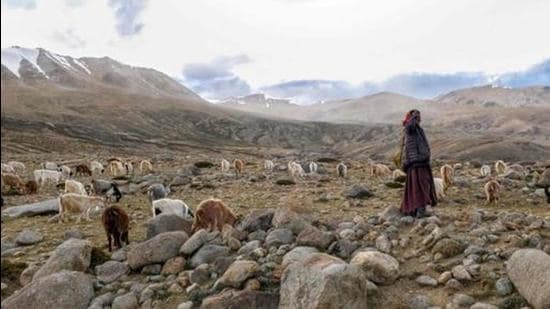
Speaking to HT from Ladakh on Tuesday, Stanzin said, after a long time nomads on their own initiative had decided to take their flock to grazing lands in Khu-la and other areas, but faced restrictions from the Indian side


Konchok Stanzin, councillor from the Chushul constituency in Ladakh, has expressed concern that owing to tension between India and China along the Line of Actual Control, normalcy is yet to return to the Union Territory and has affected the movement of nomads to traditional grazing lands.
India and China have been locked in a border row for over 16 months, a phase that witnessed a deadly skirmish in the Galwan Valley and saw tensions spiral between the rival armies on the north and south banks of Pangong Tso last year.
Speaking to HT from Ladakh on Tuesday, Stanzin said, after a long time nomads on their own initiative had decided to take their flock to grazing lands in Khu-la and other areas, but faced restrictions from the Indian side.
“Ideally the government should take steps to help the nomads in providing access to grazing lands, take steps for border area development. This year after a gap of 8-10 years the nomads on their own decided to take their yaks to Khu-la and tsogtsalu but they could not reach the areas that are their traditional grounds. This indicates that despite the disengagement things are still not normal on the ground,” he said.
Also Read | Why military has sought more time to induct women into NDA
He said allowing the nomads unfettered access to their traditional grazing lands also ensures that the land parcels are not reduced on account of border dispute.
“It (going to grazing lands) was purely an initiative by the villagers of Phobrang, Yourgo and Lukung village. Because nomads play an important role in guarding the border, they work as both ear and eyes to the nation,” he said.
Officials in the army headquarters declined to comment on the matter. The two armies kicked off talks to cool border tensions in June 2020.
Disengagement has taken place in the Pangong Tso sector and Gogra or Patrolling Point-17A.
But problems at Hot Springs and Depsang are yet to be resolved. To be sure, the problems at Depsang predate the current border standoff.
Both armies have 50,000 to 60,000 troops each in the Ladakh theatre and the deployments haven’t thinned after the disengagement in the Pangong Tso sector and PP-17A.


