E-Paper



Lawyers withdraw consent amid delays over Supreme Court collegium recommendation
There has been a growing sense of frustration within the legal community over a lack of transparency and arbitrary delays in judicial appointments

 Prefer HTon Google


Even as the Union government continues to delay decisions on names recommended by the Supreme Court collegium for high court appointments, two advocates, Rajesh Sudhakar Datar and Shwetasree Majumdar, have withdrawn their consent for elevation, citing silence and inaction that have left several others in a similar limbo.
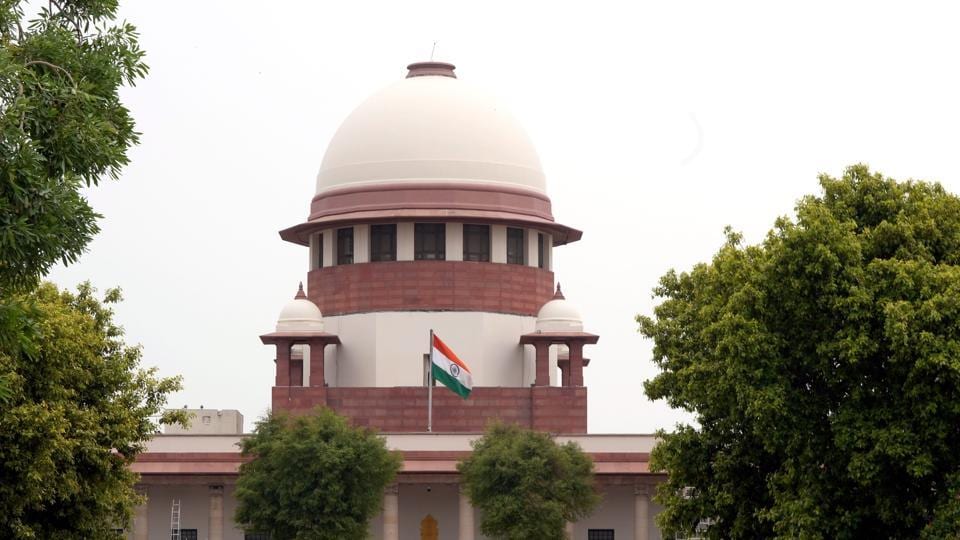
Their decisions mark a growing sense of frustration within the legal community over a lack of transparency and arbitrary delays in judicial appointments, as at least 27 other advocates, including four women, await action from the Centre despite being recommended by the collegium between January 2023 and April 2025.
Advocate Datar, a senior civil and commercial litigation lawyer in Mumbai, was recommended for elevation to the Bombay High Court on September 24, 2024, alongside three others. While the Centre cleared the names of Gautam Ankhad and Mahendra Nerlikar, who took oath on July 4, and notified Sachin Deshmukh’s appointment in May, Datar’s file remained untouched for over nine months.
“The consent form was given to me on April 5, 2024, by the then chief justice of the Bombay high court. In September, the Supreme Court collegium recommended four names including mine. The others, all junior to me, have been elevated,” Datar said. “It has been nine months. There has been no word, no explanation. So, I decided to withdraw. It is for the sake of my own self-respect, and for the respect of the entire bar.”
He submitted his withdrawal letter on July 5, a day after justices Ankhad and Nerlikar were sworn in, ending a wait that he said compromised his dignity and professional standing. “I was surprised when my name came up. I had not lobbied or met anyone. At 55, I knew I would have a short tenure even if appointed. But I said yes because we owe this to the profession. It is our duty to accept judgeship if offered. But now, there is no point in continuing with my consent,” Datar said.
A few days earlier, advocate Shwetasree Majumdar, a well-known intellectual property rights lawyer, also withdrew her consent. Recommended for elevation to the Delhi high court in August 2024, her name was held back by the Centre despite being medically examined alongside Tejas Karia, whose appointment was cleared on February 12.
“Yes, it’s correct [medical examination]…however, I have no additional comments to make at this point,” Majumdar said, confirming her withdrawal. Asked about the delay, she said: “I can confirm that my medical happened and can offer no insight on what transpired thereafter. Having withdrawn my consent, it would be inappropriate on my part to say anything further on the subject.”
Karia’s, as well as the names of Ajay Digpaul and Harish Vaidyanathan Shankar, all part of the same batch, were cleared by the Centre earlier this year.
The stalled appointments have sparked concern over the opacity of the judicial appointments process, which is increasingly marked by the Centre’s “pick-and-choose” approach. The case of senior advocate Saurabh Kirpal, whose appointment as a Delhi high court judge has been pending since 2021 due to objections raised over his sexual orientation and the nationality of his partner, has already underscored the executive’s long shadow on judicial independence.
“It is not just about judicial appointments. The Bar can stand up to several other issues, too, such as transfers and how courts are run. But either the Bar Council of India is too committed to the course of the government, or it is too scared,” said Kirpal, expressing dismay at the silence from the wider legal community.
“The Bar is reflecting what society too has been going through. Our tolerance for violations has been chipped away, bit by bit. Expectations have dropped. Breaches that should outrage us have become routine. The Bar hasn’t stood up to several critical issues because it no longer sees itself as a participant in the justice process. It has become political,” he added.
Despite the delays, Kirpal maintains he will not withdraw his consent: “I have to act on my conscience. When it comes to appointments, it is not just about two participants, the collegium and the government, but also the courts. And if the courts aren’t doing anything, what can anyone else do?”
Datar and Majumdar join a growing list of lawyers who have waited in vain. Among them is advocate Ramaswamy Neelakandan, whose name was recommended in January 2023, along with four others. While the others were appointed in February last year, Neelakandan, an OBC lawyer, is still waiting.
So is Siddhartha Sah, whose name was recommended in October 2023, for appointment to the Uttarakhand High Court, and Arun Kumar, recommended in May 2023, for the Allahabad high court. Advocate Amit Seth, whose name was sent to the government in October 2023, remains the only pending case out of a five-member list for the Madhya Pradesh high court.
Of the 27 advocates still awaiting their warrants of appointment, four are women -- Shamima Jahan (Gauhati HC, January 2024), Sreeja Vijayalakshmi (April 2024), Tajal Vashi (Gujarat HC, October 2024), and Sheetal Mirdha (Rajasthan HC, March 2025).
In stark contrast, the government has acted with remarkable speed in clearing appointments to the Supreme Court. Justices NV Anjaria, Vijay Bishnoi, and AS Chandurkar were recommended by the collegium on May 26 and took oath as Supreme Court judges just four days later, on May 30.
On the same day, the collegium had also recommended the appointment of chief justices to five high courts, the transfer of four high court chief justices, and the repatriation or transfer of 22 high court judges. These decisions still await government action over a month later.
On July 3, the Supreme Court collegium cleared a record 36 names for elevation as high court judges , following its unprecedented two-day marathon of personal interviews with 54 candidates earlier this week. The names cleared are for appointments across several high courts, including those in Delhi, Punjab and Haryana, Madhya Pradesh, Telangana, Patna, Andhra Pradesh, and Rajasthan, among others. As of July 1, there are 371 vacancies against the sanctioned strength of 1,122 across the 25 high courts in the country.
Notably, as reported first by HT on June 19, Chief Justice of India Bhushan R Gavai has conveyed to the Union government that it should refrain from selectively acting on collegium recommendations, emphasising that appointments and transfers should not be cleared in instalments or by segregating names. According to people familiar with the matter, Justice Gavai issued this message after presiding over his first collegium meeting on May 26, which recommended a sweeping overhaul of key judicial positions across the country.