E-Paper



Madhya Pradesh HC denies bail to doctor Praveen Soni in cough syrup death case
MP high court’s Jabalpur bench cites DEG contamination, 26 child deaths and alleged commission in rejecting bail of doctor in Coldrif cough syrup case

 Prefer HTon Google


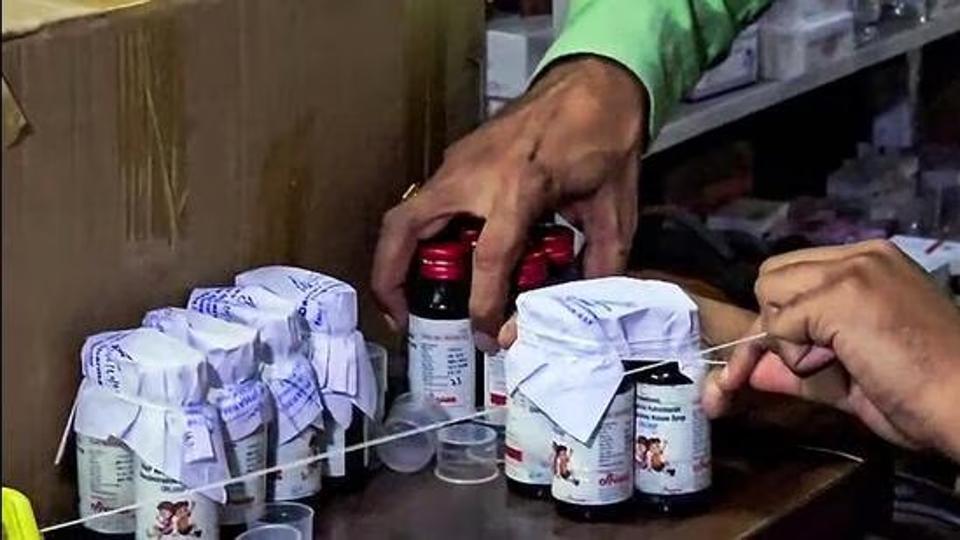
Jabalpur: The Madhya Pradesh high court’s Jabalpur bench on Tuesday dismissed the bail plea of paediatrician Praveen Soni, who was arrested last October for allegedly continuing to prescribe Coldrif — the cough syrup linked to at least 17 deaths in Madhya Pradesh and four in Rajasthan.
A single bench of Justice Pramod Agrawal said, “The trial court shall proceed with the matter uninfluenced by any observations made by this court and shall decide the case strictly in accordance with law.”
The order said, “Despite the conversation between the child specialist Praveen Khapekar and Soni, in which Khapekar informed him that 33 children died in Delhi in 1998 due to DEG-contaminated cough syrup and that a similar reaction might occur this time, Soni continued to prescribe the cough syrup. This resulted in the deaths of over 26 innocent children under the age of four or five, causing widespread harm to public health. Furthermore, Soni allegedly received a commission for prescribing the cough syrup and co-accused individuals destroyed evidence related to the syrup to protect the applicant (doctor).”
The order concluded that this was not a suitable case to grant bail to the applicant.
Soni, who was posted at the Civil Hospital in Parasia in Chhindwara district, was arrested on October 5 under Bharatiya Nyaya Sanhita (BNS) Sections 276 (adulteration of drugs) and 105 (culpable homicide not amounting to murder), and relevant sections of the Drugs and Cosmetics Act, 1940 (for brevity, “Act of 1940”), based on a complaint lodged by Ankit Sehlam, block medical officer of Parasiya.
“Despite the death of a child on September 4, he continued prescribing the dangerous cough syrup to children, including those under four years of age, for whom the syrup was prohibited,” Sehlam alleged.
The first child death linked to Coldrif was reported in Chhindwara on September 4, but the syrup continued to be prescribed. As more cases emerged across multiple states, health authorities launched a broader investigation. Laboratory tests revealed that the syrup contained diethylene glycol (DEG) — a toxic industrial solvent — in alarmingly high concentrations. DEG is commonly used in products like brake fluid and antifreeze and, when consumed, can cause acute kidney failure/Acute Tubular Necrosis (ATN) and death within 24 hours. Madhya Pradesh, Kerala, Tamil Nadu, Karnataka, Rajasthan and Telangana have now banned the sale of Coldrif.
While the permissible limit for DEG in medicines is just 0.1%, government laboratory and drug department reports of Coldrif samples collected from shops in Chhindwara, where the deaths took place, showed up to 46.2% of the chemical.
Some of the children allegedly died after being referred to a medical college hospital in Nagpur, Maharashtra. The medicine was allegedly sold by co-accused Jyoti Soni, who was working at Apna Medical Store, owned by her husband, Praveen Soni.
Jyoti Soni allegedly sold “Coldriff Syrup” without a prescription. It is further submitted that when Soni prescribed the alleged cough syrup, he received a 10% commission on each bottle and the co-accused gained a profit of ₹23 per bottle. Hence, the couple allegedly received commission and profit from prescribing and selling the cough syrup. They were allegedly in collusion and each received commission/profit as per his or her respective role.