The press must exercise restraint when reporting on suicides, and electronic media should follow Press Council of India (PCI) guidelines until a separate framework for television news channels is created, the Bombay high court said on Monday, criticising media coverage of the Sushant Singh Rajput case.
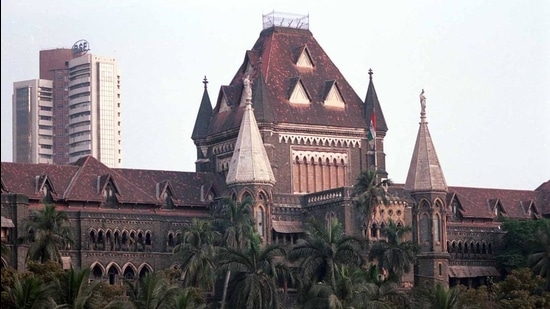
A division bench of chief justice Dipankar Datta and justice Girish Kulkarni was hearing public interest litigation filed by eight former Indian Police Service (IPS) officers from Maharashtra, as well as activists, lawyers and non-government organisations (NGOs). The court accepted their contention that certain news channels violated the programme code while reporting on Rajput, who died by suicide on June 14, and their acts were punishable under the Contempt of Court Act. The bench, however, refrained from taking suo-motu (on its own) action against the channels and left it to the authorities.
“No report/discussion/debate/interview should be presented by the press/media which could harm the interests of the accused being investigated or a witness in the case or any such person who may be relevant for any investigation, with a view to satiate the thirst of stealing a march over competitors in the field of reporting,” the bench held.
The court also said until there is a mechanism to regulate electronic media, TV channels should follow PCI guidelines on reporting on suicides, and sensitive cases. “Media should observe restraint in discussions about an ongoing investigation so as not to prejudice the rights of the accused and witness,” the high court said.
{{/usCountry}}The court also said until there is a mechanism to regulate electronic media, TV channels should follow PCI guidelines on reporting on suicides, and sensitive cases. “Media should observe restraint in discussions about an ongoing investigation so as not to prejudice the rights of the accused and witness,” the high court said.
{{/usCountry}}Currently, PCI rules are applicable to print media, while electronic media is regulated by the News Broadcasters Association and News Broadcasting Standards Authority under the guidance of the information and broadcasting ministry. The bench said until the rules are framed, channels should refrain from posting photographs of victims and accused and reconstructing the scene of incident as it would violate the rights of individuals.
“Media trial leads to interference and obstruction to administration of justice and violates programme code under the Cable TV Networks (Regulation) Act,” the bench said. “Any reportage has to be in accordance with the norms of journalistic standards and ethics, else media houses stand to face contempt action,” it added.
Rajput was found dead in his Mumbai flat on June 14. His death triggered frenzied media coverage that culminated in several central agencies investigating the case and the arrest of his then girlfriend Rhea Chakraborty.
The bench said media trials ran counter to the programme code framed under the Cable Television Networks (Regulation) Act, and said the right of freedom of speech should not violate the right of an individual by resorting to malicious reporting. The petitioners suggested that Mumbai Police appoint an officer to act as a link between the media and investigators. The HC accepted it.