E-Paper



2 months later, no one able to douse raging Manipur fire
The clashes between the Meitei community and the tribal Kuki, have left 122 dead, over 310 injured, and over 50,000 displaced from their homes.

 Prefer HTon Google


For two whole months, Manipur has been on fire. The ethnic violence began on May 3, and has continued sporadically. Gunshots still often rent the air. Wisps of smoke from villages set ablaze still mingle with the night sky. And hospitals still get a steady stream of those that are injured, or worse, dead.
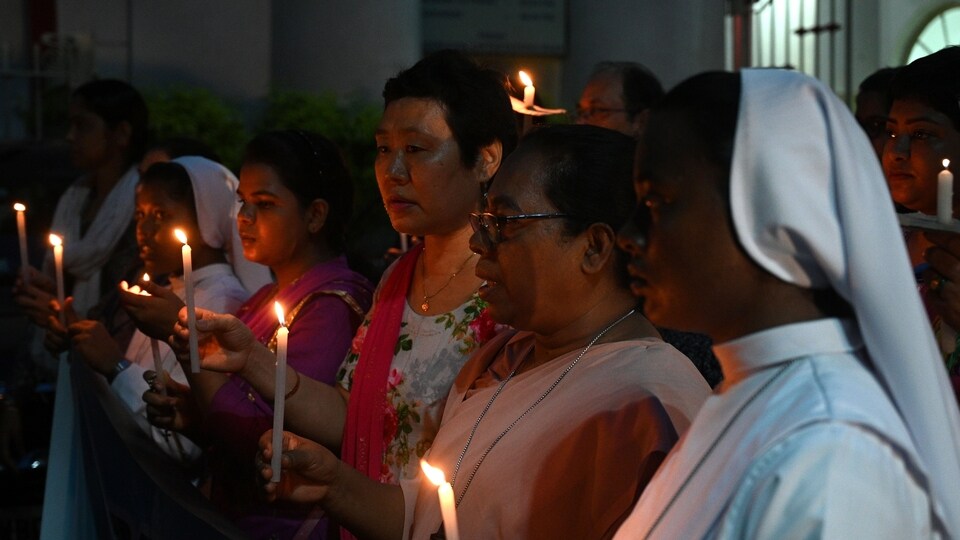
Overall, the clashes between the Meitei, the dominant community in Manipur accounting for 53% of the population, and the tribal Kuki, have left 122 dead, over 310 injured, and over 50,000 displaced from their homes. For 62 days, the state and central governments have tried a plethora of steps to mitigate a spiraling situation. The Indian Army was called in on May 4, as were scores of paramilitary personnel. The Union home minister went on a three-day trip even if the Prime Minister hasn’t, and announced the formation of a judicial commission and an investigation into the violence by the Central Bureau of Investigation. There have been attempts at the creation of a peace committee, and a slew of relief measures — from camps to compensation.
Yet, nothing has worked.
Every pillar of the state — the army, the police, the administration, and the political class — has been unable to deliver, stymied by an extraordinary set of circumstances, failing to do even their most basic roles.
In conversations with stakeholders conducted two months, HT pieces together accounts from representatives of these organs of the state, of the scale and peculiarity of the crisis, and the factors behind the anarchy Manipur has descended into.
ARMY AND PARAMILITARY FORCES
The biggest problem the army, the Assam Rifles, and other paramilitary forces have faced is disinformation — this, despite a controversial ban on data services including broadband that has been in force since May 3. On June 5, for instance, the Indian Army was forced to issue a statement on the circulation of a video that claimed that there had been clashes between the 37th battalion of the Assam Rifles and personnel of the Manipur Police that left one person dead. The video riled local communities; it showed people in olive green carrying some injured, and trying to revive others on the ground. The video, however, was of an Indian Army training exercise held in Punjab in 2021. “This is yet another failed attempt by inimical elements to build hate against those at the forefront of preventing violence,” Lt Col Amit Shukla, PRO (defence), Kohima, said.
Army officials said that they have been dealing with a “synergized malicious campaign”, battling rumours that they are not “impartial” in the discharge of their duties. On June 1, the army was forced to issue a statement that denounced a viral message on social media that gave out the personal details of army personnel of a particular community posted in Manipur, casting aspersions on the loyalty of these officers “to the nation”. “All ranks of the Indian Army are race, caste, creed and gender agnostic — fair to all and fear none... the post is an attempt to undermine an institution that is a microcosm of the nation and has never let regional biases interfere in its functioning,” the statement said.
Importantly, the armed forces are often drawn into shoot-outs with insurgents and large mobs that are heavily armed with sophisticated weapons. Since the beginning of the violence, the targeted looting of armouries has been a huge concern with the most conservative estimate of looted arms and ammunition pegged at 4,000 weapons and over 500,000 pieces of ammunition. In fact, the first speech to the public by the state police by former DGP P Doungel on May 5, pleaded for looted weapons to be returned. Thus far, state police officials say only around 1,100 weapons and close to 14,000 rounds of ammunition have been recovered.
Then, there is the issue of mobs blocking operations.
On June 26, the Indian Army released an unprecedented video, showing videos of large groups of protesters, largely led by women of both communities, that were hampering operations. The video characterised the actions of the women protesters, often brought to sensitive spots in vehicles, as deliberate and inimical to restoring normalcy. On June 13, for instance, the Indian Army said that a large mob of women preventing them from reaching villages in Kangpokpi and Yaigankpoki where armed miscreants fired from automatic weapons in nine villages over three days, leaving nine people dead.
Army personnel said that the force had not been able to function “as it normally does” because they hadn’t been given a “free hand”. “We find ourselves in a rare situation where we are not allowed to function freely and have to report to a unified command which is headed by an IPS officer who was earlier head of CRPF. On top of that, we are receiving flak for the continuance of violence and have been accused of taking sides. This has affected morale of both officers and jawans. But over the past week, things are getting better,” said one army officer who asked not to be named.
THE POLICE
Senior police officers said that right from when the violence first began, there has been little faith shown in the state police constabulary, given the ethnic cleavages within the force, drawn as they are from the local population. One of the first moves of the Union and state governments, both ruled by the BJP, was to appoint retired IPS officer and former CRPF DG Kuldiep Singh as security adviser to the state government, forming a unified command. In the same breath, the state government removed Manipur cadre IPS officer P Doungel, a Kuki, as the director general of police, and replaced him with Rajiv Singh, a Tripura-cadre IPS officer.
But senior police officers said these are not just questions of trust.
There have been real, demonstrable examples that typify the searing divide. On June 9, for instance, three people including an elderly woman were killed and two others injured when armed miscreants dressed in what looked like police fatigues entered and attacked residents on the boundary of Kangpokpi and Imphal West districts. A police officer, on condition of anonymity, said, “Personnel at the New Keithelmanbi police station got information of the gunfire at 7am but they were able to send reinforcements only around 3.30pm as the station had only Meitei personnel and there were no Kuki police officers who could be sent to [the] Kuki village.” A second police officer, speaking of the same incident said, “The head of the station is a Meitei so many Kuki officers under him had not joined work.”
On several occasions, such has been the dissipation of their authority in the state, police personnel themselves have had to be rescued. One of the first homes to be attacked in Imphal on May 5 was the home of the former DGP P Doungel. “But there have also been instances where people come to police stations in large mobs and ask for the Aadhaar cards of the police. If it is a Meitei area, they check if there is a Kuki policeperson there. If it is a Kuki area, they check if there is a Meitei policeperson there. At one police station in Chandel, 10 Meitei cops had to be rescued,” a police officer said on condition of anonymity.
POLITICIANS
The crisis in Manipur hasn’t left the state’s political leadership unscathed either. On May 4, BJP MLA Vungzagin Valte was grievously injured in an attack by a mob in Imphal. Valte was flown to Delhi where he is still recuperating from head injuries. The home of the Union minister of state for external affairs RK Ranjan Singh was attacked twice — first stormed by a mob on May 23 after which security personnel managed to disperse the angry crowd by firing shots in the air; and then, less than a month later, on June 15, even as the minister was away at a government event in Kochi . A disconsolate Singh said, “There is a total failure of law and order in Manipur. The existing [state] government hasn’t been able to maintain peace despite the central government sending lot of protection.”
The list is long. On May 24,BJP MLA and cabinet minister Govindass Konthoujam’s home in Imphal was vandalised; on June 9, the home of BJP MLA Soraisam Kebiu in Imphal West came under a grenade attack by unidentified men on a motorcycle; and on June 14, the official residence of BJP MLA Nemcha Kipgen was set on fire.
“There is lawlessness in Manipur and it has remained incessant for two months. People from both communities want their representatives to voice their demands. If they feel that a certain minister or MLA is not doing that or going soft, they turn on those people. As a result, even ministers from the BJP are afraid to speak of reconciliation,” said Joseph Riamei, assistant professor at Guwahati-campus of Tata Institute of Social Sciences (TISS).
It doesn’t help, of course, that one primary stakeholder in the conflict, the tribal Kuki population, sees chief minister N Biren Singh, a Meitei, who has thus far been roundly backed by the BJP despite an orchestrated resignation drama on June 30, as part of the problem. Letzamang Haokip, a BJP MLA from Henglep in Churachandpur, a tribal district, said, “The chief minister has the support of the members of the two Meitei groups Arambai Tenggol and Meitei Leepun. This is now beyond community clashes. We are already in civil war. When Union Minister Amit Shah visited Manipur, he said he would find a solution in 15 days. Now we are seeking the Prime Minister’s intervention. He has not said a word since May 3.”
One Manipur BJP legislator characterised the problem as a choice between the “devil and the deep blue sea”. “Right now our constituents are angry at everything. If they are Meitei, they want the Kuki driven out. If they are Kuki, they want the Meitei to be reined in. If you are a politician, and you argue for peace, you may end your political career permanently because people will feel we did not stand with them. It is very delicate,” the MLA said on condition of anonymity.
Manipur Congress president K Meghachandra said: “The situation is not improving because of a power struggle inside the BJP in Manipur. Apart from the 10 tribal MLAs of the BJP who left the government last month and demanded separate administration for the hill districts, more than 10 non-tribal MLAs of the ruling party are demanding removal of chief minister N Biren Singh.”
The Meitei largely live in the valley around Imphal, and control two-thirds of the 60assembly seats in the state; the Kuki largely reside in the hill districts, which account for 90%of the area of the state, and they, along with Naga tribes, control 20assembly seats. The Meitei are mostly Hindus, and the Kuki are mostly Christians.
ADMINISTRATION
Typically, this scale of dysfunction at multiple levels means that even normal tasks of administration, of running towns, cities and villages, have mostly been suspended. For the last 62 days, all school operations have been suspended, and classes from I to 8 will reopen on July 5, the government announced on Monday. To be sure, the government was set to open the schools on June 21 earlier, but had to rescind the decision after no let up in violence.
The Manipur Fire Department, overworked and understaffed, has found itself stretched to the limit. Officials said that even if they have been able to reach spots in Churachandpur or Imphal, they are largely unable to answer distress calls in villages. In Khamenlok, on June 9, nine villages were burnt, but no fire truck reached the spot.
The ethnic nature of the clashes has meant that among the internally displaced are hundreds of bureaucrats and government personnel. Houses and government quarters of several of these officials have been among those ransacked, looted, burnt down or simply taken over. On June 26, the Manipur government invoked a “no work, no pay” notification for employees who have been missing from their official duties. The circular signed by Michael Achom, secretary of the general administration department, asked all administrative secretaries to furnish details like names, designations, present addresses of truant employees.
The Indigenous Tribal Leaders Forum (ITLF), a conglomerate of Kuki groups in Churachandpur district, was among those to respond sharply and said that officials of the tribes had been subjected to “inhumane treatment in the Imphal valley and elsewhere”.
“Their homes, properties, personal documents and belongings have been looted and burned, leaving them without any means to return to work or their residences,” the release said. Officials confirmed to HT that the order has had no immediate impact on the ground, with Meitei far too afraid to return to postings in tribal areas, and Kuki afraid to return to the capital Imphal. With the scale of violence that has taken place, people are more scared for their safety of their families than absenteeism from work,” said Riamei from TISS.
This has meant that even the simplest of government functions are for now, beyond Manipur. The All India Radio station in Imphal runs programmes in the Kuki dialects of Thadou, Hmar and Paite. On June 10, instead of the programme in Thadou, for 30 minutes, All India Radio played Christmas songs.
There were no Kuki officials left.