New Delhi: Courts will now be required to call for the mental health report of an accused and assess their conduct in jail before sentencing anyone to death, according to a new set of guidelines issued by the Supreme Court in a judgment last week.
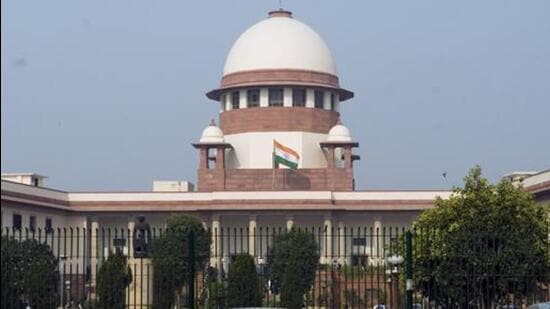
Dealing with an appeal filed by three death row convicts from Madhya Pradesh who entered a house to steal in June 2011 and ended up brutally murdering three women, a three-judge bench of the Supreme Court, looking into their good conduct in jail and strong inclination to reform, replaced the concurrent verdicts of death sentence by the trial court and the Madhya Pradesh high court with life imprisonment for a minimum term of 25 years.
The judgment, pronounced on Friday by a bench of justices UU Lalit, S Ravindra Bhat and Bela Trivedi, said that in Bachan Singh v State of Punjab (1980), the top court emphasised the need for assessing mitigating circumstances before imposing the death sentence. It provided seven factors to be analysed — circumstances around which crime was committed (act committed under extreme mental or emotional disturbance, act committed under duress, accused morally justified to commit offence), the age of the accused, their mental state at time of incident, the possibility of reform, and whether accused would constitute a continuing threat to society.
It was the same judgment that held that the death penalty should only be give in the “rarest of rare” cases — a doctrine quoted by most courts while deliberating on the death sentence.
{{/usCountry}}It was the same judgment that held that the death penalty should only be give in the “rarest of rare” cases — a doctrine quoted by most courts while deliberating on the death sentence.
{{/usCountry}}Also read: Government help, social support lacking for schizophrenia patients: Experts
The absence of a system to ensure compliance with this procedure has now led the court to issue the guidelines, the bench said.
“The state must -- for an offence carrying capital punishment -- at the appropriate stage, produce material which is preferably collected beforehand, before the sessions court disclosing psychiatric and psychological evaluation of the accused,” the judgment said, adding that this will establish the person’s frame of mind at the time of committing the crime.
In addition, the court directed the State to compile information on the age, family background, criminal antecedents, educational qualification, and other details, of the accused.
The guidelines further require the superintendent of jail or the probation officer to provide information to the court on the “jail conduct and behaviour”, “work done in jail”, and “activities the accused has been involved in”, among other details. Such report should contain a “fresh psychiatric and psychological report” on the reformative progress in jail and presence of any “post-conviction mental illness”, the bench added.
Writing the 122-page judgment for the bench, justice Bhat said, “The unfortunate reality is that in the absence of well-documented mitigating circumstances at the trial level, the aggravating circumstances seem far more compelling, or overwhelming, rendering the sentencing court prone to imposing the death penalty, on the basis of an incomplete, and hence, incorrect application of the Bachan Singh test.”
Senior advocate Colin Gonsalves said the judgment was “long overdue”.
“It is not just about psychiatric evaluation but an assessment of a whole range of circumstances – family, age, poverty, past injustice – to name some which could possibly explain what contributed to a person committing a crime,” he said.
For four decades since the Bachan Singh judgment, the court noted the absence of a scheme or system to present mitigating circumstances for the court’s consideration. “There is urgent need to ensure that mitigating circumstances are considered at the trial stage, to avoid slipping into a retributive response to the brutality of the crime, as is noticeably the situation in a majority of cases reaching the appellate stage. To do this, the trial court must elicit information from the accused and the State, both,” the bench said
The goal of reformative punishment, the top court held, requires systems that actively enable reformation and rehabilitation.
Also read: Stronger a judge, greater the attack on them: Top court
After Bachan Singh, the top court in Santosh Bariyar v State of Maharashtra (2009) articulated a two-step process for imposing the death sentence. The first step, developed on the “rarest of rare” principle laid by Bachan Singh, required balancing of aggravating and mitigating factors. The second step was to find out if the option of life imprisonment would not suffice. This required the court to consider whether the sentencing aim of reformation was unachievable with life imprisonment, through material placed before it by the State.
In Sangeet v State of Haryana (2012), the top court noted the failure to apply the Bachan Singh sentencing framework uniformly, leading to “judge-centric” judgments producing inconsistent jurisprudence in death penalty matters.
Analysing these cases, the top court in the latest judgment held, “This inconsistency in some courts calling for reports, while others fail to – further contributes to our patchwork jurisprudence on capital sentencing, and in turn undermines the equality principle and due process protection that Santosh Bariyar recognizes as existing, in favour of death row convicts.”
Anup Surendranath, executive director of Project 39A, which compiles the annual Death Penalty India Report said, “In most death penalty cases, it is information about the crime made available to court and very little information about the criminal.”
Having profiled death penalty convicts each year, Surendranath said, “These are extremely poor people and for such information to be forthcoming, it requires significant institutional investment. But the judgment also provides for the accused to provide information. This way the defence will have opportunity to produce reports and respond to the information handed over by the state.”
In the case at hand, the bench was convinced by the case presented by MP additional advocate general (AAG) Swarupama Chaturvedi about the guilt of the three convicts – Manoj, Rahul and Neha -- and termed the death of three defenceless women victims aged 22, 46, and 76 years to be “grotesque”.
Also read: Supreme Court stays Odisha Universities Amendment Act for 3 months
But, for sentencing, it relied upon the probation officer’s reports concerning the three convicts. Noting their young age and lack of criminal antecedents, the bench said, “It is evident that they have already, while in prison, taken steps towards bettering their lives and of those around them, which coupled with their young age unequivocally demonstrates that there is in fact, a probability of reform.” The court, therefore, held death sentence to be “unwarranted” and punished all accused to life imprisonment for a minimum term of 25 years.