E-Paper



Mere harassment is not enough to prove abetment to suicide: SC
The bench urged courts to examine whether the accused person’s conduct created an unbearable situation.


NEW DELHI: The Supreme Court has ruled that mere harassment or actions intended to provoke anger cannot by themselves constitute the crime of abetment to suicide, cautioning against conflating general allegations with the legal threshold for penal charges.
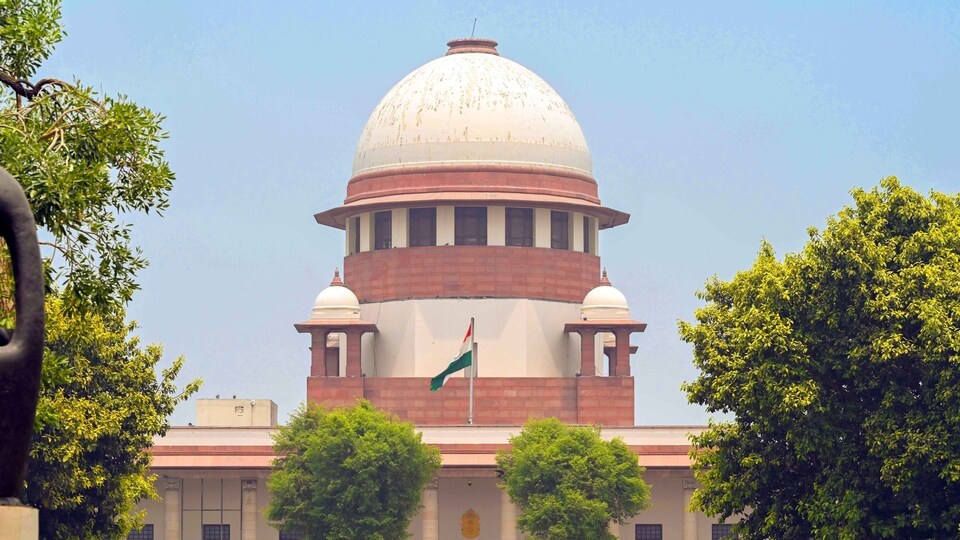
A bench of justices Vikram Nath and PB Varale held that Section 306 of the Indian Penal Code (IPC), which makes abetment to suicide punishable with up to 10 years in jail, mandates that the prosecution must establish a clear and direct link between the accused’s actions and the victim’s decision to take their own life. The ruling reaffirms the essential requirement of “mens rea” (intent) to incite or aid the act of suicide, without which a conviction under this provision cannot stand.
Also Read: Bengaluru techie dies by suicide, alleges harassment by wife in 24-page death note
“Mere harassment, by itself, is not sufficient to find an accused guilty of abetting suicide...The prosecution must demonstrate an active or direct action by the accused that led the deceased to take their own life. The element of mens rea cannot simply be presumed or inferred; it must be evident and explicitly discernible,” held the bench in a judgment on Tuesday, while acquitting a man and his family accused of abetting the suicide of his wife.
Also Read: Ludhiana: ‘Harassed for dowry’, woman ends life
The court highlighted that Section 306 IPC penalises only those whose actions fall within the parameters outlined in Section 107 of IPC, which defines abetment as instigation, conspiracy, or intentional facilitation. To convict an accused under Section 306 of IPC, it maintained, the act of abetment must be explicitly demonstrated through actions or behaviours of the accused that directly contributed to the victim’s decision to take their own life. Section 306 of IPC has been replaced by Section 108 in the Bharatiya Nyaya Sanhita (BNS) -- the new penal law effective from July 1.
Also Read: Techie's suicide: Yet to receive any communication from Bengaluru, say UP cops
Citing established precedents, the bench noted that in SS Chheena vs Vijay Kumar Mahajan (2010), the top court held that the presence of clear mens rea to instigate or push the deceased to commit suicide is indispensable. “It requires certain acts, omissions, or words that would incite or provoke another person to commit suicide,” underlined the judgment.
Referring to Ramesh Kumar Vs State of Chhattisgarh (2001), the court underscored that for a conviction under Section 306 of IPC, there must be “a clear intention” of the accused to instigate the deceased to commit suicide and that allegations of harassment or discord must be accompanied by deliberate acts of incitement or facilitation, closely linked to the time of the suicide.
Reinforcing that the proximity between the accused’s actions and the act of suicide is critical, the judgment added: “The prosecution must prove beyond doubt that the accused played a definitive role in the abetment. Without clear evidence of an active role in provoking or assisting the suicide, a conviction under Section 306 IPC cannot be sustained,” the court observed.
The judgment further clarified: “In cases of alleged abetment of suicide, there must be concrete proof of either direct or indirect acts of incitement that led to the suicide. Mere allegations of harassment are insufficient unless accompanied by actions so compelling that the victim perceives no alternative but to take their own life.”
The court also examined the timing and nature of the alleged harassment, stating: “For actions to qualify as abetment, they must be proximate to the time of the suicide.” Harassment occurring months or years prior to the act, it said, may not establish the required connection.
The bench urged courts to examine whether the accused person’s conduct, including provoking, urging or tarnishing the victim’s self-esteem, created an unbearable situation. “If the accused’s actions were intended only to harass or express anger, they might not meet the threshold for abetment or investigation. Each case demands a careful evaluation of facts, considering the accused’s intent and its impact on the victim,” it emphasised.
The ruling came in a case where a man and his family were accused of abetting the suicide of his wife, who was found hanging in her marital home in 2021. The woman’s father alleged that she faced physical and mental harassment after selling her gold ornaments, which purportedly created unbearable pressure on her.
However, the court found that the alleged incidents occurred almost a year before the woman’s death and lacked the proximate connection necessary to establish abetment. “Even if the allegations of harassment are accepted as true, they do not reflect any intention to instigate, incite, or provoke the deceased to commit suicide,” the court said.
The bench noted that while domestic disputes can cause distress, they do not automatically translate into criminal culpability. However, in the same facts of the case, the bench affirmed the trial of the man and his family for treating the deceased with cruelty in the light of the testimonies by her family members regarding the mental and physical cruelty caused to her in her matrimonial home.