The South-west monsoon may have arrived two days late in Kerala, but it has picked up pace and swept across nearly half of the country six days ahead of schedule, the India Meteorological Department said on Thursday, with experts indicating that it could cover the entire nation about a fortnight before its normal date of July 8 under favourable conditions.
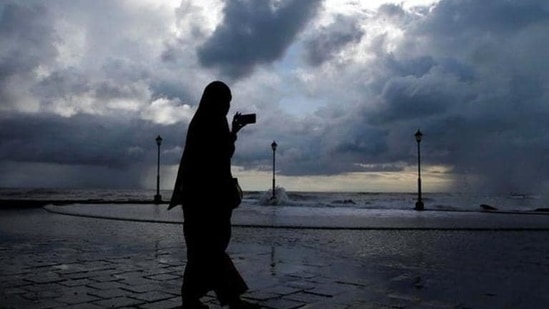
A low pressure area in the Bay of Bengal is likely to hasten the progress of the monsoon, experts say.
The earliest the monsoon has covered the entire country in the past is June 16, 2013, nine years ago. In 2020, the monsoon covered the entire country only by June 26. In 2019, this date was July 19, and in 2018, June 29, according to a Skymet report. Typically, the monsoon covers all of India by the end of the first week of July.
India recorded 21% excess rain between June 1 and 9, according to official data, with the rainfall in May being the second highest since 1901 at 107.9mm. The highest rainfall for May was recorded in 1990 at 110.7 mm.
The monsoon arrived in the Kerala coast on June 3 – the predicted date of onset was June 1 – but reached Mumbai on May 8, two days before its expected date of arrival. Till Thursday, the monsoon had covered all of Maharashtra, southern Madhya Pradesh and half of Odisha. It usually covers these regions by June 15. It is also likely to reach Delhi earlier than usual, according to Kuldeep Shrivastava, who heads IMD’s Regional Weather Forecasting Centre. The monsoon usually arrives in Delhi by the end of June.
“Monsoon is normally active during onset, and a low pressure area that is likely to develop over the Bay of Bengal is helping its progress,” said M Rajeevan, secretary, ministry of earth sciences. “Widespread and heavy rains are expected in many places. But it is likely to weaken after 10-15 days.”
{{/usCountry}}“Monsoon is normally active during onset, and a low pressure area that is likely to develop over the Bay of Bengal is helping its progress,” said M Rajeevan, secretary, ministry of earth sciences. “Widespread and heavy rains are expected in many places. But it is likely to weaken after 10-15 days.”
{{/usCountry}}Mahesh Palawat of private forecaster Skymet Weather said: “The low pressure in the northern Bay of Bengal is expected to pull the monsoon towards Odisha, Chhattisgarh, Madhya Pradesh, southern Rajasthan by June 13, bringing monsoon to the region well before time... This is basically because of weather disturbance on the eastern coast. If another weather system erupts on the western coast and the present trend continues, we can expect the monsoon to cover entire India between June 22 and 25. Otherwise, by end of June,” he said.
The early arrival of the monsoon is good news for farmers.
Almost 60% of India’s cultivated area is rain-fed, and the monsoon crop, kharif, depends entirely on the arrival and intensity of the monsoon. In general, good monsoons bode well for the rural economy. In its second forecast, IMD said monsoon rainfall this year would be normal, at 101% of the long period average (a 50 year average between 1961 and 2010). In both 2020 and 2019, India saw normal monsoons, with rainfall of 110% and 109% of the average, respectively. If this year’s rainfall is in keeping with IMD’s forecast, it will be the first time since the 1980s that the country is seeing a third successive year of a normal monsoon. The monsoon rains also replenish 89 nationally important reservoirs critical for the provision of potable water, and for power generation.
The monsoon’s progress into central India has been hastened by the low-pressure area forming over the Bay of Bengal. According to former IMD director-general KJ Ramesh: “The low pressure has created a pull for monsoon to spread to most parts of central India. With the low pressure expected to become a depression, the monsoon is expected to move faster over the next few days.” Ramesh predicted that the monsoon will cover much of Uttar Pradesh by June 20 and then cover the hills of Himachal Pradesh and Uttarakhand.
Out of 36 subdivisions, 11 have recorded large excess rainfall (60% above normal), seven have recorded excess rain (20 to 59%), and 10 have recorded normal rain (-19 to 19%), according to data.
“The monsoon is likely to advance into remaining parts of Maharashtra, some more parts of Gujarat, remaining parts of Telangana, Andhra Pradesh, some parts of Madhya Pradesh and east Uttar Pradesh, entire Odisha, West Bengal, Jharkhand, Chhattisgarh and Bihar during the next two to three days,” IMD said in a statement.
Rain over some parts of India will also be caused by a cyclonic circulation over east-central and adjoining northeast Bay of Bengal. Under its influence, a low pressure area is likely to form over north Bay of Bengal and neighbourhood around June 11. It is likely to become more marked and move west-northwestwards across north Odisha, Jharkhand and north Chhattisgarh over the following three days.
There could still be some surprises on the weather front, though, with most experts chary of making predictions beyond June 20. Ramesh said the impact of the depression forming in the Bay of Bengal needs to be studied.
“In the next 48 hours, the monsoon will reach parts of east Uttar Pradesh and Bihar. In the subsequent two days, monsoon may cover west UP and parts of Uttarakhand also. So the expectation is that it will reach Delhi earlier than expected. But certain conditions will have to be met before we declare monsoon onset here. It should have rained in a large area for a couple of days, the easterly wind pattern should be established and it should have covered Bihar, parts of UP, etc,” said Shrivastava.