
 E-Paper



Morbi: Officials drain river in mission similar to Thailand cave rescue op
Morbi Bridge Collapse: Patni Kaushik was in deep slumber at his home in Ahmedabad in the early hours of Monday when his phone began ringing around 2am. The order from his superior was enough to wipe the sleep away.

 Prefer HTon Google


Patni Kaushik was in deep slumber at his home in Ahmedabad in the early hours of Monday when his phone began ringing around 2am. The order from his superior was enough to wipe the sleep away.
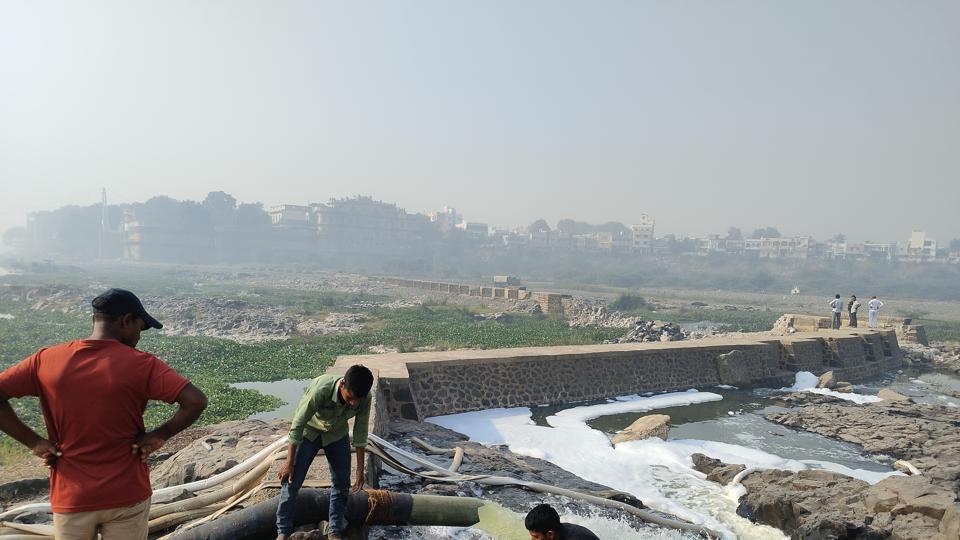
“I was tasked with dewatering a 10km stretch of the Machchu river,” said Kaushik, deputy engineer with Gujarat Water Resources Development Corporation Limited (GWRDCL).
Less than eight hours later, Kaushik and 20 colleagues set up two large pumps at one edge of the river to begin draining it. Over 48 hours later, the two pumps deployed by his team drained out at least 700,000 litres of water from the river to reduce its water level.
Their massive effort, combined with a similar but smaller exercise by the Rajkot irrigation department, may end up proving crucial in the recovery of at least two bodies still suspected to be missing following the collapse of the cable bridge over this river on Sunday evening.
Also read: Morbi bridge collapse: 'Contractors unqualified; new flooring was heavy' | 10 points
The water-draining exercise is reminiscent of a similar effort during the Thailand cave rescue in 2018, when hundreds of thousand of litres were removed from the cave and
A surrounding hills every hour in a successful attempt to save the 12 trapped children and their soccer coach. That operation was recreated in a recent film, 13 Lives, and a mini-series, Thai Cave Rescue. There, the mission was to save lives; here it is to recover bodies.
For 300-odd workers from half-a-dozen agencies working for the third day to find the missing bodies, what Kaushik’s team manages to achieve may be crucial. “If the pumps can reduce the water level by even a couple more feet, we may be able to find the bodies,” said Prasanna Kumar, the National Disaster Relief Force (NDRF) commandant overseeing the search operations.
The last of the bodies was recovered on Monday. Since then, the search efforts have not yielded any fruit. They have pressed 40 boats into service in a 200m x 100m area of focus in the river, and used a specialised machine to remove the hyacinth weeds from the dirty water, but to no avail.
In one corner of the river, about 200m from the main search area, Kaushik’s team is on the job with pumps. “We have deployed two pumps of 50 horsepower each. They are pumping out around 12,000 litres of water every minute,” he said.
Aiding them are four smaller pumps -- each with 6.5 horsepower capacity -- pumping out 1,200 litres every minute.
Due to a shut dam 10km away, the stretch of the river where the accident occurred contains stagnant water, and a lot of it comes through sewers from Morbi town. The water 15 feet deep at some points, and this -- along with poor visibility due to dirt --has hampered the search.
On Monday morning, the first action to reduce the level of water in the river was to trigger a blast at a 3m tall check dam to release the water and reduce the level around the search area. Since that was not enough, pumps were pressed into service. The water pumped out from the affected region of the river is being pumped out into the other side of the check dam.
For the men pumping out the water, there are challenges galore. “We would have preferred a flat surface, but here the pipes carrying the water are placed up a slope. That is slowing the discharge speed of water,” said Naveen Chavda, GWRDCL’s pump in-charge.
Also read: Lawyers' associations decide not to represent accused in Morbi bridge collapse case: Report
Barring a 30-minute break for the pumps on Tuesday night, the dewatering process has been going on round-the-clock.
These pumps are normally used to drain out water from flood-hit regions every monsoon. “This is a fight against time. The sooner we can drain out the water, the quicker the bodies can be found,” said Jatin Delvadiya, deputy engineer with the Rajkot irrigation department.
The primary agencies involved in the search, meanwhile, said that while they were searching for two confirmed cases of people missing in the water, they would not be surprised if more bodies were found when the water level dipped enough.
“For now, two persons are reported missing. But often what happens in such tragedies are that there are some victims whose disappearance isn’t reported,” said AK Bishnoi, director of the Gujarat State Fire Services.


