
 E-Paper



More steps in works to cool prices: Nirmala Sitharaman
The finance minister pointed to a series of steps, including calibrated release of pulses from the buffer stock, zero import duty on masoor from July 26, providing 1.5 million tonnes of chana to the states at a discounted rate, reduction in the excise duty on fuel, and added, “I am glad to say that we have just not been talking, we are acting. Inflation has now come down to the tolerable band of RBI.”

 Prefer HTon Google


Finance minister Nirmala Sitharaman on Wednesday assured Parliament of more measures to cool down inflation “for the sake of common people” while sticking to the target of reducing the fiscal deficit to 6.4% of GDP and defended the supplementary demand for grants of ₹4.35 lakh crore as “absolutely acceptable” in the extraordinary post-pandemic situation.
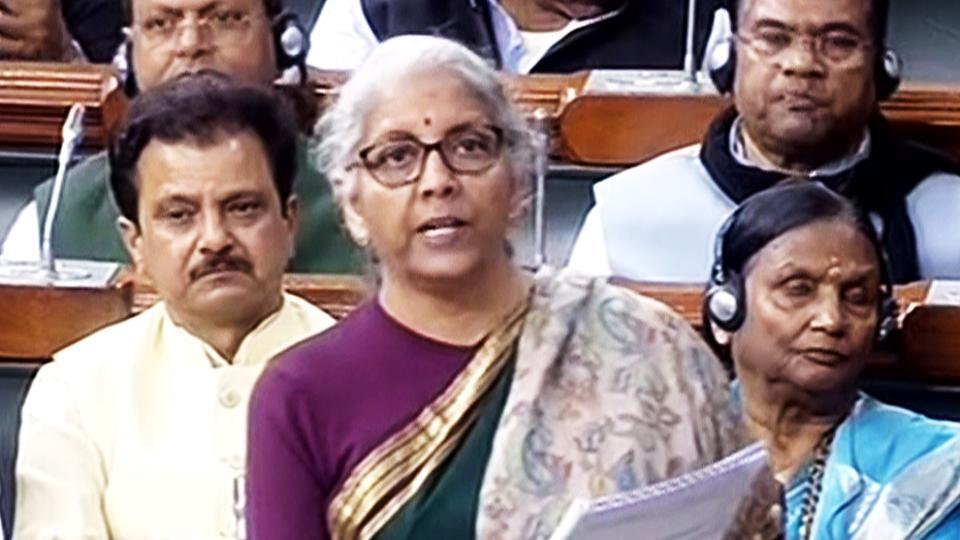
Replying to the debate on the supplementary demand for grants, Sitharaman said, “We keep a very close watch. Prices of pulses, edible oils, and vegetables are monitored by an informal group of ministers, and we work together. There is an interministerial committee which meets every week on agri-commodities, and we closely monitor it,” she said after several lawmakers expressed concern over rising prices.
The finance minister pointed to a series of steps, including calibrated release of pulses from the buffer stock, zero import duty on masoor from July 26, providing 1.5 million tonnes of chana to the states at a discounted rate, reduction in the excise duty on fuel, and added, “I am glad to say that we have just not been talking, we are acting. Inflation has now come down to the tolerable band of RBI.”
The CPI reading for November 2022 came down to 5.88% year-on-year from 6.77% in October; 6% is RBI’s upper tolerance band.
But she also hit back at the Congress. “It is a bit difficult when parties which saw double-digit inflation during their period raise a question on inflation,” she said, furnishing data on 18.19% and 19.9% inflation in October and November 2013. Congress floor leader Adhir Chowdhury, however, alleged that Sitharaman was being “selective” in her data.
Replying to the concerns of the lawmakers on the fiscal deficit as the government’s food and fertiliser bill swells, the finance minister emphasised that reduction of fiscal deficit from 6.9% of GDP in the last year’s RE (revised estimate) to 6.4% in the current year’s BE (budget estimate) is “very much in line with the government’s commitment to achieve fiscal consolidation”.
“The current situation also very clearly gives me that kind of a feeling that we will be able to comply with what we have said in the Budget,” she said.
Most analysts expect the government’s tax revenue to exceed estimates, providing it a cushion and helping meet the fiscal deficit target.
On non-performing assets (NPAs), Sitharaman said these have come down drastically to 7.28 % at the end of March 2022 due to various measures taken by the government.
On the declining value of the rupee against the US dollar, she said, the domestic unit is appreciating against all other currencies, and the fall against the greenback is lower as compared to other currencies.
Quoting a World Bank report, she said India’s forex reserves are among the highest in the world and this provides cushion against a global spillover. Later, the Lok Sabha passed the supplementary demand for grants, authorising the government to spend an additional ₹3.25 lakh crore in FY23.
The fertiliser subsidy will account for ₹1.09 lakh crore of the supplementary budget followed by the food subsidy of ₹80,000 crore to fund the ongoing Garib Anna Yojna.
The additional infusion of ₹16,400 crore in MGNREGA didn’t come without sharp questions from the Opposition. Chowdhury contested Sitharaman’s claim that the demand for jobs under MGNREGS has seen a decline in the recent past and said, “It is not coming down.” Trinamool’s floor leader Sudip Bandopadhyay said the MGNREGS bills of West Bengal have been stalled.
The finance minister strongly defended the government’s stand that the rupee remains strong. “Members kept mocking me saying that I do not understand, rupee is weakening against dollar, and so on. Against the dollar, we have performed much better than many other emerging market economies,” she said.


