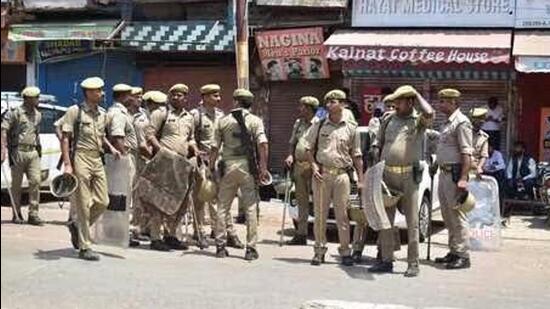
Of 28 Indian states, 18 shut down the internet at least once in these three years, a report by the Internet Freedom Foundation (IFF) in collaboration with the Human Rights Watch (HRW) has noted, highlighting that the local authorities used shutdowns in 54 cases to prevent or in response to protests, 37 to prevent cheating in school examinations or in exams for government jobs, 18 in response to communal violence, and 18 for other law and order concerns.
“This number does not include internet shutdowns in the Union Territory of Jammu and Kashmir where the authorities continued to shut down the internet more than any other place in the country,” the report stated.
It added that out of the 18 states that shut down the internet, at least 11—Rajasthan, Uttar Pradesh, West Bengal, Maharashtra, Jharkhand, Manipur, Andhra Pradesh, Chhattisgarh, Madhya Pradesh, Odisha, and Telangana—did not publish suspension orders as directed by the Supreme Court. “Even if orders were published, the authorities often failed to justify the apprehension of risk to public safety. Rajasthan, Arunachal Pradesh, West Bengal, and Assam governments shut down the internet to prevent cheating in examinations, which was clearly an unnecessary and disproportionate response,” the report states.
The most number of shutdowns were observed in Rajasthan, where of the 85 orders, a majority, 44, were to prevent protests or in response to them, at least 28 were to prevent cheating in examinations, 9 to prevent communal violence or in response to it, and 4 to address other law and order concerns. “Internet Freedom Foundation analysed 26 internet suspension orders issued by Udaipur divisional commissioner and 30 suspension orders issued by Jaipur divisional commissioner between January 10, 2020 and September 25, 2021 and found that the authorities issued shutdowns frequently, followed a copy-paste template, and failed to ensure they were lawful, necessary, and proportionate. Most of the shutdowns were ordered to quell the right to protest and were imposed even when less restrictive measures may have been available,” the report stated.
{{/usCountry}}The most number of shutdowns were observed in Rajasthan, where of the 85 orders, a majority, 44, were to prevent protests or in response to them, at least 28 were to prevent cheating in examinations, 9 to prevent communal violence or in response to it, and 4 to address other law and order concerns. “Internet Freedom Foundation analysed 26 internet suspension orders issued by Udaipur divisional commissioner and 30 suspension orders issued by Jaipur divisional commissioner between January 10, 2020 and September 25, 2021 and found that the authorities issued shutdowns frequently, followed a copy-paste template, and failed to ensure they were lawful, necessary, and proportionate. Most of the shutdowns were ordered to quell the right to protest and were imposed even when less restrictive measures may have been available,” the report stated.
{{/usCountry}}The Indian government does not collect any data on internet shutdowns, which are imposed by the home secretary of the state and subsequently reviewed by an inter-ministerial committee.
Most shutdowns involve cutting off access to the internet on mobile phones within a certain area.
The 2021 Parliamentary Standing Committee report concluded that “the principle of proportionality and procedure for lifting the shutdown are vague and lack clarity.”
The two organisations examined whether “Indian state governments are complying with the court’s directives and found that decisions to snap internet access are often erratic and based on a vague, tenuous, and unsubstantiated understanding of a law-and-order problem, which does not satisfy the international legal threshold of a public emergency or a threat to public safety”. “Shutting down the internet to stem protests or criticism of government, for instance, does not constitute a legitimate aim and instead violates the right to peaceful assembly,” they have argued.
They add that the shutdowns affect vulnerable communities the most. “Apart from the privacy concerns this raises, it also conditions people’s livelihoods on often unreliable internet access that stalls completely during internet shutdowns. In February 2023, hundreds of NREGA workers from across the country gathered in Delhi to begin a 100-day protest against the mandatory app-based attendance,” the report stated. “Apart from harming the government’s efforts to ensure the right to livelihood, as enshrined in the Indian Constitution, internet shutdowns also impact a key social protection policy to provide subsidised food grains under the National Food Security Act through a targeted public distribution system.”