
 E-Paper



National Archives' first overseas project in Oman preserves diaspora records
“The Oman Collection” was a special digitisation and oral history project conducted at the Indian embassy in Muscat during May 19-27


The National Archives of India (NAI) has completed its first overseas project by digitising and archiving the documents of the Indian diaspora in Oman, whose presence in the West Asian country dates back almost 250 years.
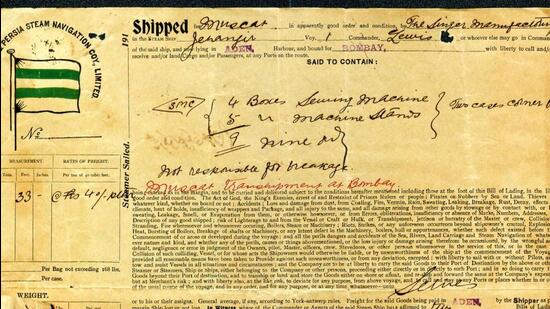
“The Oman Collection” was a special digitisation and oral history project conducted at the Indian embassy in Muscat during May 19-27 and it was joined by 32 prominent Indian families hailing from Gujarat.
More than 7,000 documents in English, Arabic, Gujarati and Hindi from private collections of Indian merchant families were scanned and digitised.
The oldest document dated back to 1838, and a large majority were from the late 19th century and early 20th century.
The documents included personal diaries, account books, ledgers, telegrams, trade invoices, passports, citations, letters and correspondence, and photographs that shed light on the lives and contributions of the Indian community. They also provide a vivid narration of the history of the Indian community, including their cultural practices, social activities, trade and commerce, and contributions to Omani society.
Also Read: India set to sign trade deal with Oman to expand its Middle East ties
The project also involved recording the oral histories of older members of the Indian community, the first such project by the NAI. These firsthand narratives capture a range of stories, including personal anecdotes, migration experiences and the evolution of the Indian community in Oman over the decades.
Since this was the first overseas project by the NAI to archive diaspora documents, it marks an important step in preserving the history and heritage of the Indian community abroad. The digitised documents will be uploaded on “Abhilekh Patal”, the digital portal of the NAI, making them accessible to researchers and the wider public.
NAI director general Arun Singhal said, “This is the first time that we have collected and digitised private archives of diaspora documents from abroad. This marks a historic milestone for the NAI and a significant step towards preserving the rich heritage and narratives of the diverse overseas Indian community.”
India’s ambassador to Oman, Amit Narang, said the project aligned with the government’s vision to strengthen connections with the Indian diaspora worldwide. Sheikh Anil Khimji, head of the Indian community in Oman, expressed his appreciation for the project. “The archiving of historical documents of the Indian diaspora by the embassy of India will go a long way in preserving their history and also showcase the time-tested bonds of friendship between India and the sultanate of Oman,” he said.
The project was supported by the National Records and Archives Authority of Oman, which provided logistical and other support.
Oman is currently home to more than 673,000 Indian nationals, and historical and cultural connections between the two sides date back 5,000 years. Merchant families from Mandvi, Surat and other parts of Gujarat moved to Sur, Muttrah and Muscat since the late 18th century.
A total of 1,797 Indian-origin people have Omani citizenship and are an integral part of the local society while still maintaining strong ties with India.


