
 E-Paper



Need to focus on sustainable development along with environmental protection: SC
The need for sustainable development must also to be taken into account while ensuring protection of the environment, the Supreme Court held on Friday as it cleared the decks for establishing new wood-based industries (WBIs) in Uttar Pradesh

 Prefer HTon Google


The need for sustainable development must also to be taken into account while ensuring protection of the environment, the Supreme Court held on Friday as it cleared the decks for establishing new wood-based industries (WBIs) in Uttar Pradesh.
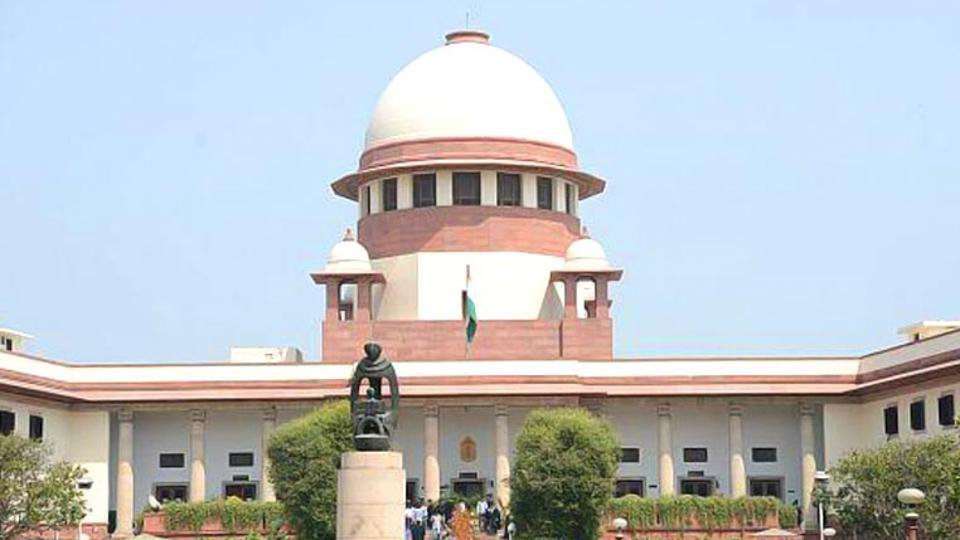
A bench headed by justice BR Gavai underlined that a balance was needed between implementing policies and projects that provide immediate benefit and keeping the environment safe for future generations.
“It is the duty of this generation to protect the environment for future generations...it is the duty of the State, as well as its citizens, to safeguard the forests of the country. The resources of the present are to be preserved for future generations. However, one principle cannot be applied in isolation of the other,” said the bench, which also comprised justice BV Nagarathna.
The judgment further emphasised: “It is necessary that while protecting the environment, the need for sustainable development has also to be taken into consideration and a proper balance between the two has to be struck.”
The court’s observations came during the hearing of an appeal by the Uttar Pradesh government against orders issued by the national green tribunal (NGT) in 2020 which nixed the state’s plan to establish new WBIs. The NGT had also quashed 1,215 provisional licenses allotted by the state to several entities for setting up WBIs, mostly in the western districts of UP.
In its order, the green panel had noted that the state could not present a conclusive assessment on availability of wood for determining the amount of timber needed for WBIs and that felling of trees would be in violation of a spate of Supreme Court orders passed in public interest litigations (PILs) to protect green cover.
Finding fault with the NGT order, the top court on Friday held that the green panel adopted a “lopsided view”, for it chose not to rely on a report by the Forest Survey of India (FSI) that categorically pointed in favour of availability of wood from eucalyptus and poplar trees to sustain WBIs in the state.
“The learned NGT has also failed to take into consideration the stand taken by the he Ministry of Environment, Forest and Climate Change (MoEFCC), which supported the stand of the state. The state had emphasised many advantages of granting new licenses to WBIs. However, none of these aspects have been considered by the NGT. We are, therefore, of the considered view that the impugned orders of the NGT are not sustainable in law,” said the bench.
It further pointed out that the state government specifically told the NGT that establishment of WBIs was likely to attract an investment of ₹3,000 crore and generate employment opportunities to over 80,000 people. It had also stipulated that farmers of the state would get better prices and the practice of timber supply to Haryana at low prices would cease.
Even as it paved way for the UP government to establish WBIs, the top court on Friday stressed that the state authorities must ensure that necessary steps are taken for arresting the problem of declining forests and tree cover.
“The conservation of forests plays a vital role in maintaining ecology. It (A forest) acts as processor of the water cycle and soil and also as provider of livelihood. As such, preservation and sustainable management of forests deserves to be given due importance in formulation of policies by the state,” it added.
While allowing the state to grant WBI licenses, the court directed the UP government to ensure that permission for tree-felling is granted only upon compliance with all the safeguards laid down by the state and the top court through a series of orders.



