
 E-Paper



New cryptocurrency bill to be tabled after Cabinet nod: Sitharaman in Parliament
“A bill on Cryptocurrency and Regulation of Official Digital Currency for introduction in the Lok Sabha has been included in the Lok Sabha Bulletin-Part II as part of government business expected to be taken up,” Sitharaman told Parliament on Tuesday.

 Prefer HTon Google


Finance minister Nirmala Sitharaman on Tuesday said the government plans to table a reworked bill on cryptocurrency in the winter session of Parliament after Cabinet approves it, and told the Rajya Sabha that income earned from investing in cryptocurrencies is taxable.
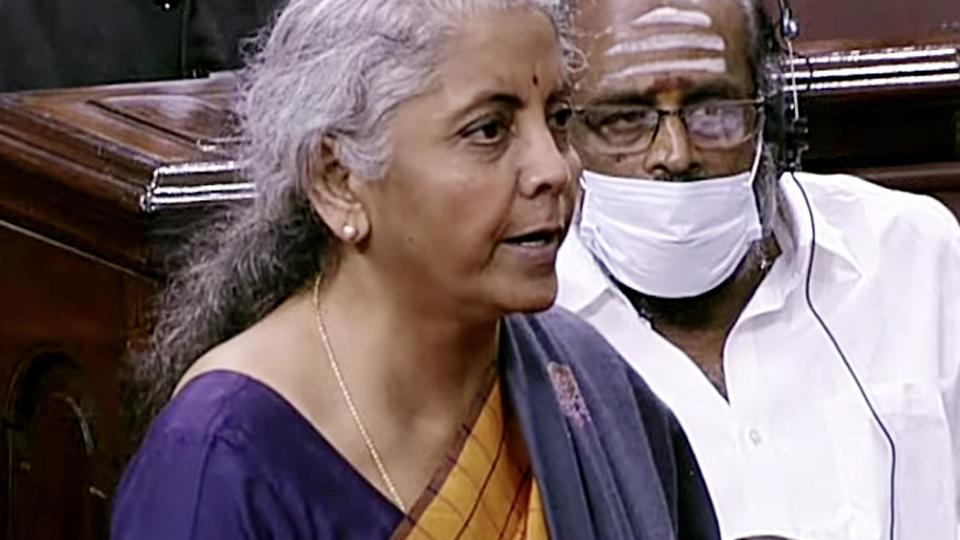
Replying verbally to questions raised on the issues of cryptocurrencies in the house, she said the government could not take up the bill in the monsoon session, but that a reworked bill will soon be introduced.
Also Read | Companies must disclose all crypto trade, investment
“A bill on Cryptocurrency and Regulation of Official Digital Currency for introduction in the Lok Sabha has been included in the Lok Sabha Bulletin-Part II as part of government business expected to be taken up,” she said in a written reply to the house. The winter session started on November 29 and will end on December 23.
The Cryptocurrency and Regulation of Official Digital Currency Bill, 2021 seeks “to create a facilitative framework for creation of the official digital currency to be issued by the Reserve Bank of India (RBI)”. It also seeks to ban all private cryptocurrencies while allowing “for certain exceptions to promote the underlying technology of cryptocurrency and its uses,” according to the bulletin.
Sitharaman said that currently, cryptocurrencies, and non-fungible tokens (NFTs), are “unregulated” in India, but income generated from them are taxable. “The extant statutory provisions on scope of total income for taxation as per section 5 of the Income-tax Act, 1961 envisage that total income shall include all income from any source derived,” she said in her reply.
“The income earned by cryptoexchanges and other crypto service providing platforms is liable to tax under the head Business or Profession under Chapter-IV of the Income-tax Act, 1961. Applicability of tax rate will depend on status and category of taxpayer,” she added.
On another specific query -- whether government has conducted any study for regulating cryptocurrency – she said: “A study was conducted by the government through a research firm on ‘Virtual Currencies: An Analysis of the Legal Framework and Recommendations for Regulation’ in July, 2017. Thereafter, government constituted an Interministerial Committee (IMC) on 2nd November, 2017 under the Chairmanship of Secretary (Economic Affairs) to study the issues related to Virtual Currencies and propose specific action to be taken in this matter.”
The committee submitted its report in February, 2019, which recommended that “all private cryptocurrencies be prohibited” in India, she said. “It also recommended that it would be advisable to have an open mind regarding the introduction of an official digital currency in India.”
On regulating cryptocurrencies, she said: “The question of monitoring cryptocurrency transactions, if any or regulating cryptocurrency transactions, if any is consequent to the passage of the Bill in Parliament.”
Giving written reply on this matter minister of state for finance, Pankaj Chaudhary, said RBI had cautioned investors about the risks associated with the cryptocurrencies through public notices dated December 24, 2013, February 01, 2017 and December 05, 2017 that dealing in virtual currencies (VCs) is associated with potential economic, financial, operational, legal, customer protection and security related risks.
“RBI, vide its circular dated May 31, 2021 has also advised its regulated entities to continue to carry out customer due diligence processes for transactions in VCs, in line with regulations governing standards for Know Your Customer (KYC), Anti-Money Laundering (AML), Combating of Financing of Terrorism (CFT), obligations under Prevention of Money Laundering Act (PMLA), 2002, etc.,” he said.


