E-Paper



New in NE | The politics of language creates uproar in Assam's schools — again
Last week, the state’s BJP-led government decided to start teaching science and mathematics in English instead of Assamese or other vernacular languages. Many have opposed this decision.


Language is often an emotional issue.
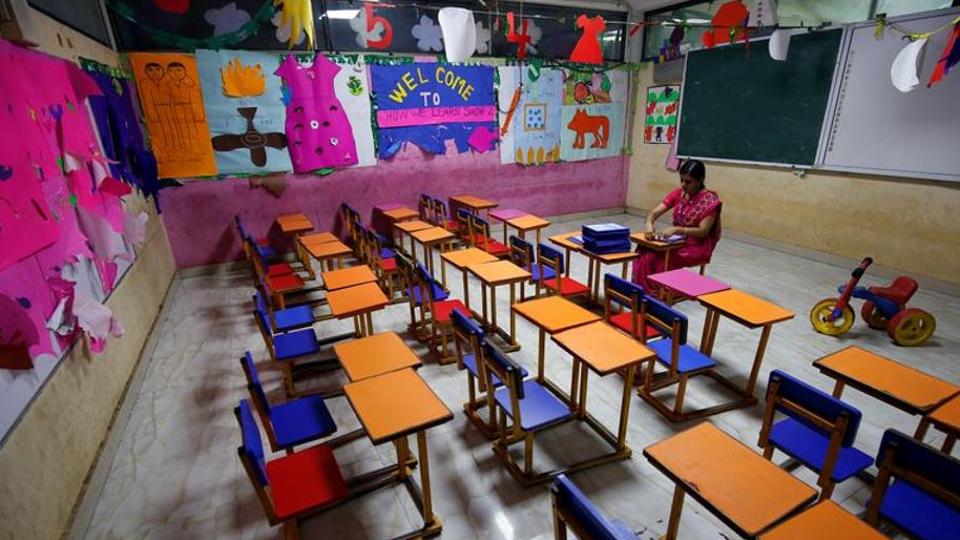
This was evident in Assam, yet again, following last week’s decision by the state’s Bharatiya Janata Party (BJP)-led government to start teaching science and mathematics in English instead of Assamese or other vernacular languages.
On Thursday, the state Cabinet approved both subjects to be taught in English in all government schools from Classes 3-12, instead of the current practice of teaching them in Assamese, Bodo, Bengali, or other vernacular languages.
In an attempt at gender equality, the Cabinet also decided to convert all all-girls government schools in the state to co-ed ones. It was also agreed to introduce English as a medium of instruction in all subjects parallel to Assamese in 5-10 schools in each district. Another decision was to abolish the social studies subject in secondary schools and introduce two separate subjects: Geography and history.
While most believe that the decision will bring about transformative changes in the government schools of the state, it was the move to start teaching science and maths in English that got more attention and led to more debate.
As soon as the decision was announced by education minister Ronoj Pegu, a small section welcomed it, but a large number of individuals, as well as Opposition parties, student organisations and literary bodies, came out against the move saying it will sound a death knell to Assamese and other vernacular languages of the state. There were also questions about the availability of enough teachers with skills to teach both subjects in English.
The state’s premier literary body, Asam Sahitya Sabha (ASS) and the most influential student organisation, All Assam Students Union (AASU) have also flayed the government's decision. There’s also the question about the availability of teachers to teach science and math in English.
"Studies all over the world have shown that teaching students in their mother tongue helps them understand better. Even subjects like science and maths should be taught in a language which the child is comfortable in so that they can acquire teachings in a more wholesome manner," said the president of Asam Sahitya Sabha, Kuladhar Saikia.
Incidentally, the National Education Policy (NEP) approved by the Centre in July 2020, says that wherever possible the medium of instruction in schools until Class 5 — preferably till Class 8 — should be the mother tongue, regional or local language. “All efforts would be made early on to ensure that any gaps that exist between the language spoken by the child and the medium of teaching are bridged,” says NEP.
It’s worth mentioning that while the government decided to introduce English as the medium of instruction for science and mathematics, Assamese and other vernacular subjects would continue to be taught in schools.
Also, other subjects like geography and history will be taught in vernacular languages. This effectively means that government schools in Assam will now have a dual medium of instruction instead of being Assamese, Bodo or Bengali medium schools.
“Introduction of English as a medium for teaching science and maths won’t hurt Assamese and other languages as students would continue to study them as subjects. The move could encourage many parents to enrol their kids in government schools,” Chief Minister Himanta Biswa Sarma said at an event in Guwahati on Friday.
Some sections say the move by the BJP-led government was taken in haste, without consulting with stakeholders. This will hurt Assamese and other vernacular languages in the long run.
“The present move by the state government is very confusing. Earlier Chief Minister Himanta Biswa Sarma had publicly advocated teaching medicine and engineering in Assamese and now the state Cabinet has decided that science and maths would be taught in English. The state government should make its stand clear on both issues,” Congress’s leader of Opposition, Debabrata Saikia said.
Regional party, Raijor Dal, termed the move will decrease the relevance of Assamese and other vernacular languages of the state. In a statement issued on July 28, the party accused the government of failing to address issues of teacher training and other problems in the current education system.
“The government’s reasoning that the decision was taken to ensure better performance by students from Assam in national-level exams doesn’t hold water as globally it has been proved that children learn better in their mother tongues, especially in the primary level,” president of Assam Jatiya Parishad (AJP), said at a press conference on Saturday.
Opposing the move, Bodo Sahitya Sabha and All Bodo Students Union — the prominent organisations of the state’s Bodo community have said the decision was taken in haste and will have an adverse impact on the Bodo language.
“The Cabinet decision is welcome. Many people these days send their wards to English-medium schools. The move could help bring that trend down. I don’t think there’s any threat to vernacular languages and the present government won’t take any such move,” said Bodoland Territorial Region (BTR) chief Pramod Bodo and president of United Peoples Party Liberal (UPPL), a partner in the ruling coalition in Assam.
While more details of the decision are awaited, and the move is yet to be officially notified, the debate over it could lead to changes in the government’s stand. Only time will tell.
 ABOUT THE AUTHORUtpal Parashar
A seasoned senior journalist, I have nearly three decades of experience across print, digital, and online platforms, covering political transitions, insurgencies, environmental issues, and development stories in India and Nepal. I am skilled in breaking news, leading editorial teams and launch of newspaper editions. I am adept at leveraging digital trends and social media to expand global reach, with a strong ethical foundation and a reputation for impactful journalism. An alumnus of Asian College of Journalism, I joined Hindustan Times in New Delhi as a trainee reporter in May 1997. Over the years, I have been posted in Dehradun, Kathmandu (Nepal) and Guwahati. Currently, as Senior Assistant Editor at Hindustan Times, I lead a team reporting on India’s northeastern states. My work involves in-depth analysis, and engaging multimedia storytelling across formats, including text, photo, video, and interactive content. I am skilled in producing timely, shareable content, leveraging digital platforms and social media to engage global audiences. Throughout my career with the Hindustan Times, I have led diverse editorial teams, designed capacity-building activities, and supported reporters in developing strong story ideas, ethical reporting practices, digital skills, and fact-checking techniques. As Senior Assistant Editor for Northeast India, I have been responsible for guiding correspondents through complex political, humanitarian, and community-level stories using multimedia formats. Earlier, as Foreign Correspondent in Nepal, I produced extensive reporting during Nepal’s democratic transition and the 2015 earthquake and its aftermath.Read More