A 500 m walk on a cobbled street leads former Union minister Ninong Ering to a single-story building, the Remi government school, located deep in the interior of the lush green foothills of Pasighat, Arunachal Pradesh.
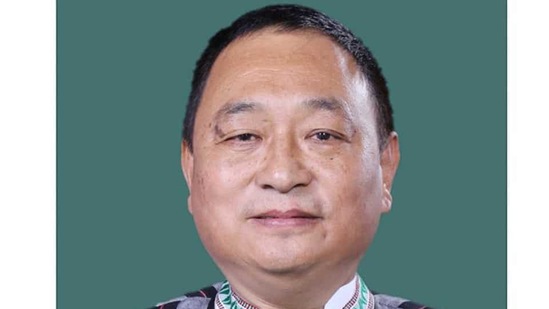
“They fondly call all of us teachers, mama,” Ering says. Ering served as the minister of state for minority affairs from October 2012 to May 2014.
For him, the school was like a second home before the Covid-19 pandemic hit. He would frequently saunter into a classroom, reciting nursery rhymes to teach the students English. “I have always believed that the correct pronunciation is extremely important,” Ering says. “There is no better way to teach this than by using nursery rhymes, or even songs. I personally think Sound of Music has some of the instructional rhymes.”
Ering, 62, who was elected as the legislator from Pasighat (West) in June 2019, moved to the village of Remi six months ahead of the polls. He spent five years as a teacher, before he became a civil servant in 1981. The pull of his former profession led him back to the schools in his constituency last year, as he started teaching in some, assessing and helping the others grow in whatever way he could. He used to visit Remi at least thrice a week before the pandemic caused the schools to shut.
“It was after a very long hiatus that I got to return to the school,” Ering said. “Now, schools are slowly opening up and I could not miss the chance to return to the classroom.”
{{/usCountry}}“It was after a very long hiatus that I got to return to the school,” Ering said. “Now, schools are slowly opening up and I could not miss the chance to return to the classroom.”
{{/usCountry}}On Tuesday, Ering shared a video on Twitter reciting the rhyme Doe a Deer to the students of class 1. “He used to visit the school often but then the pandemic happened,” said Tagon Padho, a teacher at the school. “We have around 136 students who are studying in classes one to eight.”
Eloquence of the language, Ering asserts, can be a means to achieving great success in life. Before Ering entered politics in 1989, he served as a teacher for five years in Mirbuk and Miren schools. “I often teach them in Hindi and make sure they understand what the word means in English as well.”
He laughs as he recalls his teaching days from 1975 to 1980. “There were just the three of us, we would teach everything from mathematics to the social sciences,” he says. “Back then, the schools barely had 40-50 students and now they have nearly a 1,000.”
He fondly recalls the bamboo-based furniture and the thatched roofs under which he taught. “Now the schools have better infrastructure, but a lot more needs to be done. Arunachal needs more full-time teachers, especially those with training in the English language.”
Although he laments that the state of education in Arunachal is still basic, he wants to try whatever he can to help. “Sometimes I try and train the teachers as well; a lot of them find it difficult to converse in English.”