E-Paper



‘No evidence’: U’khand HC reinstates judge sacked in 2020 for hiring teen at home
The high court quashed the inquiry and all subsequent proceedings against Deepali Sharma, then posted as civil judge (senior division) in Haridwar

 Prefer HTon Google


DEHRADUN: The Uttarakhand high court has set aside the 2020 termination of a woman civil judge accused of engaging a 14-year-old as a domestic help and subjecting her to physical abuse.
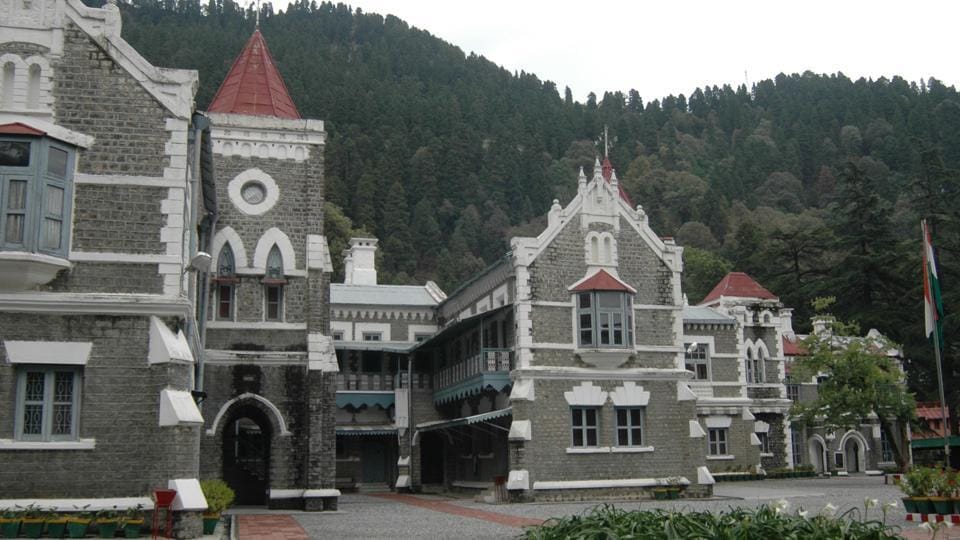
“This is not merely a case of no evidence, but a case where foundational facts themselves are missing,” a bench of chief justice G Narendar and justice Subhash Upadhyay said in its January 6 judgment.
In a 130-page verdict, the bench said the 2018 inquiry against the judge suffered from serious procedural lapses, lack of primary evidence, non-examination of key witnesses, and reliance on an unproven preliminary report.
The high court quashed the inquiry and all subsequent proceedings against Deepali Sharma, then posted as civil judge (senior division) in Haridwar, holding that the allegations stemmed from an anonymous email complaint in January 2018 and were not proved through legally admissible or credible material.
The case originated from an anonymous email sent to the high court alleging that Sharma had engaged a minor girl as a domestic help and subjected her to physical abuse. Acting on telephonic instructions issued by the then chief justice, the Haridwar district judge conducted a spot visit, following which Sharma was suspended, and eventually sacked.
Deepali Sharma, who joined the judicial service as a civil judge (junior division) in 2008, was sacked via a government order on October 20, 2020 following the full court resolution of the high court on the administrative side.
Lawyer Aditya Paratap Singh, who appeared for the judge, said the high court has set aside the full court resolution, the subsequent government order and the enquiry report that indicted Deepali Sharma. The bench has ordered that Sharma would be deemed to be in service from the date of her removal with all service benefits including seniority and further held that Deepali Sharma would be entitled to 50% service benefits including pay from the date of her removal.
The lawyer said the high court also observed that the allegations and findings against the judge were against the record and perverse in nature.
“Further, no approval from the Chief Justice of 2018 is on record. The minor girl and her father have denied all the allegations of child labour and most importantly, no charge of child labour was framed during the enquiry as per the Uttarakhand Government Servants Rules of 2002.”, he said
The court also raised questions over the medical evidence relied upon by the inquiry officer, pointing out that the alleged injury report was neither proved by a qualified doctor nor supported by hospital admission records.
“The wound certificate is in a format never seen by this court,” the bench said, adding that the absence of the original medical record further weakened the prosecution’s case.
The high court also noted that key witnesses, including court staffers posted at the judge’s residence and neighbouring judicial officers, were never examined, while reliance was placed on assumptions and conjectures. It also questioned why the girl was put up in a shelter house for a prolonged duration though her parents had been being identified and willing to take custody.
The high court noted that though the allegation of employing a minor as domestic help was central to the complaint, no specific charge under the relevant conduct rules prohibiting child labour was framed against Sharma.
Also, it concluded that the scale and manner of the police operation at the judge’s residence was excessive, and the presence of a large police force and videography raised questions about proportionality and motives.