
 E-Paper



No instant relief for CM, SC to wait for HC order
Supreme Court delays decision on Arvind Kejriwal's bail challenge, awaiting Delhi HC's order. Kejriwal was arrested by ED in March in Delhi excise policy case.

 Prefer HTon Google


There was no relief for Delhi chief minister Arvind Kejriwal with the Supreme Court on Monday deciding to wait for the Delhi high court’s order on his bail, posting to Wednesday his petition challenging the interim stay granted by that court on his release.
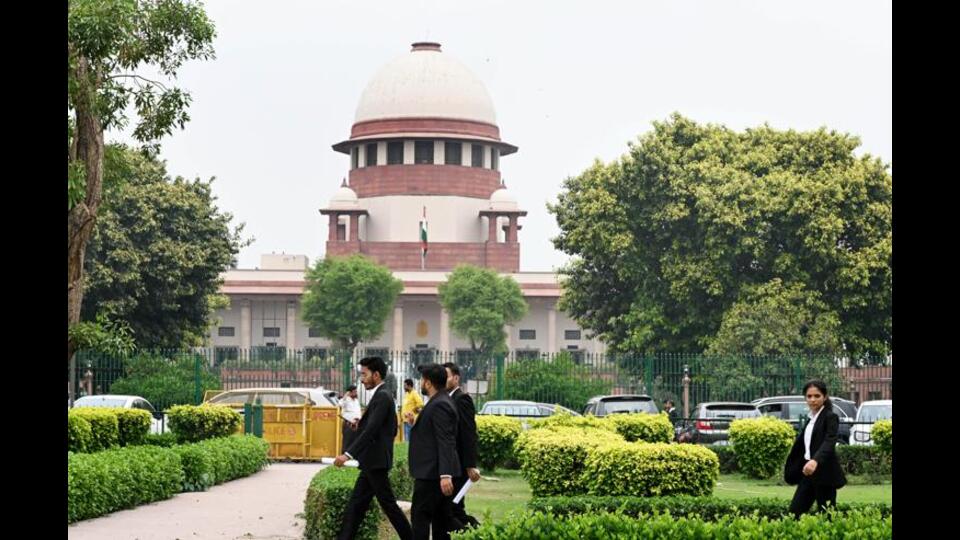
A vacation bench of justices Manoj Misra and SVN Bhatti said, “Till the order of the high court comes we are unable to understand anything. What we propose to do is to fix a date and let the order of the high court come in the meantime.”
The high court is expected to pronounce its verdict on Tuesday.
Kejriwal was arrested by the Enforcement Directorate (ED) in March in connection with the Delhi excise policy case. He was granted interim bail by the top court on May 10 to participate in the election campaigning and was directed to surrender by June 2. Following this, on June 20, the trial court granted him regular bail that was stayed by the HC on June 21, even before the bail order was out.

Additional solicitor general (ASG) SV Raju appearing for the Enforcement Directorate (ED) informed the court that the HC order is expected shortly and requested the matter to be adjourned. The HC while reserving the verdict on June 21 allowed the parties to file their written submissions by June 24 indicating that the order could be passed by Tuesday (June 25).
The top court noted that the delay by the HC was “unusual”. “In orders staying bail, judgment is not reserved but passed the same day.” But it deemed it “appropriate that the matter be put up day after tomorrow”.
“In the meantime, if the order of the HC is passed, the copy of the same shall be filed before this court,” it said.
Kejriwal approached the top court against the interim stay on his release granted by the HC.
Senior advocates Abhishek Singhvi and Vikram Chaudhary appearing for Kejriwal informed the court that there were procedural flaws in the HC order as the HC first orally granted stay of the trial court decision when it was mentioned by ASG Raju without following the procedure of first approaching the HC registry. It is only when the registry refuses that a mentioning can be made before the vacation judge, Chaudhary said.
Singhvi submitted, “If the HC can stay the order of the Delhi court without even the order been out, why can’t this court grant stay before the order of the HC comes out? Court cannot be discretionary towards respondents alone.”
The court replied, “According to you, the HC has committed that mistake. Why should we also do it? ”
Singhvi pointed out that there are precedents of past Supreme Court judgments laying down the law that a bail order once granted will not be stayed or reversed easily.
The court wished to know from ED whether the trial court order considered the twin conditions required for grant of bail under Section 45 of the Prevention of Money Laundering Act (PMLA). Solicitor General Tushar Mehta, also appearing for ED, informed the court that the trial judge, who was a vacation judge, did not appreciate the merits of the case. He said, “The court says in its order this is a high-profile case. For courts, everybody is an aam aadmi (common man).”
He also pointed to the trial court judge’s observation on not having the time to go through the “records of the case” to suggest that the twin test under Section 45 was not fully considered.
ASG Raju termed the trial court order to be “perverse” and said, “If the trial court has not looked at the papers (of the case) how can an order be passed? There can’t be satisfaction of the twin conditions.”
The twin conditions for bail under section 45 of PMLA requires the court granting bail to form “reasonable grounds for believing that the accused is not guilty of the offence” and that “he/she is not likely to commit any offence while on bail.”
Kejriwal’s lawyers countered ED submissions by pointing out that long written submissions were supplied by ED to the trial court raising all the issues. “More than five paragraphs of the trial court order were devoted to the satisfaction of the twin conditions,” Chaudhary pointed out.


