E-Paper



No monkeypox cases so far in India as three samples test -ve
As monkeypox cases were rising globally, India stepped up surveillance at all international entry points, asking officials to identify and collect samples after testing passengers arriving from Africa who showed symptoms related to the disease.

 Prefer HTon Google


All three samples tested for monkeypox in the past 10 days in India have returned negative for the viral disease, people familiar with the matter said on Monday.
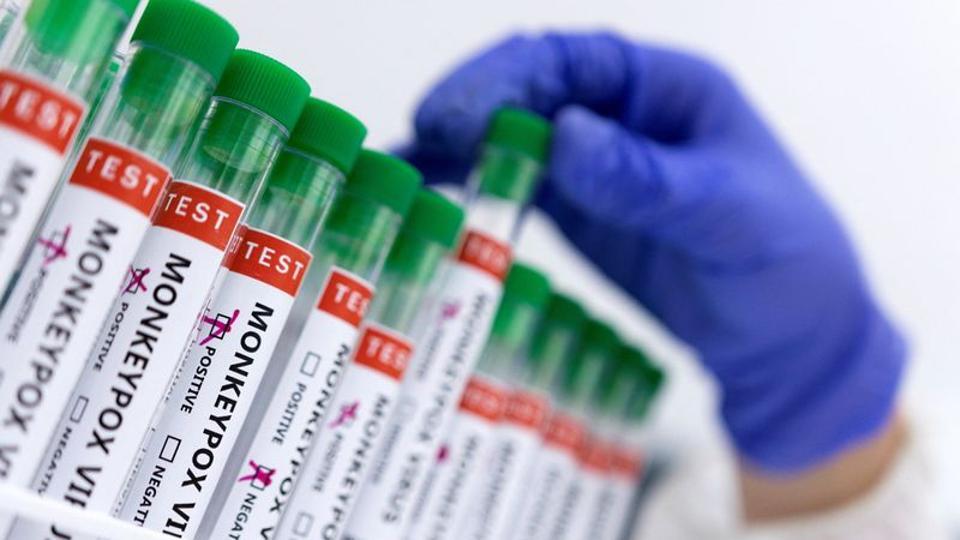
Since the government began watching out for monkeypox, two samples sent for testing to the Indian Council of Medical Research’s apex virology laboratory in National Institute of Virology (NIV) at Pune were from Hyderabad, and one was from Goa.
“India has no laboratory confirmed case of monkeypox so far. All the samples referred to the National Institute of Virology so far have tested negative,” a central government official said, seeking anonymity. “The government and experts, however, are keeping an eye on it.”
As monkeypox cases were rising globally, India stepped up surveillance at all international entry points, asking officials to identify and collect samples after testing passengers arriving from Africa who showed symptoms related to the disease.
Since May 13, the World Health Organization has received reports of infections from at least 23 countries that are not endemic for the monkeypox virus, including the US, Canada, the UK, Germany, France, Italy, Sweden, Denmark, Switzerland, the United Arab Emirates, Israel and Australia.
According to the UN body, 257 laboratory-confirmed cases and around 120 suspected cases have been reported to it till May 26.
On May 20, the Indian government issued a standard operating procedure to conduct surveillance to local authorities at all entry points to the country that included all international airports, seaports, and land border crossings.
All officials concerned— airport health officers, seaport health officers, and land border crossing health officers— were alerted to identify passengers showing signs related to the disease.
“The standard guidelines clearly say that those international passengers who show related symptoms at the arrivals need to be isolated, and their samples should be taken and sent to a bio safety level-4 laboratory for testing. The laboratory in question is ICMR’s NIV in Pune,” the official cited above said.
The health ministry is also working with experts to frame guidelines for the states to manage the virus better.
“The guidelines are being prepared and will be disseminated soon to help the states identify, track, and manage the cases, if the disease happens to land in the country,” the official said. “The monkeypox virus is not found in our country, and so far no case has been detected either. The ICMR’s National Institute of Virology lab is fully equipped to run any type of test required.”
Testing equipment makers in the country are also working to develop the necessary kits.
Medical devices company Trivitron Healthcare recently announced the development of real-time, PCR-based kit to detect the monkeypox virus.
“Research & Development team of Trivitron Healthcare has developed a RT-PCR based kit for the detection of Monkeypox virus. Trivitron’s Monkeypox Real-Time PCR Kit is four colour fluorescence based kit, which can differentiate between Smallpox and Monkeypox in a one tube single reaction format, with total turnaround time of 1 hour,” said the company in a statement.
Monkeypox is a zoonotic disease that can spread from animals to humans and also between people. The symptoms of monkeypox include fever, intense headache, muscle aches, back pain, low energy, swollen lymph nodes and a skin rash or lesions.
The rash usually begins within one to three days of the onset of fever, according to the World Health Organisation. Lesions can be flat or slightly raised, filled with clear or yellowish fluid, and can then crust, dry up and fall off.