‘Normal’ to ‘above normal’ rainfall is likely over some parts of north India, central India and most parts of south peninsula in July, the India Meteorological Department has forecast on Friday.
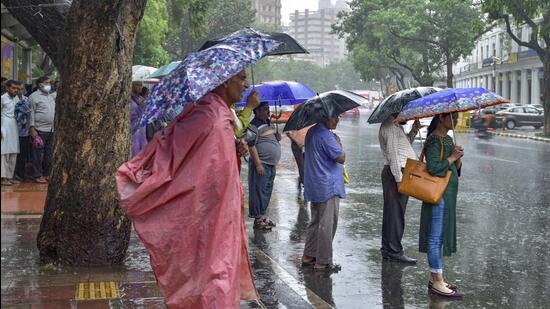
‘Normal’ to ‘below normal’ rainfall is likely over most parts of east and northeast India and areas adjacent to the east central India and some parts of west south Peninsular India during July. The monthly rainfall for July over the country is likely to be ‘normal’ (94 to 106 % of long period average), IMD said in a statement. The long period average (LPA) of rainfall over the country during July based on data from 1971 to 2020 is about 280.4 mm.
‘Normal’ to ‘above normal’ maximum temperatures are likely over most parts of the country except some parts of Himalayan foothills and Peninsular India where ‘below normal’ maximum temperatures are likely. The latest global model forecasts indicate that the prevailing La Niña conditions are likely to continue over the Equatorial Pacific Ocean and there is enhanced possibility of development of negative Indian Ocean Dipole (IOD) conditions over the Indian Ocean during July to September 2022. As sea surface temperature (SST) conditions over the Pacific and the Indian Oceans are known to have strong influence on Indian monsoon, IMD is carefully monitoring the evolution of sea surface conditions over these Ocean basins, IMD said.
La Nina refers to the large-scale cooling of surface temperatures in the central and eastern equatorial Pacific Ocean, coupled with changes in the tropical atmospheric circulation (winds), pressure and rainfall. It occurs every two to seven years.
{{/usCountry}}La Nina refers to the large-scale cooling of surface temperatures in the central and eastern equatorial Pacific Ocean, coupled with changes in the tropical atmospheric circulation (winds), pressure and rainfall. It occurs every two to seven years.
{{/usCountry}}In India, La Nina is associated with strong monsoon and above average rainfall, and colder winters. IOD is the difference between the temperature of the ocean in two parts — in the Arabian Sea on the west and the Bay of Bengal in the east. A neutral IOD doesn’t affect the monsoon, but a negative one is bad news.