
 E-Paper



Northeast has potential to become India’s growth engine: PM Narendra Modi
Speaking after laying the foundation stone for the Manipur Water Supply Project today, through video conferencing, the Prime Minister highlighted that modern infrastructure is being built to improve connectivity.

 Prefer HTon Google


Northeast has the potential to become India’s growth engine, said Prime Minister Narendra Modi on Thursday while asserting that peace has now established in the region.
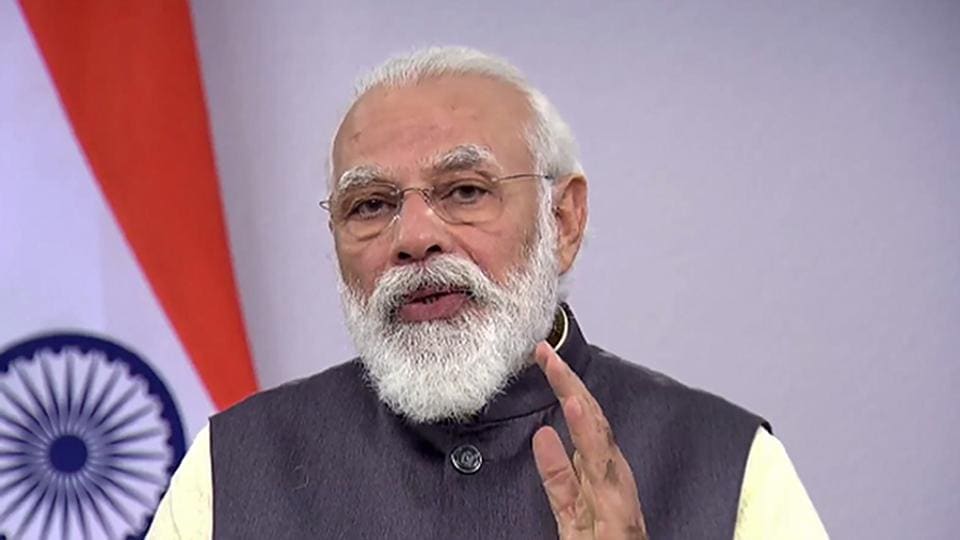
Speaking after laying the foundation stone for the Manipur Water Supply Project today, through video conferencing, the Prime Minister highlighted that modern infrastructure is being built to improve connectivity.
“The Northeast has the potential to become the growth engine of the country. Day by day my faith is getting deeper because peace is now being established in the entire region. The mantra of peace, progress and prosperity is echoing in the Northeast,” the Prime Minister said.
“While blockades in Manipur have become a part of history, Assam has witnessed a phase of violence for decades. In Tripura and Mizoram too, youth have abandoned the path of violence. Now Bru-Reang refugees are moving towards a better life,” he said.
The Prime Minister said modern infrastructure is being built in the Northeast emphasising that connectivity in the region is important, not for only ease of living, but also for achieving the goal for self-reliant India.
He said that tourism potential of the region, including Manipur, is still unexplored.
“Natural and cultural diversity of the Northeast is a great symbol of cultural strength. In such a situation, tourism also gets a lot of strength when modern infrastructure is built. Tourism potential of Northeast, including Manipur, is still unexplored,” he said.
“Connectivity of Northeast is important for ease of living of people here. But it is also substantial for ‘Atmanirbhar Bharat’. On one hand, it strengthens our social and trade relations with Myanmar, Bhutan, Nepal and Bangladesh, while also strengthening India’s Act East Policy,” he said.
The Prime Minister said that India’s Northeast, in a way, is the gateway to our ancient cultural relationships with East Asia and the future of trade, travel and tourism.
“With this thinking, there is a constant emphasis on connectivity-related infrastructure in the entire Northeast, including Manipur. Modern infrastructure is being laid in the Northeast along with roadways, highways, airways, waterways and i-ways as well as gas pipelines. Thousands of crores of rupees have been invested in the infrastructure of the region in the last six years,” he said.
“Efforts have been made to connect the four capitals of the Northeastern states, 2 lanes to the district headquarters and all-weather road to the villages. Under this, about 3,000 kilometres of roads have also been prepared and projects are going on for about 6,000 kilometres,” he said.
Asserting that there is a huge change in the area of rail connectivity in the region, the Prime Minister said that the work of connecting the capitals of every state of the Northeast with a good rail network is going on at a rapid pace.
He highlighted that there are about 13 operational airports in the Northeast today. “To expand the existing airports in the region, including Imphal Airport, more than ₹3,000 crores are being spent to build modern facilities there,” Modi added.
“Another major work is happening for the Northeast, in the area of inland waterways. Work is now underway on more than 20 national waterways. In the future, connectivity here will not be limited to the Siliguri corridor,” he said.
“Now clusters are being developed for value addition and marketing in local products under the self-reliant India campaign. In these clusters, all the facilities will be given to agro startups and other industries.
The Prime Minister said that the region has the potential to replace India’s bamboo import with local production. “There is such a huge demand for incense sticks in the country. But for this also, we import bamboo worth billions of crores of rupees. A lot of work is being done in the country to change this situation,” he said.
“Hundreds of crores of rupees are being invested under the National Bamboo Mission for bamboo farmers, artists associated with handicrafts and other facilities. This will benefit the youth of the region, the startups here,” he said.
The Prime Minister said that many institutes are now being built in the region for health, education, skill development, start-ups and other training. “With the formation of sports universities and world-class stadiums, Manipur is becoming a major hub for the country’s sports talent,” he said.
The Prime Minister said that ease of living is the right of everyone and his government is doing a lot of work in this direction.
He said that the whole of India, including Manipur, is free from open defecation.
The Prime Minister said that almost every family in the country is connected with electricity.
“Today LPG gas has reached the kitchen of the poorest of the poor. Every village is being connected by a good road. Good homes are being provided to every poor homeless. There was a big shortage of clean water, so to complete it, work is also going on on the mission mode,” he said.


