E-Paper



Consumer protection regulator imposes ₹1 lakh fine on Sunrise Foods over ‘100% whole wheat bread’ claim
The Central Consumer Protection Authority (CCPA) directed the company to immediately discontinue the misleading advertisement across platforms.

 Prefer HTon Google


The Central Consumer Protection Authority (CCPA) has imposed a penalty of ₹1 lakh on Sunrise Foods for misleading consumers by marketing its Everyday bread as “100% Whole Wheat Bread”, despite the product containing only 64% whole wheat.
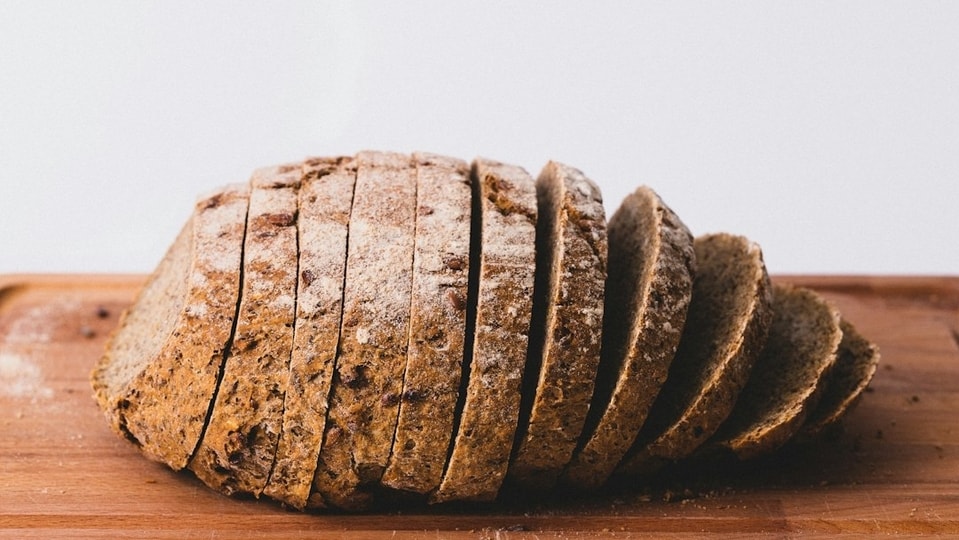
According to an order dated October 28, the regulator directed the company to immediately discontinue the misleading advertisement across print and electronic media, including social media, and submit a compliance report within 15 days.
CCPA flags ‘whole wheat’ claim
The CCPA found that the claim conveyed the impression that the bread was entirely made from whole wheat flour, while the product’s actual composition did not support the representation. It also noted that the company had not adequately disclosed the proportion of whole wheat used on the packaging.
Under the Food Safety and Standards Authority of India’s (FSSAI) labelling regulations, bread marketed as “Whole Wheat Bread” must meet a minimum whole wheat flour content threshold of 75% on a flour basis. The CCPA said the product’s disclosed composition of 64% whole wheat fell below this threshold, raising concerns not only over the “100%” claim but also the use of the term “Whole Wheat” itself.
“The impugned representation is consequently misleading on two distinct and independent counts,” the order said, referring to the claim of 100% whole wheat despite the lower content and the use of the nomenclature “Whole Wheat” despite the product allegedly failing to meet the prescribed threshold.
Under Section 21 of the Consumer Protection Act, 2019, the CCPA can direct advertisers to discontinue or modify misleading advertisements and impose penalties of up to ₹10 lakh for a first contravention and up to ₹50 lakh for subsequent contraventions.
The inquiry
The proceedings followed a complaint by KMA Law Offices, Solicitors and Advocates, alleging systematic mislabelling of packaged bread products by several manufacturers and marketers. The CCPA initiated an inquiry into Sunrise Foods’ product and subsequently referred the matter to its investigation wing on August 6, 2026.
The investigation report, dated October 15, concluded that the claim was misleading and ambiguous. It also cited FSSAI’s observations in a similar matter that the use of “100%” on food product labels was not permissible under the Food Safety and Standards (Advertising and Claims) Regulations, 2018.
FSSAI issued an advisory on May 28, 2025, asking food business operators to discontinue the use of the term on food labels, packaging, and promotional materials.
The company's argument
Sunrise Foods argued that “100% Whole Wheat Bread” was intended to convey that the wheat flour used in the product was entirely whole wheat flour, or atta, rather than refined wheat flour, or maida. It maintained that the claim did not mean every ingredient in the finished product was whole wheat.
The company told the authority that whole wheat flour constituted 96.3% of its total flour-related inputs, while the revised packaging declared whole wheat flour at 64% of the finished product’s net weight. It said the two figures reflected different calculation methods and that the product met applicable food safety requirements.
The company also said it had approved revised packaging under the name “Everyday Whole Wheat Bread”, removing the “100%” claim. However, the CCPA found discrepancies in its account of when the revised packaging was implemented.
What happened in the hearing?
During a hearing on October 23, the company’s representatives said the earlier packaging had been withdrawn and removed from all quick-commerce listings. But the authority said it checked Blinkit and Zepto through live screen-sharing during the hearing and found that the disputed packaging and claim were still displayed on the platforms.
The CCPA said this contradicted the company’s assurance that the earlier packaging was no longer being offered or displayed for sale. It also rejected the argument that product listings and images on third-party platforms were maintained independently by the platforms, noting that the claim remained accessible to consumers.
The authority further held that the prominent “100%” claim on the front of the packaging could not be neutralised by ingredient information in smaller print elsewhere on the pack. It said the overall presentation had to be assessed from the perspective of an ordinary consumer, rather than on the basis of the manufacturer’s stated intention.
“ The test is not the subjective intent of the manufacturer, but the objective understanding of an average consumer of ordinary prudence,” the order said.
The CCPA also noted that the company had sold 107,754 packets of the product in 2024-25, generating ₹38.11 lakh in revenue, and 132,437 packets in 2025-26, generating ₹53.14 lakh in revenue. During the hearing, the company said it sold approximately 2,000 packets a day.
Using that figure, the authority estimated sales of around 4.1 lakh packets, worth approximately ₹2.25 crore, over 205 days of the 2026-27 financial year up to the relevant hearing date. It said the product’s market reach was a material consideration in assessing the potential impact of the misleading representation.
The CCPA concluded that the claim constituted a misleading advertisement and an unfair trade practice under the Consumer Protection Act, 2019, and violated consumers’ right to be informed about the quality, composition and other characteristics of goods.
The authority said the company’s internal compliance procedures did not absolve it of responsibility, particularly as its own documents showed that the product name, ingredient list and packaging artwork were subject to quality assurance and regulatory review.