Chief minister M K Stalin on Tuesday said that he has been receiving complaints of bad roads in Chennai and its suburbs and that he would conduct a survey in the city in the coming week.
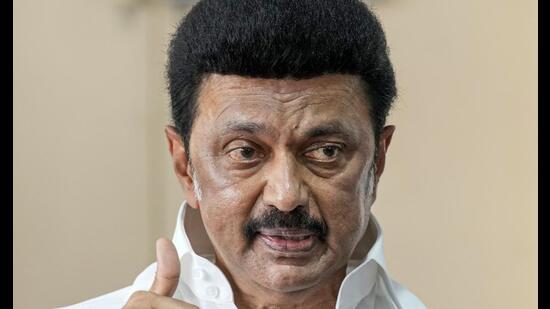
“This is not acceptable,” the chief minister said while chairing a meeting on the monsoon preparedness, which was attended by ministers and top bureaucrats. “I keep receiving complaints that the condition of roads in Chennai and suburbs are very bad. It’s the same in districts. Due to this, motorists are facing severe difficulties and it leads to minor accidents.”
Stalin further instructed the Greater Chennai Corporation to complete the on-going storm water drain work and the district authorities to complete road work, without compromising on quality, at the earliest.
The chief minister cited infrastructure work such as constructing drains, water pipelines and sewage lines and lack of maintenance as the reason behind the poor condition of the roads. “This situation needs to change,” Stalin said. “The roads of our state should be in a way that all people appreciate. This is not just mere advice. All ministers and secretaries should pay serious attention to this. I will monitor the work in progress.”
Tamil Nadu normally receives 443 mm of rainfall during the north east monsoon, between October and December. Since it contributes to 48% of the state’s annual rainfall, the government wants to maximise its benefits and minimise loss and damage, he said. Stalin said in the last two years, since the Dravida Munnetra Kazhagam (DMK) came to power in May 2021, the government has been able to protect people from major harm because of all departments coordinate and work together. “Our government is committed to building a disaster-resilient society that can effectively deal with all kinds of disasters,” he said.
{{/usCountry}}Tamil Nadu normally receives 443 mm of rainfall during the north east monsoon, between October and December. Since it contributes to 48% of the state’s annual rainfall, the government wants to maximise its benefits and minimise loss and damage, he said. Stalin said in the last two years, since the Dravida Munnetra Kazhagam (DMK) came to power in May 2021, the government has been able to protect people from major harm because of all departments coordinate and work together. “Our government is committed to building a disaster-resilient society that can effectively deal with all kinds of disasters,” he said.
{{/usCountry}}In a previous meeting chaired by chief secretary Shiv Das Meena on September 14, officials of all departments, including the weather department, were given instructions on preventative measures to be taken during the upcoming monsoon season.
Officials said that allocations to the tune of ₹716 crore have been made in the last two years for various mitigation work taken up by the Greater Chennai Corporation and the municipal administration department, which has helped reduce the disaster-prone areas in the state from 4,399 to 3,770.
Early warning systems to warn of disasters have been installed in 424 locations, particularly in Tamil Nadu’s coastal areas.
Stalin instructed district collectors to ensure that relief centres are ready and for the public to have access to safe drinking water and to avoid electrocution-related deaths. “Encroachments along water bodies should be removed. While releasing surplus water from dams, the public should be informed,” he said. He also instructed district collectors to form multi-disciplinary committees to monitor areas that are likely to be flooded.