
 E-Paper



Not just climate change, Chamoli disaster was human-induced
Stone quarrying, blasting of mountains and digging of tunnels in the base of the mountain system for two dams on Rishi Ganga and Dhauli Ganga rivers played havoc with the local ecology

 Prefer HTon Google


The glacial burst in the Chamoli district of Uttarakhand, killing at least seven persons with another 170 feared dead, is nature’s way of telling humans that it can strike back when the ecological balance is destroyed. That may sound mystical but the stone quarrying, blasting of mountains and digging of tunnels in the base of the fragile mountain system for the two back-to-back under-construction dams on Rishi Ganga and Dhauli Ganga rivers, despite warning by experts and ecologists, had played havoc with the local ecology.
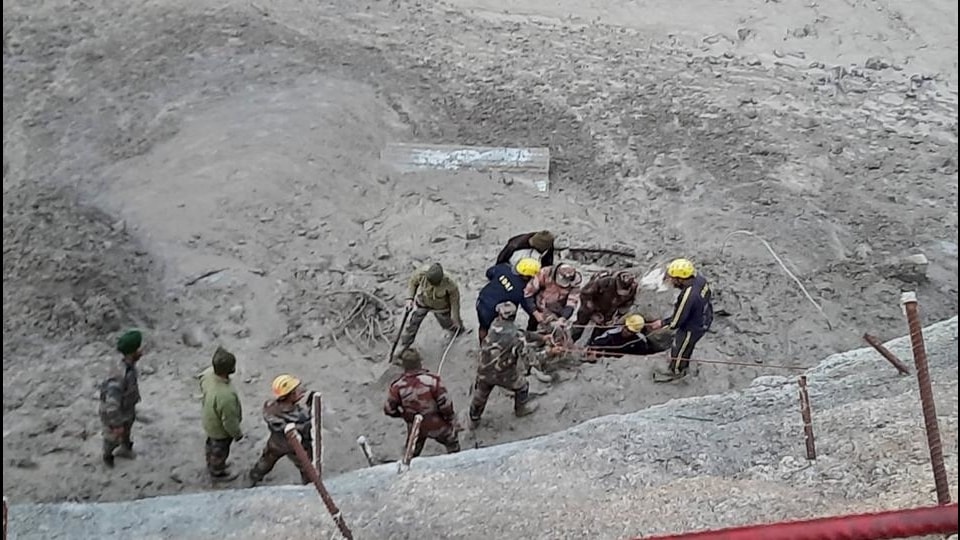
And, climate change, held responsible for faster glacial melting, could have aggravated the situation. A 2019 report by Kathmandu-based International Centre for Integrated Mountain Development said that 36% of the volume of glaciers in Hindu Kush Himalayan (HKH) region will be gone by the end of 2100 if the world manages to keep the temperature rise within 1.5 degrees Celsius as mandated by Paris Climate Agreement. Though the disaster region may not strictly fall in the HKH, its findings confirm what has been said in various studies on faster melting of glaciers feeding the perennial Ganga from the upper reaches of Uttarakhand and China.
Also Read | Uttarakhand glacier burst: Day after tragedy, multi-agency rescue operations on
The data from the Indian Space Research Organisation’s resource centre on Himalayan glaciers reveals that melting of the glaciers in Central Himalayan catchment area, where Chamoli falls, has increased in the first 20 years of this century. A research based on the study of 650 glaciers spanning 2,000 kms and published in journal, Science Advances, in June 2019 showed that glacial melting has doubled since 2000 as compared to 1975-2000. The faster melting of hundreds of Ganga glaciers would impact livelihood of close to 600 million people living in the Ganga river basin from Uttarakhand to Bangladesh, and India’s economy.
Glacial melting and bursts are well-documented but little attention has been paid to the damage caused to the local ecology and loss of forest cover in the upper reaches of Central Himalayas for building hydel dams and construction of wider roads (read Char Dham road project) keeping environmental norms at bay. Villagers of Raini in Chamoli, now the epicentre of the Sunday disaster, had petitioned the Uttarkhand high court in May 2019 against illegal stone quarrying on Rishi Ganga river bed, blasting of mountains and improper muck disposal by contractors engaged in construction of Rishi Ganga hydel project. The district magistrate of Chamoli , asked by the high court to submit a report, found some of the allegations true.
The fragile upper reaches of Uttarakhand, source for several small riverine systems feeding Ganga, already has 16 dams and another 13 are under construction. The state government has proposed another 54 dams to harness hydel energy potential of these rivers. On Dhauli Ganga river, 8 back-to-back new hydel projects are proposed in addition to National Thermal Power Corporation’s Tapovan project, which was badly damaged in Sunday’s flash floods. Geologists say that such heavy drilling of a young and under-studied mountain systems such as Himalayas and loss of massive green cover for these dams were causing an irreparable damage.
Also Read | Uttarakhand glacier bursts: Panic and memories of 2013 floods
What should be an eye-opener for those pursuing the death of Himalayan ecology in the name of development is that rarely, anywhere in the world, two big disasters in a region have taken place in less than a decade. A similar flash flood caused by glacial lake burst ravaged the Kedarnath shrine at the peak of the pilgrimage season in June 2013, killing close to 3,000 people and leaving thousands missing. The death toll in Chamoli disaster is expected to be around 180.
There is enough data to suggest that severe flash floods due to glacial melt in Uttarkhand have increased post-2000 and if the present Himalayan destruction continues, it would rise further and would be more fierce. If we don’t stop this ecological catastrophe, the nature will strike back again, as it did in Kedarnath and Chamoli, and next time, it could be worse. So, saving Himalayas is the only option India has.


