New Delhi: National Security Advisor (NSA) Ajit Doval on Friday suggested an idea of “jointness” and “interoperability” among the central armed police organisations (CAPOs) on the lines of a joint theatre command in the country’s defence forces.
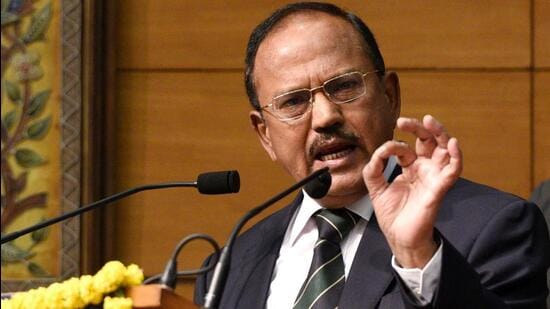
Doval, who was delivering the Rustamji Memorial Lecture organised by the Border Security Force (BSF), also stressed the importance of securing the country’s borders as India works towards becoming a major economic power.
“This is just an idea. Should we think about the jointness in our CPOs (central police organisations) — jointness where you can have interoperability. We are a huge force. We have got the same type of duties, intermingling duties at many places,” he said. “In the defence forces it is being done now. We are thinking of theatre commands with a joint commander for the theatres. There could be one officer from the air force, who is probably controlling both the army and navy. It was more difficult because their equipment, doctrines, command and control system are different. Here (CPOs), it is almost similar.”
He added it was not about saving money but about bringing greater homogeneity. “Whenever a requirement is there — either in war or peace. If we must deploy 30 battalions of the CAPOs, in the borders, it does not matter if BSF forces are unavailable. CRPF could also do the same thing. They have also been trained. Their equipment is the same. Even if there is one platoon of CRPF and two of BSF, it does not matter. They will march,” he said, adding this was his personal idea as a former police officer and as a man of security and not as an NSA.
{{/usCountry}}He added it was not about saving money but about bringing greater homogeneity. “Whenever a requirement is there — either in war or peace. If we must deploy 30 battalions of the CAPOs, in the borders, it does not matter if BSF forces are unavailable. CRPF could also do the same thing. They have also been trained. Their equipment is the same. Even if there is one platoon of CRPF and two of BSF, it does not matter. They will march,” he said, adding this was his personal idea as a former police officer and as a man of security and not as an NSA.
{{/usCountry}}In India, the six paramilitary forces — BSF, SSB, Assam Rifles, CRPF, ITBP and CISF — have separate charter of duties. While BSF, SSB, ITBP and Assam Rifles guard India’s borders with different countries, CRPF is primarily involved in internal security and CISF is responsible for the security of vital installations in the country.
On borders and adversarial neighbours
In the next 10 years, the NSA said, India would become a $10 trillion economy and the third largest economy. India will have one of the largest workforces apart from being a major tech hub, he said.
“While India is on this journey, it is important to identify the retarders. Vulnerability of our borders is one of the major ones. If, presume, both of our borders with our neighbours — western and northern— had been secure, defined and not in a state of adversarial disposition, how much it would have affected nation’s internal and external security. India’s economic progress would have been much faster if we had more secure borders…,” he added.
In the last 10 years, Doval said, Prime Minister Narendra Modi-led government had paid “very, very high attention” to security and management of borders.