E-Paper



Number Theory: How hot are the 2024 elections likely to be?
The seven-phased Lok Sabha elections will begin on April 19 and conclude on June 1. The results will be announced on June 4.

 Prefer HTon Google


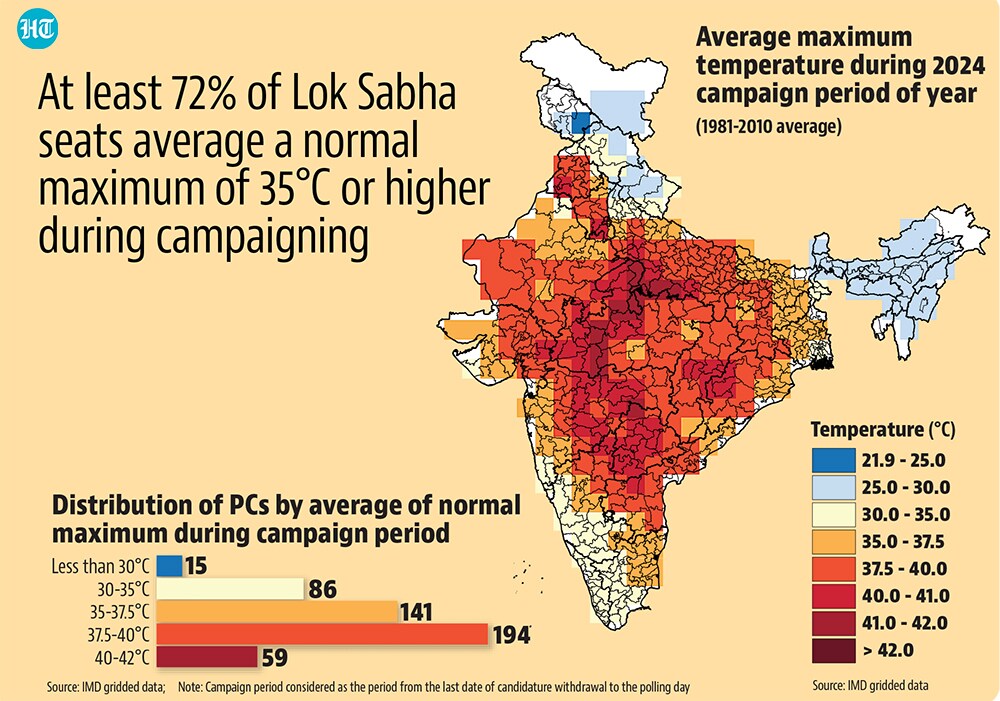
The 2024 general elections will happen in seven phases. The first phase of voting is slated for April 19 and the last phase for June 1. That is pretty much the entire summer season in India. It, therefore, becomes important to look at the summer heat apart from the political heat which the polls are normally associated with. An HT analysis based on aggregating India Meteorological Department’s (IMD) gridded temperature database to parliamentary constituencies (PCs) – this has made it possible to check historical temperatures for 495 out of the 543 PCs in India – shows that the period of campaigning in most parts of India is among the hottest these regions are throughout the year. For this analysis, campaign period was considered as the period starting from the last date of withdrawal of nomination to the day of polling.
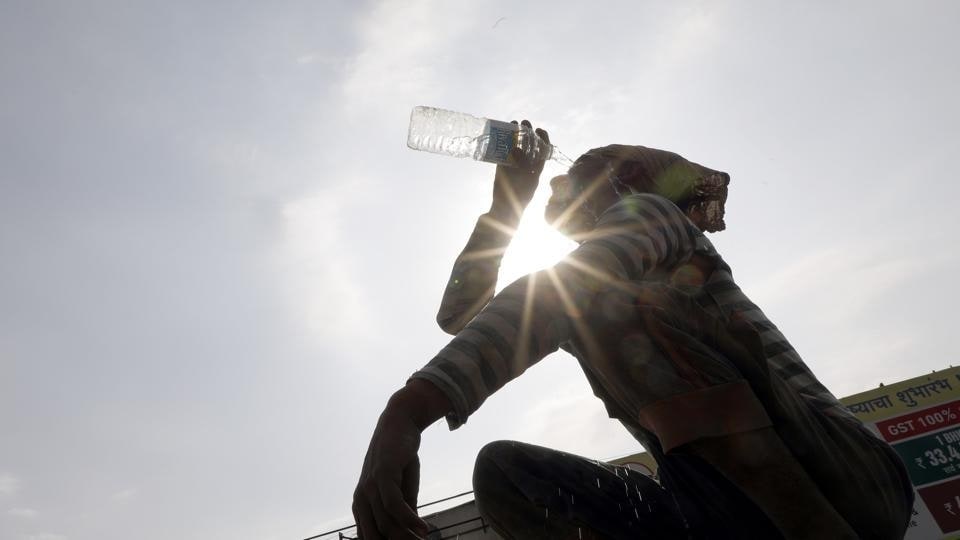
(With inputs from Jayashree Nandi)
 At least 72% of Lok Sabha seats average a normal maximum of 35°C or higher during campaigningIf one looks at average maximum temperature for the 1981-2010 period – it is considered the “normal” for temperature by IMD – 59 out of the 495 PCs for which this analysis is possible will see an average maximum temperature of 40°C or above during the period of campaigning. If one sets the threshold at 35°C, this number crosses 394. While 35°C might not appear to be very hot on a standalone basis, higher humidity levels can make even this temperature threshold extremely dangerous for any outdoor activity, which is what almost all of political campaigning is.
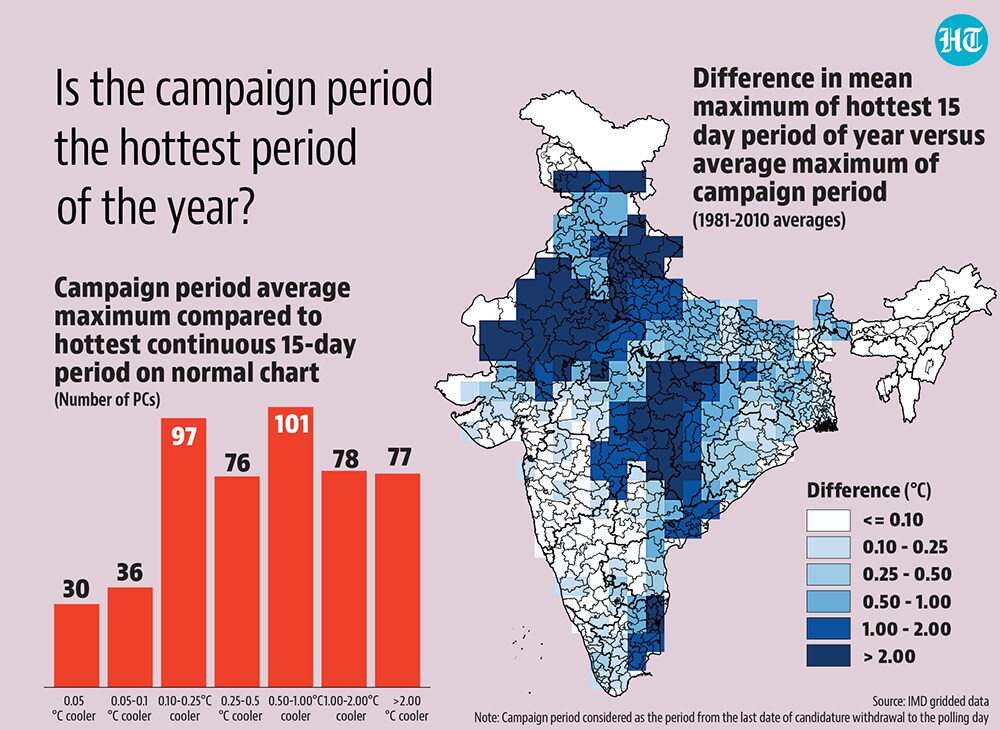
- Is the campaign period the hottest period of the year?If one looks at average maximum temperature for the 1981-2010 period – it is considered the “normal” for temperature by IMD – 59 out of the 495 PCs for which this analysis is possible will see an average maximum temperature of 40°C or above during the period of campaigning. If one sets the threshold at 35°C, this number crosses 394. While 35°C might not appear to be very hot on a standalone basis, higher humidity levels can make even this temperature threshold extremely dangerous for any outdoor activity, which is what almost all of political campaigning is.
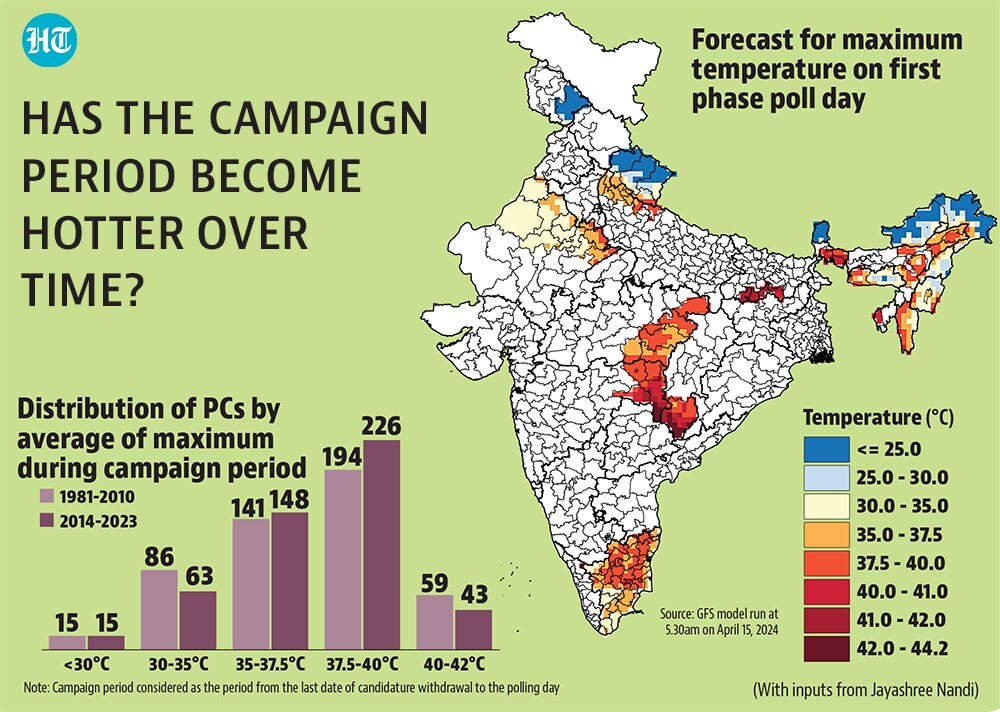
- Has the campaign period become hotter over time?It has. This can be seen from the fact that the distribution of PCs has shifted towards higher temperature ranges in the past 10 years (2014-2023) compared to the 1981-2010 period. Moreover, for at least the first phase PCs, which go to the polls on April 19, forecasts from the Global Forecast System (GFS) model of the US National Weather Service (NWS) can be taken into account for maximum temperature. HT used this to compare the polling day maximum of first phase PCs with the “normal” temperature for the day. This suggests that at least 58 of the 102 first phase PCs (this comparison was possible for 89 of 102 PCs) are likely to experience a warmer than normal maximum on polling day, with 53 of them being more than 1°C warmer. To be sure, since GFS forecasts were compared with normal temperatures taken from IMD, this trend needs to be read with caution. Nonetheless, the forecasts by themselves suggest caution on polling day. Of the 101 PCs for which forecasts could be aggregated, 66 are forecast to experience a maximum of 35°C or higher, with 10 of them forecast to experience a maximum of 40°C or higher. The Aurangabad PC in Bihar is forecast to experience the highest maximum of 41.6°C. To be sure, clusters within a given PC can experience temperatures which are higher than the average maximum for the PC. “We can expect an uptick in all kinds of heat related illnesses. This is because a higher number of people are likely to be exposed to heat during the elections. Some precautions are very important. Public gatherings should be avoided between 11am and 4pm during this period. This is mainly meant for political parties. Two groups of people are most vulnerable — general public which includes those with comorbidities and the elderly; second group are election workers. The impacts on election workers is responsibility of the government but for general public also regular alerts and precautionary measures should be communicated as much as possible. Hospitals will have to be prepared for higher number of heat strokes, heat exhaustion cases and cooling/rehydration measures should be in place. In Ahmedabad for example, ice packs are available for transporting the patient and immediately at hospitals,” said Dr Dileep Mavlankar, who heads the Indian Institute of Public Health in Gandhinagar.