E-Paper



Number Theory: Will the BSP play a role in this year's elections?
With the BJP becoming a dominant party, a lot of the non-SC support, and perhaps even non-Jatav SC support the BSP enjoyed, has gone back to the BJP
Updated on: Jan 16, 2024, 08:34:08 IST

 Prefer HTon Google
Share via


Copy link

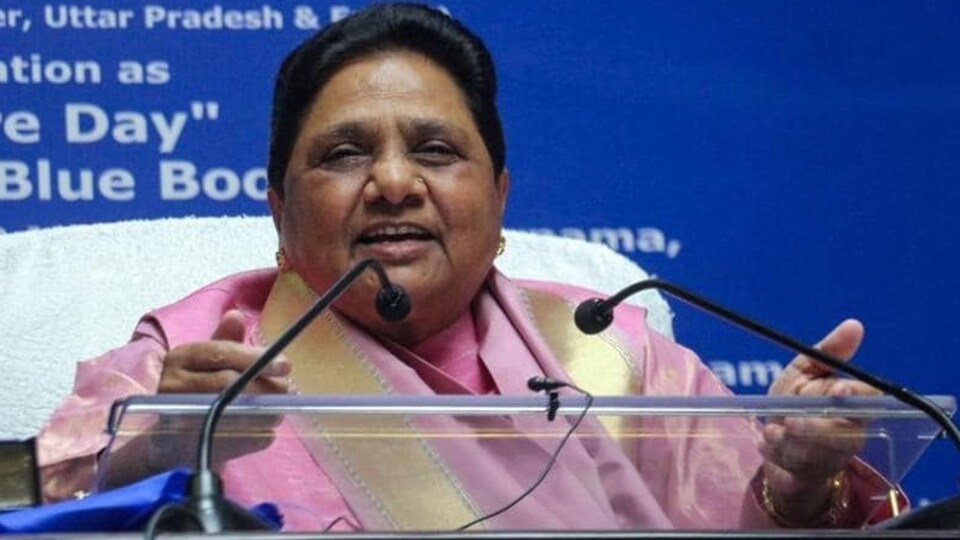
On Monday, Mayawati announced that the Bahujan Samaj Party (BSP) will contest the 2024 general elections on its own. What does this mean for the nature of political contest in Uttar Pradesh, the largest state in the country which sends 80 members to the Lok Sabha? Here are five charts which try and answer this question.
Will the BSP play a role in this year's elections?
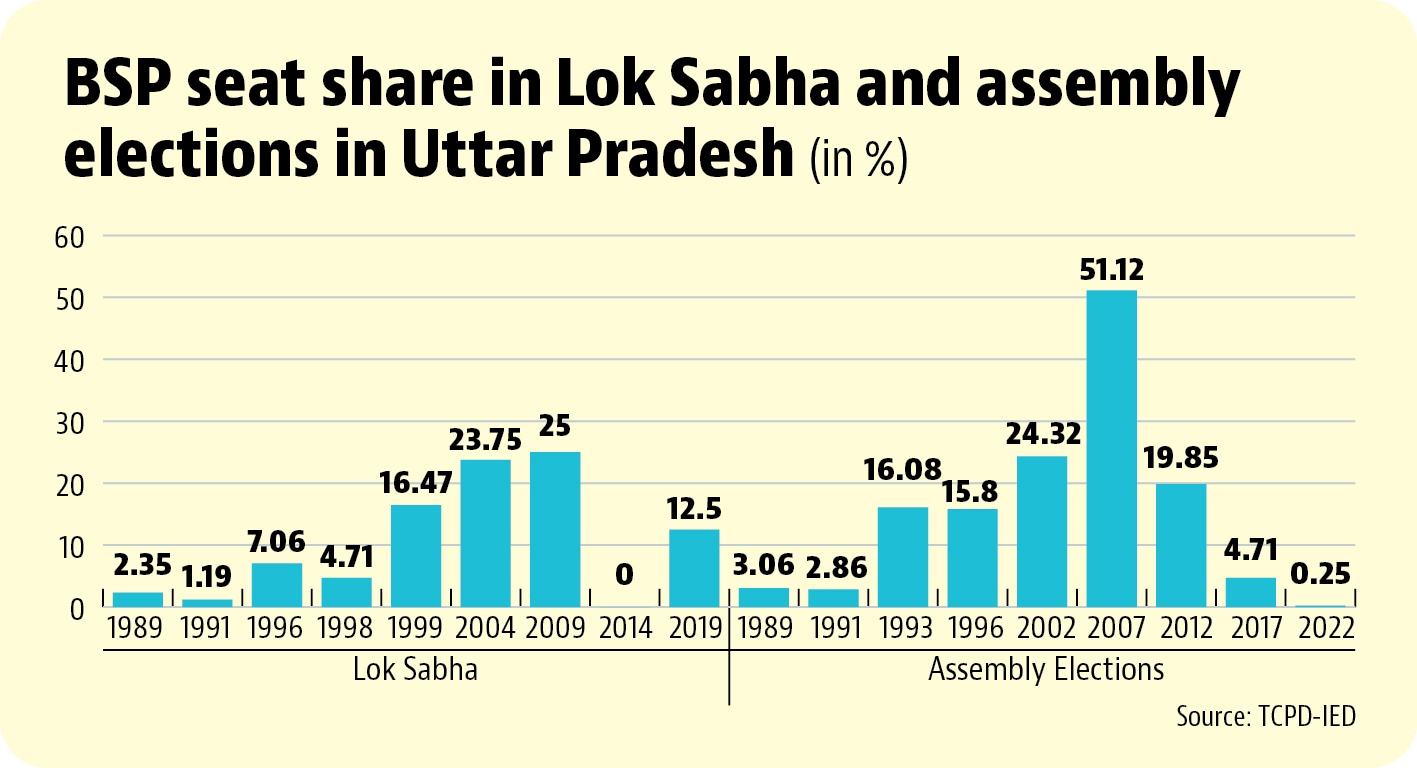
 BSP’s 2019 performance might not be representative of its current strengthIn terms of seats, the BSP saw a big revival in the 2019 Lok Sabha elections winning 10 Lok Sabha constituencies in 2019 compared to none in the 2014 elections. However, there is good reason to believe that BSP’s 2019 performance is not a good indicator of its current political strength. This is because the BSP benefitted from an alliance with the Samajwadi Party (SP) in the 2019 elections. The SP-BSP alliance, however, did not last long and Mayawati broke ranks with the SP in June 2019. When the BSP contested the 2022 assembly elections on its own, its seat share collapsed from 12.5% in 2019 to 0.25% (it won only 1 seat).
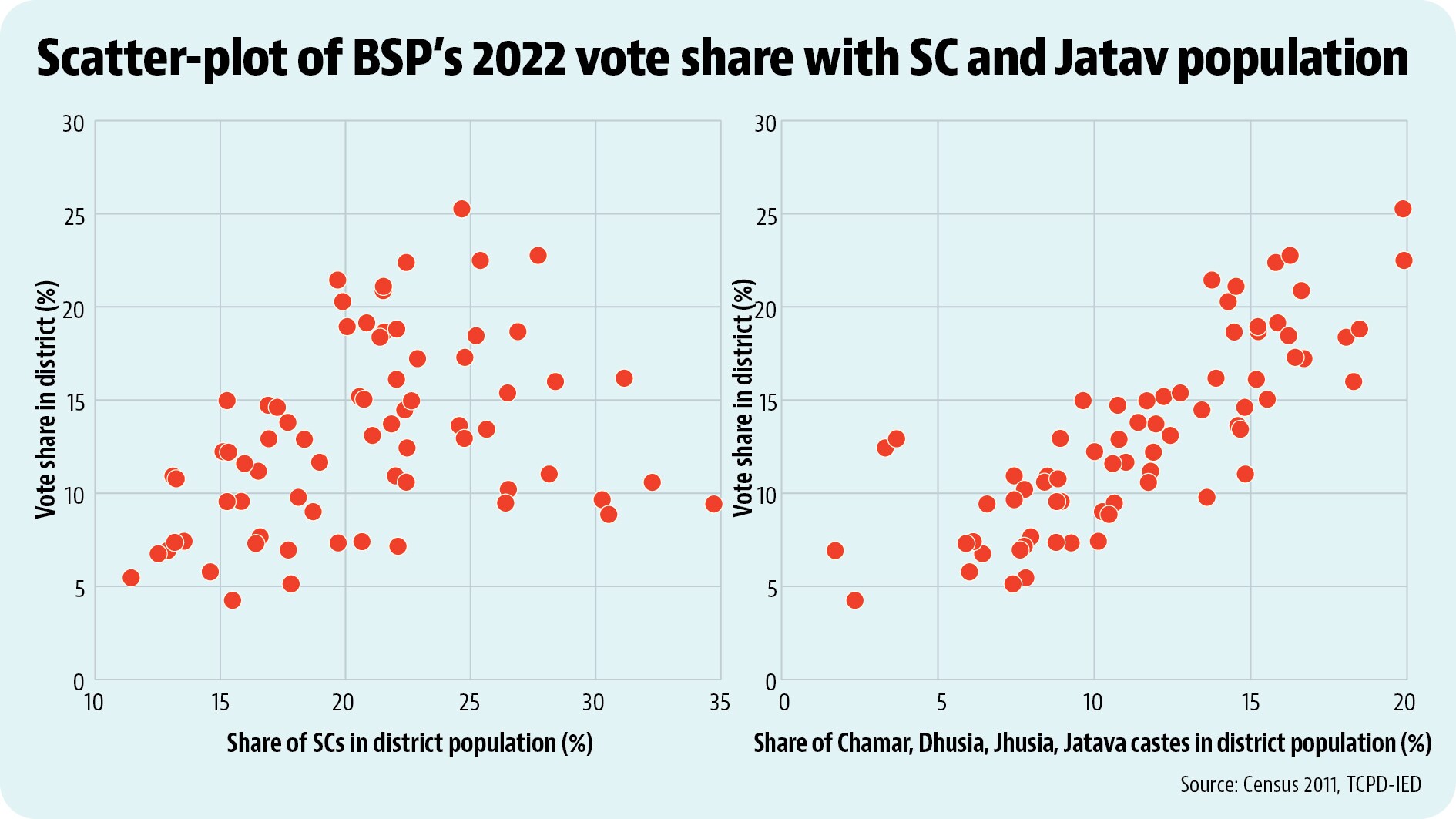
- To be sure, the BSP did have a committed voter base even in 2022The BSP is the only political party in India with a core voter base among Dalits to have captured power in India’s largest state on its own. HT’s database on chief ministers in India shows that Mayawati is the only Dalit politician who has had a full-term as a chief minister in the country. Are Dalit voters in Uttar Pradesh still committed to the BSP? One way to answer this question is to compare the BSP’s 2022 performance; its worst since 1996 in terms of vote share, across districts with the share of Scheduled Caste (SC) population. SCs have a 20.7% population share in Uttar Pradesh according to the 2011 census, and it varies significantly across districts. A comparison of BSP’s district-wise vote share and share of the SC population shows a weak correlation. This relationship becomes significantly strong if one looks at the relationship between BSP’s district-wise vote share and the share of Jatavs in every district. Jatavs, a numerically dominant subcaste among SCs in Uttar Pradesh, are believed to be the core support base of the BSP. If the BSP can still retain its core voter base of Jatavs, it will still be a political party to reckon with and have a role in deciding results even if it does not win much in terms of seats.
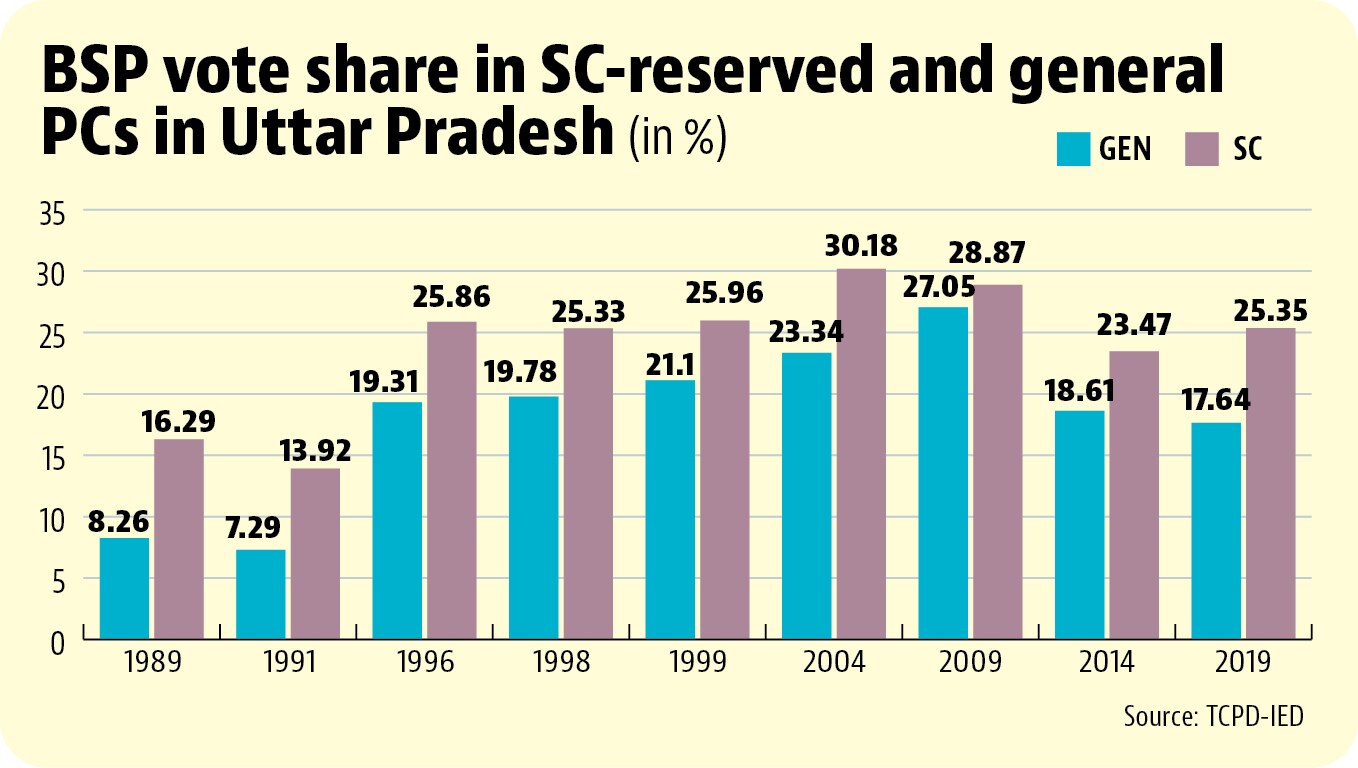
- But its core-support base is not enough for the BSP to win seats or capture powerThis has been the biggest dilemma facing the BSP. When it did capture power in Uttar Pradesh or was at its best in terms of strength in the Lok Sabha, the BSP’s performance gap between SC-reserved and unreserved constituencies was the smallest. SC reserved constituencies have a higher Dalit population. However, the period of BSP’s dominance in Uttar Pradesh was also one when the Bhartiya Janta Party (BJP) was at its weakest in the state. With the BJP becoming a dominant party, a lot of the non-SC support, and perhaps even non-Jatav SC support the BSP enjoyed, has gone back to the BJP and the BSP seems to be struggling to get its mojo back.
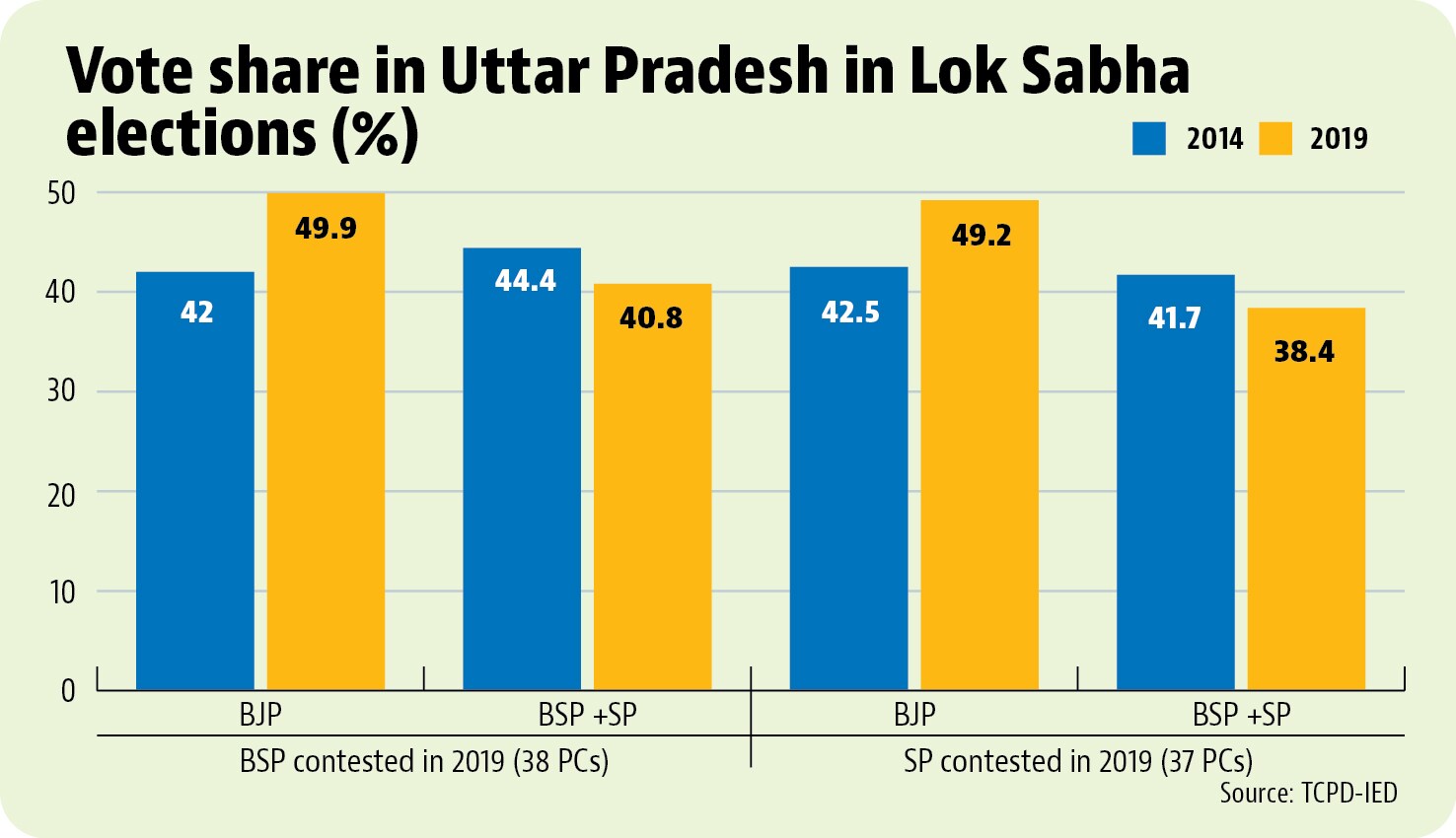
- Why did the SP-BSP alliance break?While Mayawati accused the SP for being anti-Dalit and failing to consolidate its core voter base behind the SP-BSP alliance in the 2019 elections, an HT analysis of SP and BSP’s performance in the 2014 and 2019 elections suggests that both parties failed to ensure a complete consolidation of their individual vote shares in 2014 in favour of the alliance in 2019. On the other hand, the BJP used the SP-BSP alliance to create a major counter-polarisation which allowed it to cut its losses in terms of seats.
- Would things have been different had the SP and the BSP continued with their alliance after the 2019 elections and tried to build an organic front to pose a bigger challenge to the BJP? Counter-factuals are always difficult to answer in politics, but a divided Opposition in Uttar Pradesh will definitely make the BJP’s job easier in 2024.