E-Paper



On margins of G20 summit, Modi flags anti-India activity,threats to diplomats in Canada
India expresses concerns to Canada about pro-Khalistan elements promoting secessionism and inciting violence against Indian diplomats and officials. Prime Minister Modi emphasizes that mutual respect and trust are essential for progress in bilateral ties. The Canadian Prime Minister, Justin Trudeau, defends freedom of peaceful protest but also vows to prevent violence and tackle hatred. The Indian side urges cooperation in dealing with these threats and highlights the nexus of these elements with organized crime, drug syndicates, and human trafficking.

 Prefer HTon Google


New Delhi India on Sunday conveyed to Canada its strong concerns about pro-Khalistan elements promoting secessionism from Canadian soil and inciting violence against Indian diplomats, with Prime Minister Narendra Modi saying mutual respect and trust are essential for progress in bilateral ties.
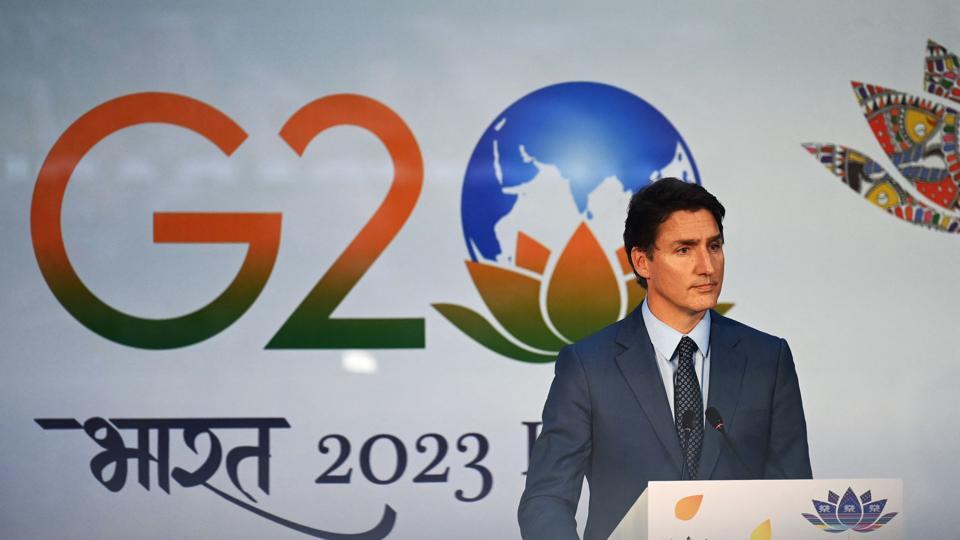
Modi’s remarks during a meeting with his Canadian counterpart Justin Trudeau on the margins of the G20 Summit came on the back of extremist elements organising rallies and protests in support of Khalistan in Canadian cities and targeting Indian diplomatic facilities and officials over the past few months. The Indian side was particularly angered when a float at a recent rally eulogised the assassins of former prime minister Indira Gandhi.
While emphasising that bilateral ties are “anchored in shared democratic values, respect for rule of law and strong people-to-people ties”, Modi conveyed India’s “strong concerns about continuing anti-India activities of extremist elements in Canada”, the external affairs ministry said in a statement.
These elements are “promoting secessionism and inciting violence against Indian diplomats, damaging diplomatic premises, and threatening the Indian community in Canada and their places of worship”, the statement said.
Modi mentioned that “mutual respect and trust” are essential for the progress of India-Canada relationship.
The statement added: “The nexus of such forces with organised crime, drug syndicates and human trafficking should be a concern for Canada as well. It is essential for the two countries to cooperate in dealing with such threats.”
Though the statement didn’t directly name pro-Khalistan elements, there was no doubt whom the Indian side was referring to.
Asked at a news conference about India’s concerns at the activities of pro-Khalistan elements, Trudeau said Canada will always defend freedom of peaceful protest but simultaneously asserted it will also prevent violence and tackle hatred.
“Canada will always defend freedom of expression, freedom of conscience and freedom of peaceful protest and it is extremely important to us,” he said.
“At the same time, we are always there to prevent violence and to push back against hatred. I think on the issue of the community, it is important to remember that the actions of the few do not represent the entire community or Canada,” Trudeau said.
A readout on the meeting from the Canadian Prime Minister’s Office contained no reference to India raising the activities of pro-Khalistan elements. It said the two leaders discussed India’s priorities under this year’s G20 theme of “One Earth, One Family, One Future” and spoke about inclusive economic growth, support for low- and middle-income countries and access to concessional finance for sustainable development.
Trudeau “raised the importance of respecting the rule of law, democratic principles and national sovereignty”, the readout added.
During the news conference, Trudeau further said India is an “extraordinarily important economy and an important partner” of Canada in a range of sectors, including climate change and creating economic growth. He said both sides will continue to look at expanding their existing cooperation.