
 E-Paper



One of 4 terrorists in Kabul Sikh attack a 29-yr-old Kerala man
According to the Islamic State, Al Hindi carried out the March 25 Gurudwara attack to avenge the alleged plight of Muslims in Kashmir, but Indian intelligence officials say there is enough evidence to indicate that this is a classic case of a covert false flag operation with Pakistani deep state involvement.

 Prefer HTon Google


Indian intelligence agencies have confirmed that the terrorist killed in the Kabul Gurudwara attack, who was identified by the Islamic State of Khorasan Province (ISKP) as Indian national Abu Khalid Al Hindi, is indeed an Indian, and from Kerala, although he left the country around six years ago and was radicalised by Pakistani Islamists in Dubai.
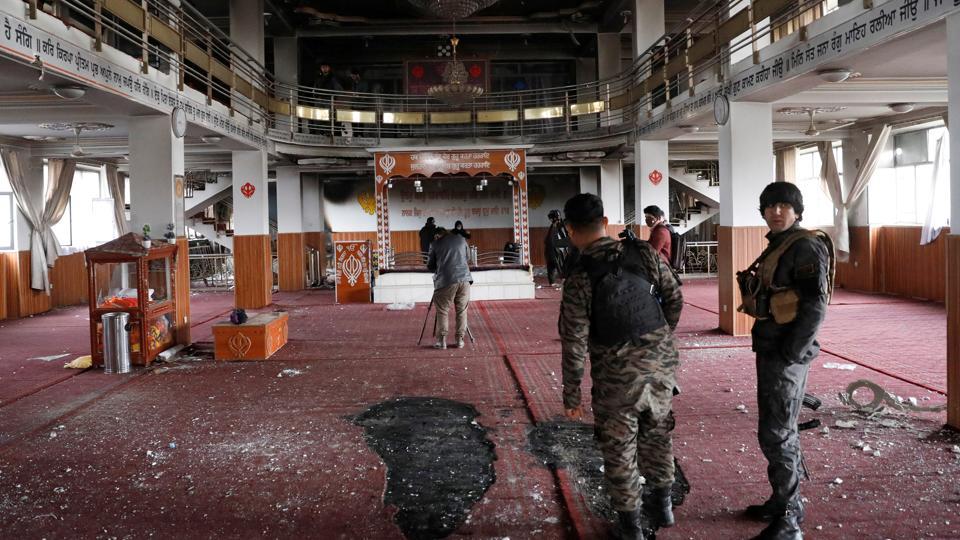
According to the Islamic State, Al Hindi carried out the March 25 Gurudwara attack to avenge the alleged plight of Muslims in Kashmir, but Indian intelligence officials say there is enough evidence to indicate that this is a classic case of a covert false flag operation with Pakistani deep state involvement.
The ISKP claim, they add, is working to substantiate Pakistani’s repeated efforts to brand Indians as terrorists. As many as 28 persons belonging to Sikh minority community died in the dastardly attack, which was actually aimed at the Indian embassy in Kabul.
Counter-terror operatives said that Al Hindi’s actual name is Muhsin Trikaripur or Mohammed Muhasin Nangarath Abdulla (as per his UAE health card) and that he was born in Kasargode, Kerala, on March 19, 1991. The 29-year-old attacker comes from a family that runs a small furniture shop at Trikaripur, Kasargode.
He left Tirkaripur in 2007 and moved to Bengaluru, Malaysia, Dubai with stints back home in-between. Details of what he was doing in Malaysia and Dubai are sketchy, although it is believed that he worked at a hotel in Malyasia and also in Bengaluru for some time.
Intelligence officials said Muhasin left for Dubai two years ago where he came in touch with radicalised Pakistani groups in the UAE. He was with Lashkar-e-Taiba but then left to join the Islamic State in Afghanistan and Syria, they added. Six months ago, they said, Muhasin contacted his mother in Kerala to say that he was active in Afghanistan.
“That was the last the family heard from him,” a senior Kerala government official who didn’t want to be named said.
The Islamic State in Afghanistan was initially formed by jihadists patronised by the Pakistani deep state and were used to settle scores with other groups operating on the Durand Line and Kabul. While Afghanistan’s national security directorate is still investigating the Gurudwara killing, there are reports that the attackers were communicating in Punjabi and Urdu, not Dari or Pushto.
Over the years, Pakistan has been trying to radicalise Indian youth to be used against their own country with groups such as the Indian Mujahideen being the fronts for covert strikes. One such was Fayaz Kagzi aka Abdullah Gulzar Khan who was killed on July 4, 2016 while attempting a suicide bombing attack near the US consulate in Jeddah, Saudi Arabia. While the Islamic State claimed the attack, Kagzi was a member of the LeT and wanted in connection with a 2006 arms haul case in Aurangabad. He fled to Pakistan in 2006 and later moved to Saudi Arabia on Pakistan travel documents. Along the way, he acquired a Pakistani wife.
Another was ISKP recruiter Huzaifa al Bakistani, who used to be a member of the LeT media department before he joined the Baghdadi brigade. He was killed on July 18, 2019. Bakistani was radicalising Indians, particularly Kashmiris, to join Islamic State.
“If claims of the ISPK is proved correct, Muhasin would be the second Indian to have carried out a terror strike in a foreign soil,” a second senior official in the security establishment, who didn’t want to be named, said.
(Sudhi Ranjan Sen contributed to this report)


