
 E-Paper



Operation Sindoor to be in focus at military conclave Ran Samwad on August 26-27
Ran Samwad, to be held at Army War College in Madhya Pradesh’s Mhow, will see India’s top military leadership focus on the impact of technology on warfare

 Prefer HTon Google


New Delhi: The planning of Operation Sindoor, its execution and the outcomes of the May 7-10 military confrontation with Pakistan will be in sharp focus at a top military conclave to be held next week at the prestigious Army War College in Mhow, Madhya Pradesh, where India’s top military leadership will focus on the Impact of Technology on Warfare, officials aware of the matter said on Wednesday.
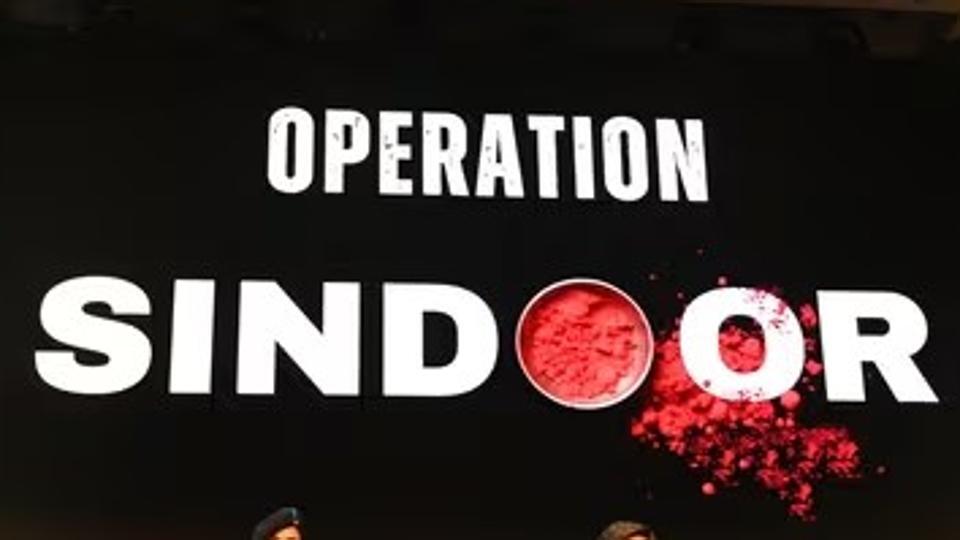
The seminar, Ran Samwad, will be held on August 26-27 and be attended by defence minister Rajnath Singh, chief of defence staff General Anil Chauhan, the top brass of the three services including the chiefs, defence secretary Rajesh Kumar Singh, top officials of the Defence Research and Development Organisation, industry representatives and defence attaches of several countries, the officials said.
Ran Samwad has been conceived by General Chauhan and is being organised by the Headquarters Integrated Defence Staff (IDS) and the Army War College.
“Ran Samwad was conceived before India launched Operation Sindoor but different aspects of the operation, including technologies used, will be discussed during the seminar,” said deputy chief of integrated defence staff (doctrine, organisation and training) Lieutenant General Vipul Shinghal at a curtain raiser to the seminar.
Also read: Operation Sindoor paused after forces met aims: Centre
India launched Operation Sindoor in the early hours of May 7 and struck terror and military installations in Pakistan and Pakistan-occupied Kashmir (PoK) following the April 22 Pahalgam terror strike in which 26 people were killed. Between the launch of the operation and the ceasefire on May 10 evening, Indian forces bombed nine terror camps in Pakistan and PoK, killing at least 100 terrorists, and the Indian Air Force struck targets at 13 Pakistani airbases and military installations.
In his Independence Day speech, Prime Minister Narendra Modi hailed Operation Sindoor as a demonstration of India’s strategic autonomy and defence self-reliance, adding that the armed forces dismantled terror networks and infrastructure in Pakistan using locally made weapons.
Modi also touched upon the changing nature of warfare as he announced the creation of a formidable military capability to defend India’s military and civilian installations against aerial attacks and set a 10-year deadline for developing an indigenous air defence shield integrated with offensive weapons under Mission Sudarshan Chakra.
Also read: Operation Sindoor depiction takes centre stage at Red Fort on Independence Day
Ran Samwad will delve into how technological advancements are continuously changing the nature of warfare and how these changes affect operational planning, tactics and strategies, said another official. Army War College commandant Lieutenant General HS Sahi is closely involved in organising the seminar which the IDS has hailed as a first-of-its-kind event that will now be organised every year by the three services in rotation.
It will have two sub-themes: Emerging Technologies and Impact on Future Warfare, and Reforms in Institutionalised Training to Catalyse Technological Enablement.
“We can’t stop technology from changing the nature of warfare. But we can study its impact and be ready for the next conflict. The idea of holding the seminar annually is to make it an ongoing conversation,” Shinghal said.
Also read: Operation Sindoor and global outreach against terrorism
Top military officers will speak on a raft of topics including recent conflicts and their impact on modern warfare, identifying emerging technologies impacting warfighting, leveraging and actualising technologies in the Indian armed forces, autonomous swarm tactics, leveraging artificial intelligence for coordinated drone swarm in maritime multi-domain operations, measures to integrate technology for warfighting through training initiatives, integration of unmanned systems in land warfare, and reimagining force structures and tactical operations by 2035.
Three joint doctrines on multi-domain operations, Special Forces operations, and airborne and heliborne operations will be released during Ran Samwad, HT has learnt. Defence attaches of 17 countries will be present, including the US, Australia, France, Germany, Netherlands, Oman, Bangladesh and Vietnam.


